Why combinations exist in research at all
The defensible rationale is mechanism coverage: two or more compounds acting on non-overlapping pathways that converge on a related endpoint. Combining two agonists at the same receptor adds nothing an increased quantity of either would not. Combining agonists at different receptors is a different experiment.
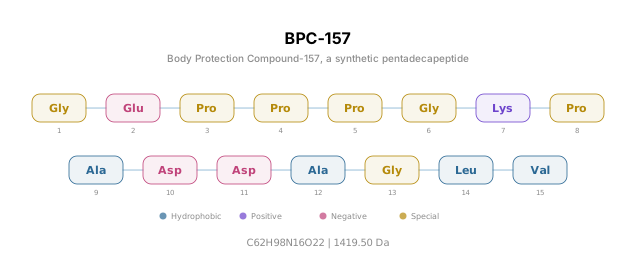
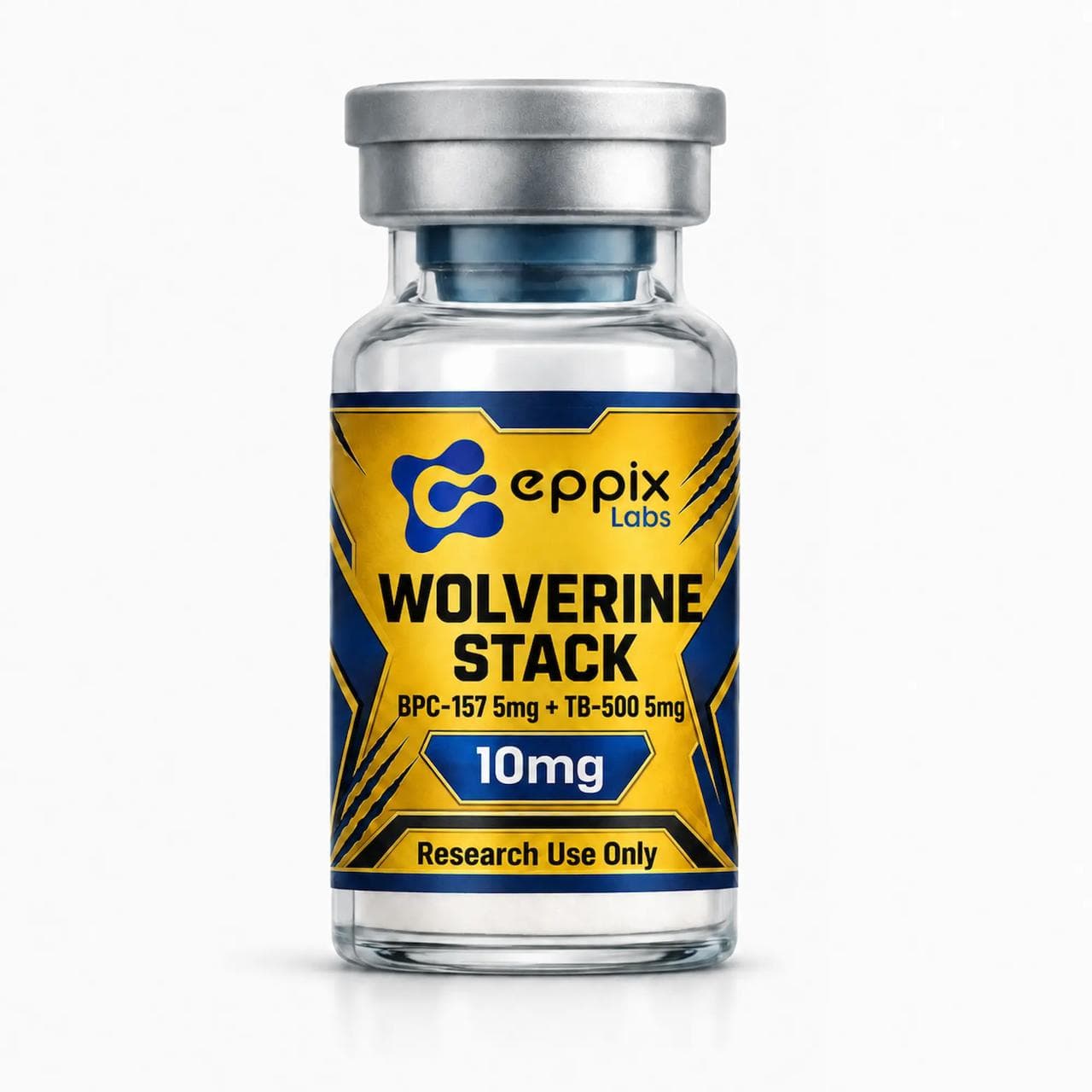
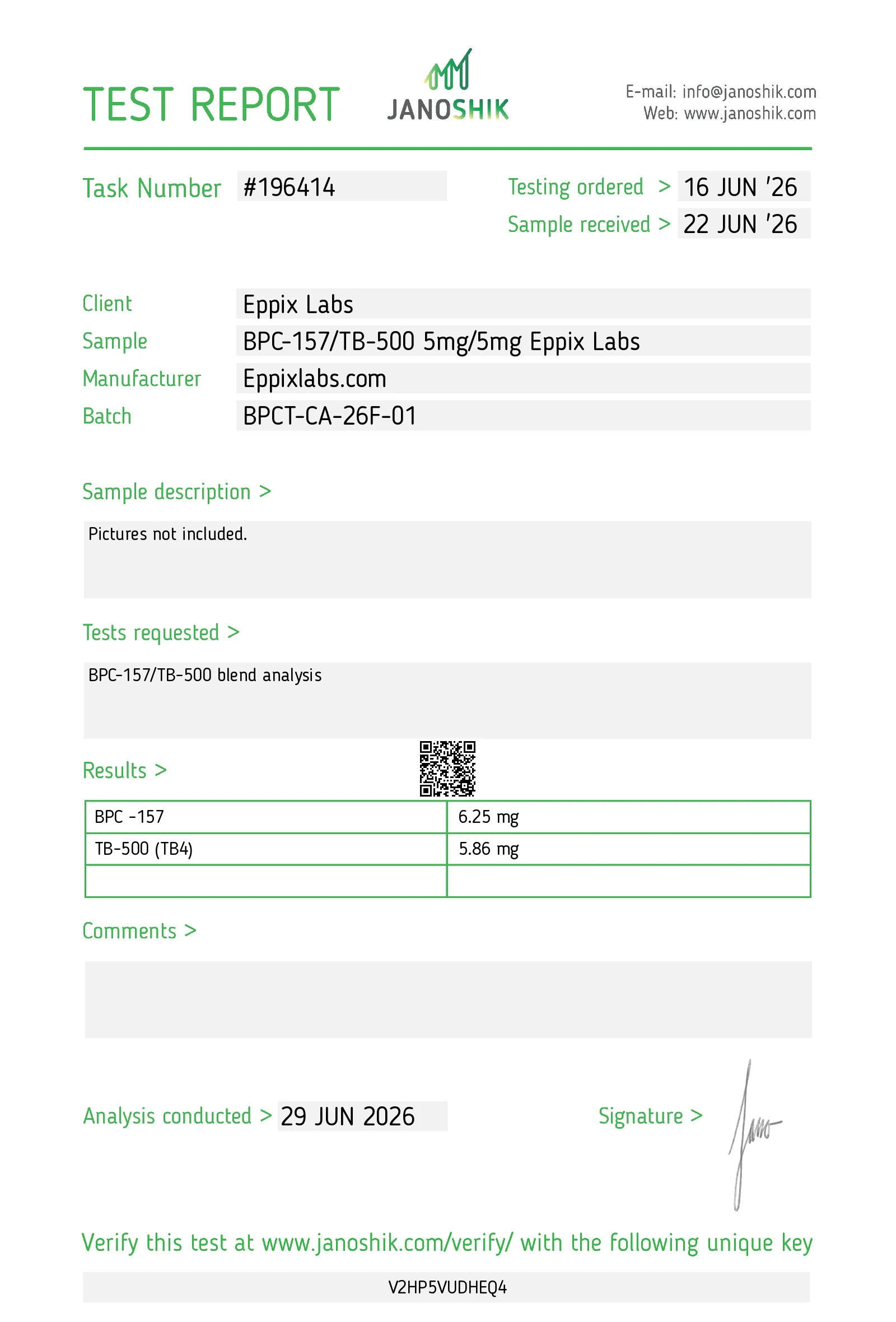
The clearest example in this catalogue is BPC-157 with TB-500. One is a gastric-juice-derived fragment whose published mechanism centres on angiogenic and nitric-oxide-pathway signalling; the other is a fragment of an actin-sequestering protein whose parent biology is about cell migration.[1][2] Those are the two dominant mechanistic stories in the repair literature, and they are not the same story. The full side-by-side is at BPC-157 vs TB-500.
The same reasoning drives GHRH-analogue plus secretagogue pairings on the growth-hormone axis, and it is the same principle behind the amylin plus GLP-1 combination discussed in cagrilintide vs semaglutide. Non-overlapping receptor systems, converging outputs.