Canada Post Xpresspost1–2 day delivery across CanadaFree on orders over $200

Verification

Mass Spectrometry: The Test That Proves What Is Actually in the Vial

HPLC tells you a sample is pure. Mass spectrometry tells you what it is pure of, which in a market where substitution is the profitable fraud is the more load-bearing question

·By Adam Reeves · Research Editor, Eppix Labs

Purity is the number this market talks about. Identity is the number it depends on. A vial can be 99.7% pure and still contain the wrong molecule, and no amount of purity rescues it, because purity describes how homogeneous a sample is rather than what the sample is.

This page covers the test that settles identity, what it catches, and how to read it on a certificate. It is the companion to what HPLC testing cannot prove.

The principle, briefly

A mass spectrometer ionises the sample and measures each ion's mass-to-charge ratio with high precision. Modern instrumentation resolves peptide masses to well within the difference a single amino-acid substitution would make, which is why the technique became the backbone of protein and peptide analysis generally.[1]

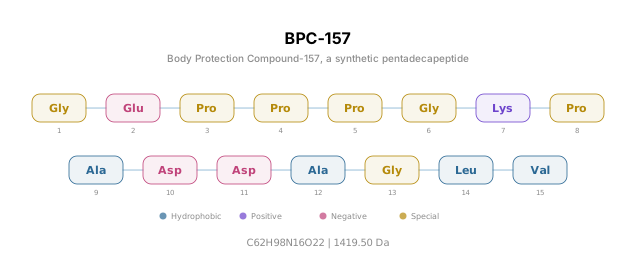
Every peptide has an exact theoretical molecular weight determined by its sequence: the sum of the residue masses less the water lost at each peptide bond, plus whatever modifications the molecule carries. BPC-157, a 15-residue sequence, comes out around 1419.5 g/mol. If the measured mass matches the theoretical mass within tolerance, the molecule is the one the label claims. If it does not, the purity figure is describing something else.
Amino Acid Sequence
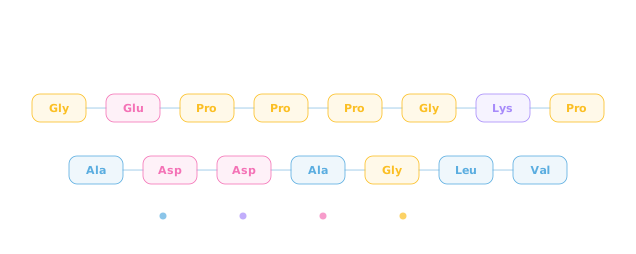
Amino Acid Sequence diagram
The sequence fixes the theoretical mass. Mass spectrometry compares the vial against that number.

What mass spectrometry catches that nothing else does

  • ·Substitution. A cheaper analogue, or a different peptide entirely, is invisible to a purity measurement and unmistakable on a mass measurement. The incentive is largest for expensive compounds and for very short sequences, where the cost gap between the labelled molecule and a substitute is widest.
  • ·Variant confusion. N-acetylated against standard semax, CJC-1295 with the drug affinity complex against without: same families, different masses. Identity testing is what distinguishes them, and it is the only thing that does. The clearest case is set out in CJC-1295 with DAC vs without.
  • ·Modification failures. An amidated C-terminus, an acetylated N-terminus or a lipid chain each shift the mass. A synthesis that failed to install one produces a molecule that is not the target, and again the chromatogram will look fine.
  • ·Quantity. Quantitative mass-spectrometric methods measure how many milligrams the vial actually holds, which is the fill-accuracy figure that completes a certificate rather than an identity check as such.

Reading the identity line on a certificate

Three things belong on it: the theoretical mass of the target compound, the found or observed mass measured in the sample, and agreement between them within a stated tolerance. A certificate that says "identity confirmed" without publishing either number has asked you to take the conclusion on trust while withholding the data.

The audit is quick. Take the compound's published molecular weight, compare it against the theoretical value printed on the certificate, and then compare the found mass against both. A supplier whose listed molecular weight does not match public chemistry databases is copying specifications it has not checked, which tells you something before you get to the certificate at all. The method is in peptide molecular weight.

Published Certificate
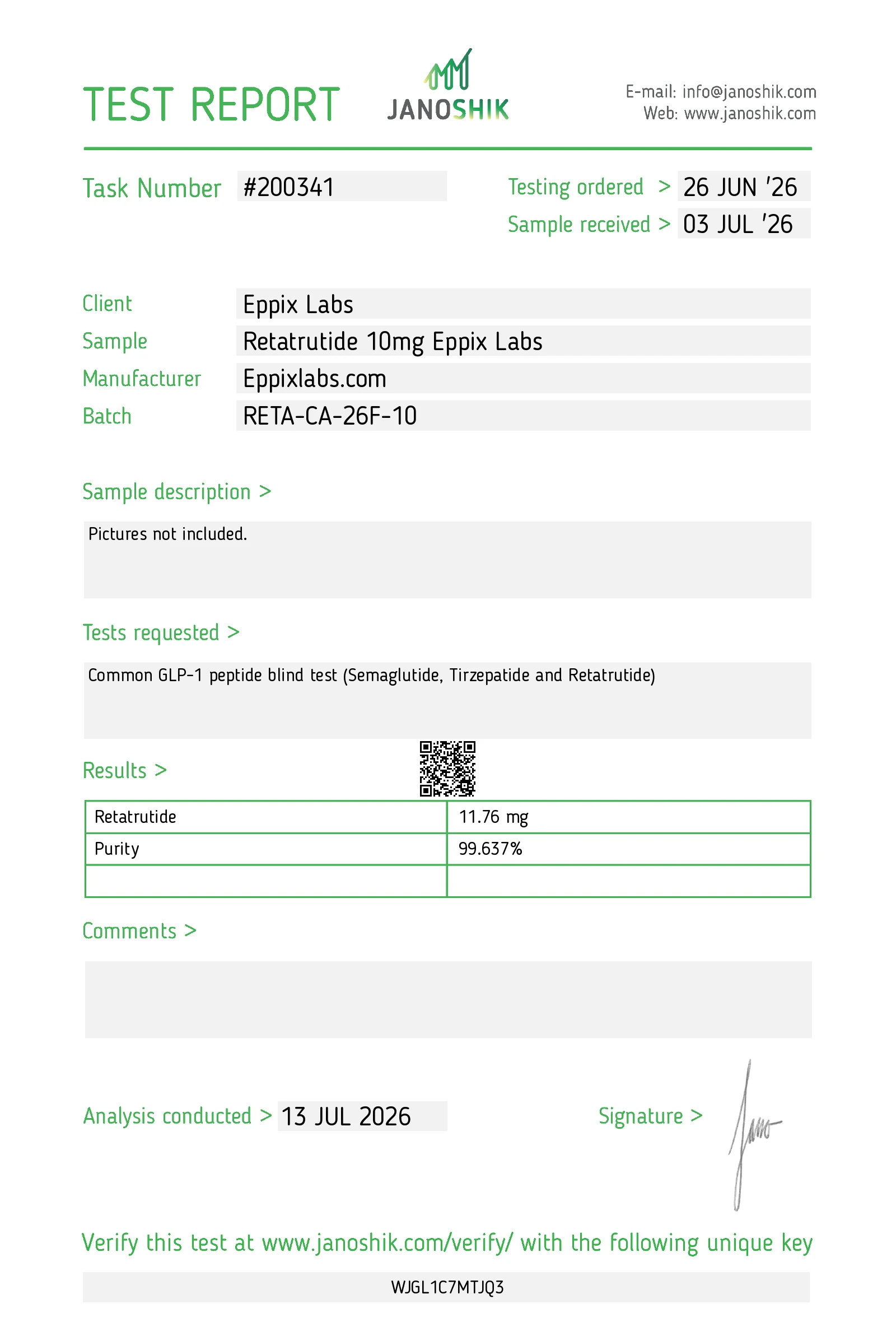
Certificate of analysis for Buy Retatrutide Canada | Triple Agonist 10mg, batch RETA-CA-26E-01, 99.637% purity, 11.76 mg measured content

Select strength

Batch
RETA-CA-26E-01
Purity (HPLC)
99.637%
Measured content
11.76 mglabelled 10 mg
Laboratory
Janoshik
A current certificate. Identity and measured content come from the same analysis as the purity figure.

The complete-certificate standard

HPLC purity, mass-spectrometric identity, measured content. Three figures, one lot, one named laboratory, and a verification key that resolves outside the supplier's own website.

The reason to insist on all three is that each is blind to what the others measure. Purity cannot see substitution. Identity cannot see a short fill. Measured content cannot see contamination. Together they are a description of the material; separately they are three different ways to be reassured about the wrong thing.

The scale of the problem is documented rather than theoretical: market surveillance of peptide products sold online without prescription has found products failing on content and on what they claimed to contain.[2] The answer to that is not a better adjective on a listing, it is a lot-linked certificate that a third party can confirm.

Frequently Asked

Why do purity and identity need different tests?

HPLC separates molecules by how they interact with a column and cannot name what came off it. Mass spectrometry weighs the molecule and compares it against the mass the sequence predicts. A purity figure without an identity result certifies an unknown.

What does "found mass" mean?

The molecular weight the instrument actually measured in the sample, which is compared against the theoretical value calculated from the target sequence to confirm identity.

Can a mass-spectrometry result be faked on a certificate?

A document can be forged. A certificate carrying the testing laboratory's own verification key, checkable on that laboratory's site, cannot be, which is why the key matters more than the PDF.

Does every lot get identity testing here?

Yes. Identity and measured content are established alongside HPLC purity before a lot is listed, and all three appear on the published certificate.

Which compounds are most at risk of substitution?

Expensive ones, where a cheaper substitute saves the most, and very short sequences, where the substitute is easiest to source. Identity testing is the only check that addresses either case.

References

  1. Aebersold, R., Mann, M. (2003). Mass spectrometry-based proteomics. Nature 422(6928):198-207. PMID 12634793
  2. Ashraf, A.R., Mackey, T.K., Vida, R.G. et al. (2024). Multifactor quality and safety analysis of semaglutide products sold by online sellers without a prescription: market surveillance, content analysis, and product purchase evaluation study. J Med Internet Res 26:e65440. PMID 39509151
  3. Thomas, A., Walpurgis, K., Thevis, M. (2024). Chromatographic-mass spectrometric analysis of peptidic analytes (2-10 kDa) in doping control urine samples. J Mass Spectrom 59(1):e4996. PMID 38197510

Research Use Only

This article summarizes published preclinical research literature. Compounds referenced are supplied by Eppix Labs strictly as research materials for laboratory investigation within Canada. They are not approved by Health Canada for human or veterinary use, and nothing on this page should be interpreted as medical advice or guidance on human or animal administration.