Canada Post Xpresspost1–2 day delivery across CanadaFree on orders over $200

Reference

Understanding Peptide Sequences: How to Read the Letters

Every product page lists a sequence. Being able to read one turns a listing from marketing into data, and it takes about five minutes to learn

·By Adam Reeves · Research Editor, Eppix Labs

GEPPPGKPADDAGLV. Gly-His-Lys. Aib-His-D-2-Nal-D-Phe-Lys-NH2. These are the sequences of three compounds in this catalogue, and each string carries more checkable information than the paragraph of copy next to it.

This page covers the notation: the two codes, the annotations that carry meaning, and how a sequence connects to the number that identity testing checks. It is the companion to peptide molecular weight.

The two notations

Amino acids are written either in three-letter code (Gly, His, Lys) or one-letter code (G, H, K). The information is identical and the choice is a matter of space: three-letter code is more readable, one-letter code fits a long sequence on one line.

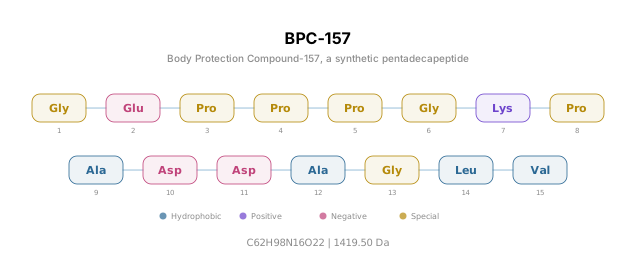
BPC-157 is GEPPPGKPADDAGLV. Fifteen letters, fifteen residues: glycine, glutamate, proline, proline, proline, glycine, lysine, and so on. Sequences are read left to right from the N-terminus to the C-terminus, which is the opposite of the order solid-phase synthesis actually builds them in. That asymmetry is set out in how peptides are made.
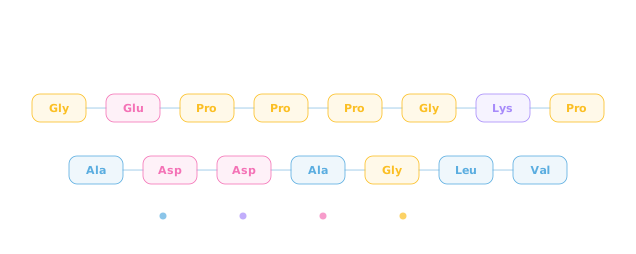
Amino Acid Sequence
Amino Acid Sequence diagram
Fifteen residues, read N-terminus to C-terminus. The diagram is the sequence drawn out.

The annotations that carry meaning

  • ·A D- prefix (D-Phe, D-2-Nal). A mirror-image amino acid. Naturally occurring residues are the L-form; the D-form is the enantiomer, and proteases that evolved to cut L-form chains handle it poorly. A D-residue in a sequence is almost always a deliberate stability choice, and it is common in secretagogues.
  • ·Non-standard residues (Aib, 2-Nal, Sar). Synthetic amino acids: aminoisobutyric acid, naphthylalanine, sarcosine. They appear where the twenty standard residues do not deliver the conformational or stability property the designer wanted.
  • ·A -NH2 suffix. C-terminal amidation, which replaces the terminal carboxyl with an amide. Another stability modification, and one that changes the molecular weight, which is how mass spectrometry distinguishes an amidated variant from an unamidated one.
  • ·An N-Acetyl prefix. Acetylation of the N-terminus. N-Acetyl Semax and Semax are different molecules with different masses and separate certificates, not two grades of one product.
  • ·A metal designation (GHK-Cu). A complex of the peptide with a metal ion. The copper is not part of the chain; it is coordinated to it, and it accounts for a good deal of the compound's published activity.

Why the sequence matters for verification

The sequence fixes the theoretical molecular weight, and the molecular weight is what mass spectrometry compares the vial against. That chain of reasoning is the whole reason a published sequence is more than decoration: a listing that shows a sequence, a molecular formula and a molar mass is showing you the data you need to audit its own certificate.

A listing that shows none of them is asking for trust in place of proof. It is a small tell and a reliable one, because publishing the specifications is free and only inconvenient if they would not survive checking. Every product page in this catalogue publishes sequence, formula, molar mass, CAS number and, where the compound is indexed, a PubChem identifier.

Worked examples from the catalogue

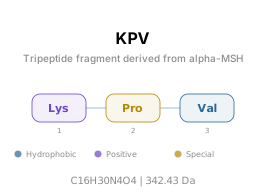
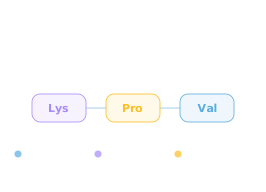
KPV: Lys-Pro-Val. Three residues, the C-terminal fragment of alpha-MSH. A sequence this short is trivial and cheap to synthesise, which is precisely why identity testing carries all the weight here: a substitute costs almost nothing.

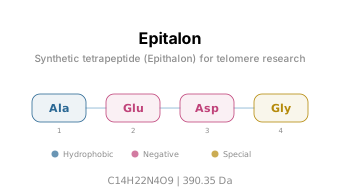
Epitalon: Ala-Glu-Asp-Gly, or AEDG. Four residues. Same reasoning as KPV.

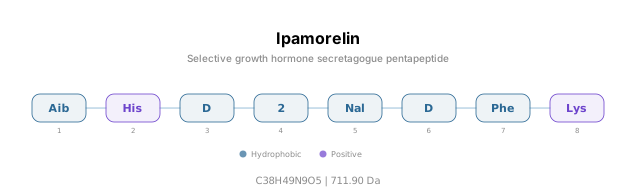
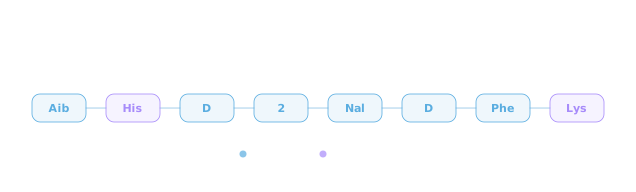
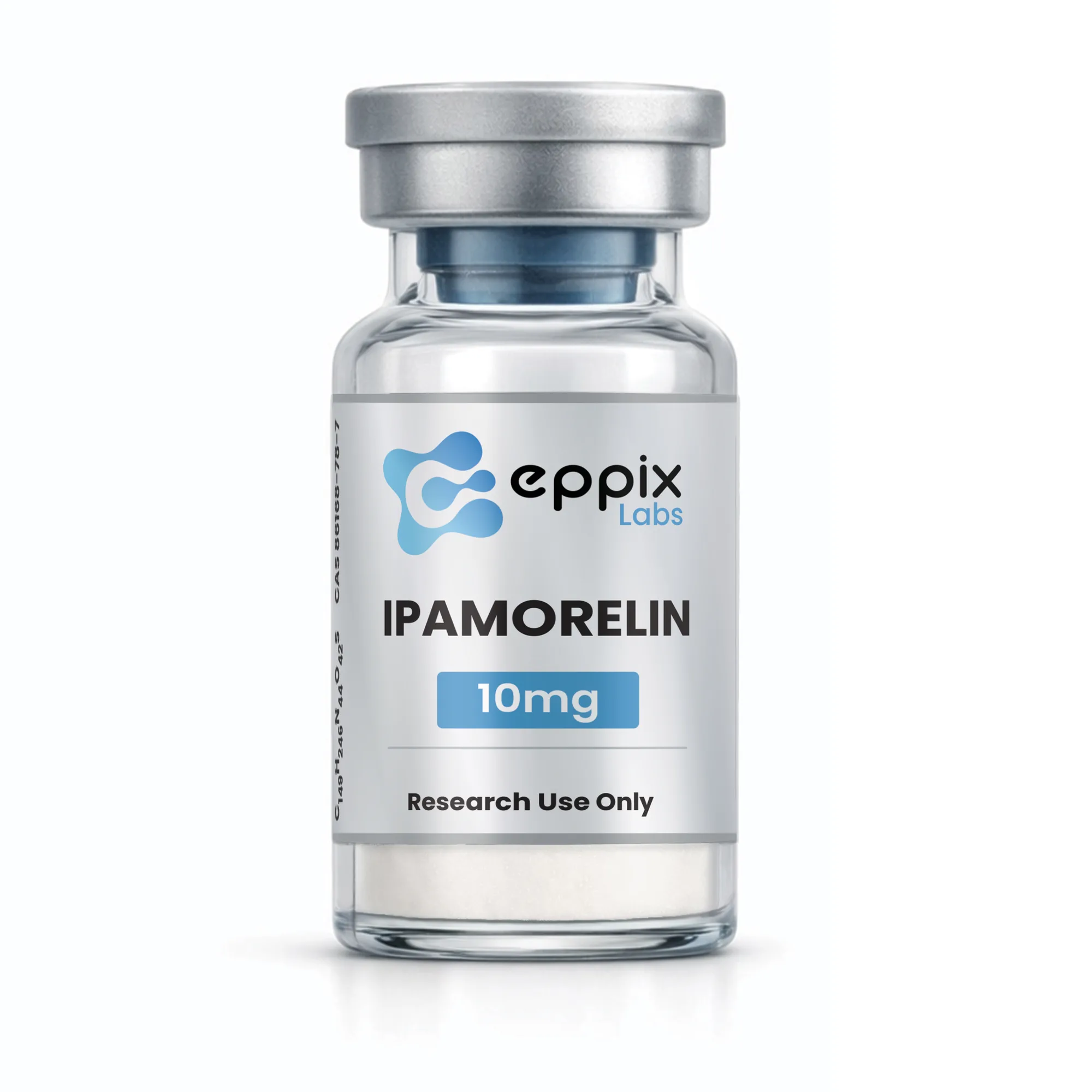
Ipamorelin: Aib-His-D-2-Nal-D-Phe-Lys-NH2. Five residues carrying a non-standard residue, two D-form residues and an amidated terminus. Almost every annotation described above appears in one short sequence, and every one of them shifts the mass, which is why a synthesis that dropped any of them would still look clean on a purity chromatogram.

GHK-Cu: Gly-His-Lys plus copper. Three residues and a coordinated metal ion, the smallest sequence in the catalogue with the largest cosmetic-market shadow.

Amino Acid Sequence
Amino Acid Sequence diagram
Ipamorelin: a non-standard residue, two D-form residues and an amidated C-terminus in five positions.
Amino Acid Sequence
Amino Acid Sequence diagram
KPV: three residues, and nothing to hide behind if identity is not tested.
Amino Acid Sequence
Amino Acid Sequence diagram
Epitalon: four residues, AEDG.

Frequently Asked

What do N-terminus and C-terminus mean?

The two ends of the chain: the free amine end (N) and the carboxyl end (C). Sequences are conventionally written from N to C.

Why do some sequences use abbreviations that are not standard amino acids?

Because they are not standard amino acids. Codes such as Aib, 2-Nal and Sar denote synthetic residues, and their presence usually signals that the molecule was engineered for stability or conformation.

Does a longer sequence mean a stronger compound?

No. Length reflects the biology the sequence copies and says nothing about potency. It does predict synthesis difficulty and therefore price.

What does the D- prefix change?

It denotes the mirror-image form of the residue. D-form residues resist enzymatic cleavage, so they are used deliberately to extend a peptide's stability.

Where does Eppix Labs publish sequences?

On each product page, in the molecular profile alongside the CAS number, molecular formula and molar mass, and in the chain diagram on the same page.

References

  1. Behrendt, R., White, P., Offer, J. (2016). Advances in Fmoc solid-phase peptide synthesis. J Pept Sci 22(1):4-27. PMID 26785684
  2. Raun, K. et al. (1998). Ipamorelin, the first selective growth hormone secretagogue. Eur J Endocrinol 139(5):552-561. PMID 9849822
  3. National Center for Biotechnology Information (2026). PubChem compound database: molecular formula, molecular weight and structure records for research peptides. PubChem. Source

Research Use Only

This article summarizes published preclinical research literature. Compounds referenced are supplied by Eppix Labs strictly as research materials for laboratory investigation within Canada. They are not approved by Health Canada for human or veterinary use, and nothing on this page should be interpreted as medical advice or guidance on human or animal administration.