The assembly line
Nearly all research peptides are made by solid-phase peptide synthesis, the method Merrifield introduced in the early 1960s and which has been refined continuously since, most notably into the Fmoc chemistry that dominates today.[1] The defining idea is that the growing chain stays anchored to an insoluble resin bead, so excess reagents and by-products can be washed away at every step instead of requiring a purification after each one.
The chain is built backwards relative to how sequences are written, starting from the C-terminus:
- ·The first amino acid is coupled to the resin.
- ·Each subsequent residue is added in a cycle: deprotect the growing chain's reactive end, couple the next protected amino acid, wash.
- ·After the final residue, the chain is cleaved from the resin and the side-chain protecting groups are removed.
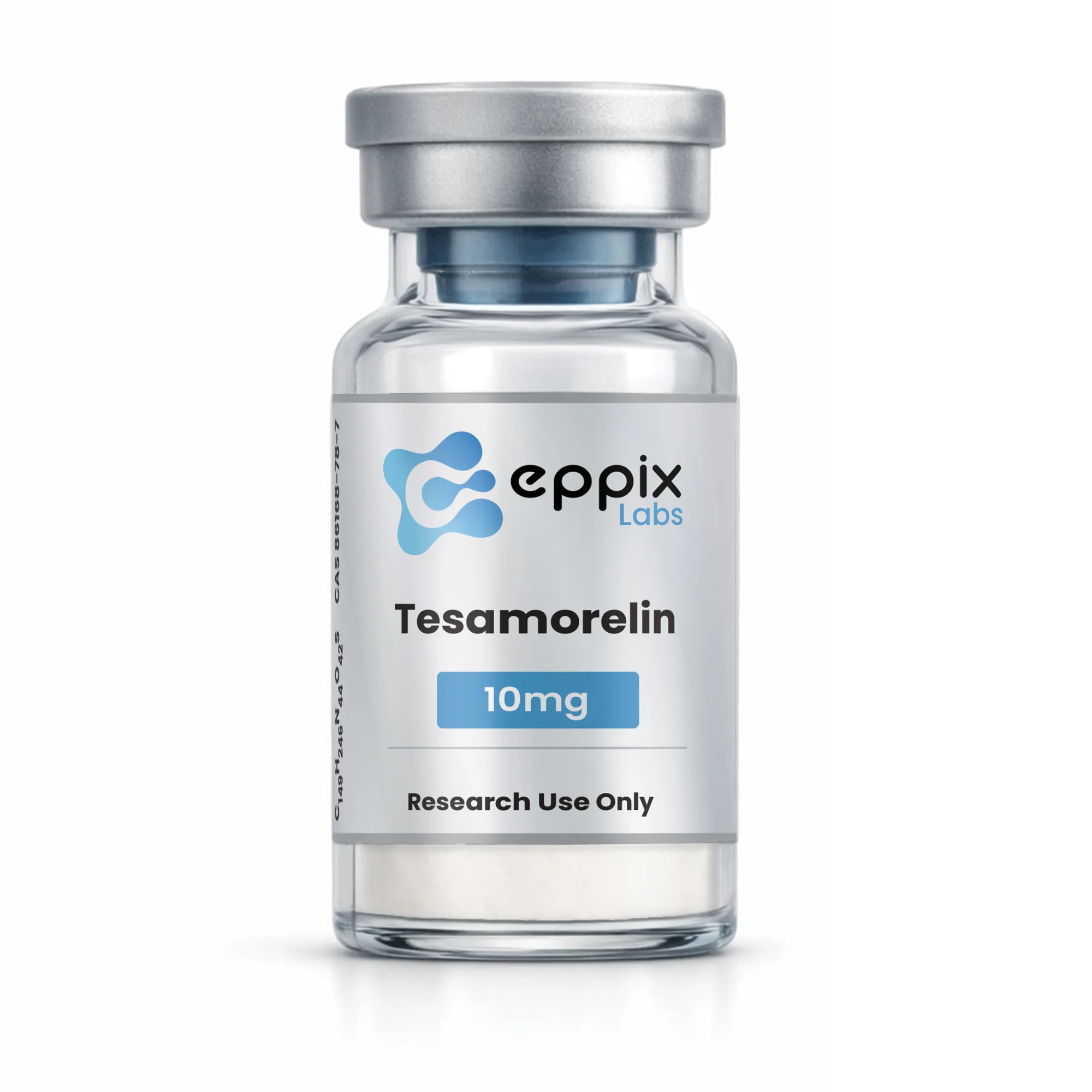
- ·The crude product is purified, typically by preparative HPLC, then lyophilised into the powder that ships in a vial.