Canada Post Xpresspost1–2 day delivery across CanadaFree on orders over $200

Reference

Peptide Molecular Weight: The Number That Anchors Every Verification

Of all the figures on a product page, molar mass looks the most decorative and is the most load-bearing: it is what makes identity testing possible and what lets you audit a certificate yourself

·By Adam Reeves · Research Editor, Eppix Labs

Molecular weight is the figure most buyers scroll past. It is also the one that makes the rest of a certificate checkable, because identity testing works by comparing a measured mass against a theoretical one, and the theoretical one comes from here.

This page covers what the number is, why it anchors verification, and how to use it to audit a supplier in about half a minute. The companion pages are understanding peptide sequences and mass spectrometry in peptide verification.

What the number is

A peptide's molecular weight, or molar mass, is fixed by its sequence: the sum of the constituent residue masses less the water molecule lost at each peptide bond, plus the mass of any modification the molecule carries. It is not a measured property of a particular vial; it is a property of the molecule.

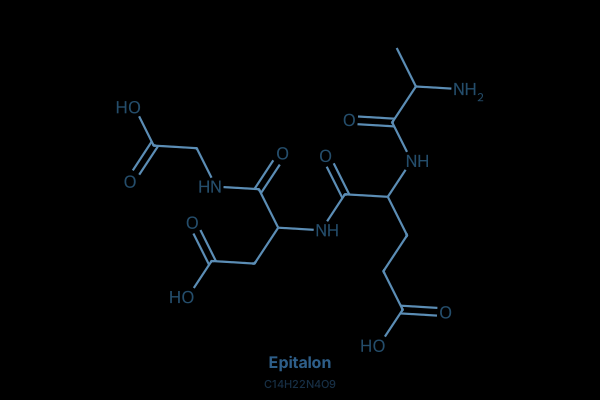
BPC-157, fifteen residues, comes out around 1419.5 g/mol. Epitalon, four residues, around 390.4 g/mol. Every modification shifts the value: C-terminal amidation, N-terminal acetylation, copper complexation, an albumin-binding group. That is precisely why the shifts are useful, because each one is detectable.
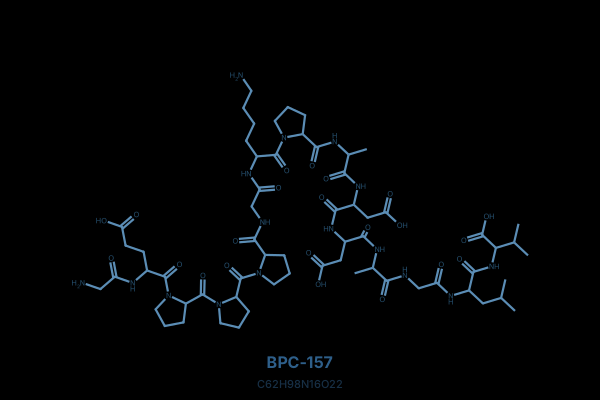
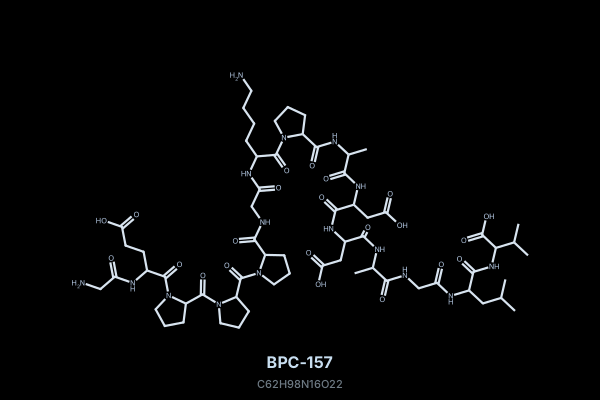
Chemical Structure
Chemical Structure diagram
The structure determines the formula; the formula determines the mass.

Why it anchors verification

Mass spectrometry measures the mass of what is in the vial and compares it against the theoretical mass calculated from the target sequence.[1] Agreement within tolerance means the molecule is the one on the label. Disagreement means the wrong compound, the wrong variant, or degradation, and no purity figure repairs that, because purity describes homogeneity rather than identity.

Without a published molecular weight, a mass-spectrometric result has nothing to be checked against by the reader. The supplier can assert that identity was confirmed and the buyer has no way to confirm the assertion. Publishing the value is what makes the certificate auditable rather than merely reassuring.

Auditing any supplier in thirty seconds

  • ·Take the compound's CAS number or name to a public chemistry database. PubChem indexes most research peptides and publishes formula and molecular weight.
  • ·Compare the database value against the supplier's listed value. A listing that is wrong here is reproducing specifications it has not checked, which is informative before you reach the certificate.
  • ·On the certificate, compare theoretical mass against found mass. They should agree within the stated tolerance.
  • ·Then verify the certificate itself on the testing laboratory's own database rather than on the supplier's site. The full chain is set out in how to verify a peptide COA.
Chemical Structure
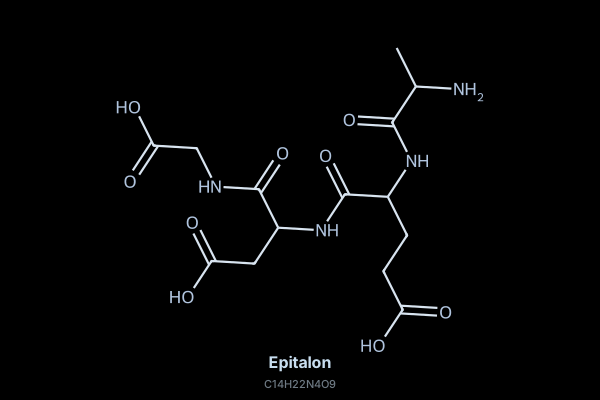
Chemical Structure diagram
A four-residue compound around 390 g/mol. Small molecules leave the least room for a mismatch to hide.
Published Certificate
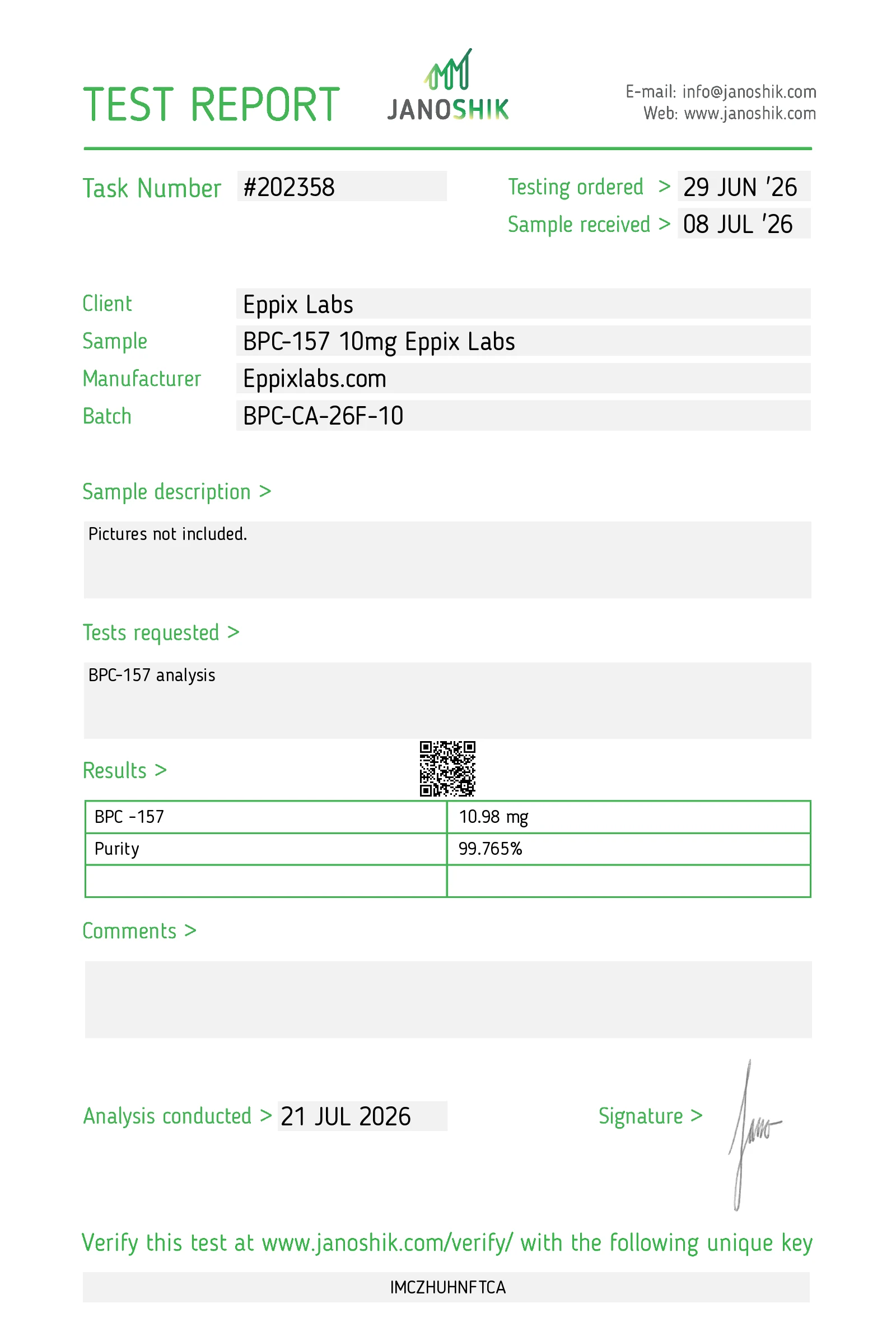
Certificate of analysis for Buy BPC-157 Canada | 10mg & 20mg Vials 10mg, batch BPC-CA-26F-10, 99.765% purity, 10.98 mg measured content

Select strength

Batch
BPC-CA-26F-10
Purity (HPLC)
99.765%
Measured content
10.98 mglabelled 10 mg
Laboratory
Janoshik
A current published certificate, where the found mass is compared against the theoretical value.

One distinction worth making explicitly

Molecular weight and vial mass are unrelated numbers that get conflated by new buyers surprisingly often. Molecular weight, expressed in g/mol, says what the molecule is. Vial mass, expressed in milligrams, says how much of it the label claims is in the container. The certificate's measured content says how much is actually there.

The first is a fact about chemistry and cannot vary between lots. The second is a claim about a fill operation and can. Confusing them is how a "10 mg" vial and a "1419.5" figure end up in the same sentence as if they were describing the same thing. Why the fill number needs its own measurement is covered in purity vs fill accuracy.

Why published values sometimes differ slightly

Two conventions account for most small discrepancies. Average molecular weight uses the natural isotopic abundance of each element; monoisotopic mass uses the most abundant isotope of each. For a peptide of a few hundred to a few thousand daltons the two differ by a small but visible amount, and a certificate reporting one against a listing quoting the other will look like a mismatch when it is not.

The second is salt form. Peptides commonly ship as acetate salts, and the counterion adds mass. A good certificate states whether its figures are net peptide or salt-inclusive. A discrepancy of a few percent between two sources is usually one of these two conventions; a discrepancy of hundreds of daltons is not.

Frequently Asked

Why do sources differ by a decimal on molar mass?

Usually the average against monoisotopic mass convention, or a salt form that includes the counterion. Small stated differences are ordinarily convention rather than error; large ones are not.

What is a salt form?

Peptides commonly ship as acetate salts, and the counterion contributes mass. A good certificate states whether the values reported are net peptide or salt-inclusive.

Does molecular weight affect laboratory handling?

It is what converts milligrams to moles, so it is used in every molarity calculation. The site calculator handles the arithmetic.

Where can I check a compound's true values?

Public chemistry databases indexed by CAS number, PubChem being the most convenient for research peptides. Product pages here publish the CAS number and, where available, the PubChem identifier so the lookup is one click.

Is molecular weight the same as the vial size?

No. Molecular weight in g/mol is a property of the molecule. The milligram figure on the label is a claim about how much material is in the vial, and the certificate's measured content is what tests that claim.

References

  1. Aebersold, R., Mann, M. (2003). Mass spectrometry-based proteomics. Nature 422(6928):198-207. PMID 12634793
  2. National Center for Biotechnology Information (2026). PubChem compound database: molecular formula, molecular weight and structure records for research peptides. PubChem. Source

Research Use Only

This article summarizes published preclinical research literature. Compounds referenced are supplied by Eppix Labs strictly as research materials for laboratory investigation within Canada. They are not approved by Health Canada for human or veterinary use, and nothing on this page should be interpreted as medical advice or guidance on human or animal administration.