Canada Post Xpresspost1–2 day delivery across CanadaFree on orders over $200

Compound Comparison

BPC-157 Capsules vs Vials: What Actually Differs for Research

One molecule, two formats, and a set of differences that are real rather than cosmetic: stability, concentration control, and what the certificate has to measure in each case

·By Adam Reeves · Research Editor, Eppix Labs

BPC-157 is one of the few compounds in this catalogue sold in two formats, lyophilised powder in a vial and a fixed quantity in a capsule. The choice is usually presented as a convenience question. It is not only that: the two formats give a protocol different amounts of control, and they put different demands on the batch certificate.

This page sets out what genuinely differs. Both formats are supplied as laboratory research materials only, and nothing here is dosing, medical or administration guidance. The compound-level overview is at BPC-157 in the literature, and the sourcing guide at buy BPC-157 in Canada.

Why an oral format exists for this compound at all

For most peptides an oral format is close to pointless. A chain of amino acids meeting gastric acid and pancreatic proteases is a substrate, and what survives to the far side is fragments rather than the sequence on the label. That is the ordinary reason research peptides ship as powder for reconstitution.

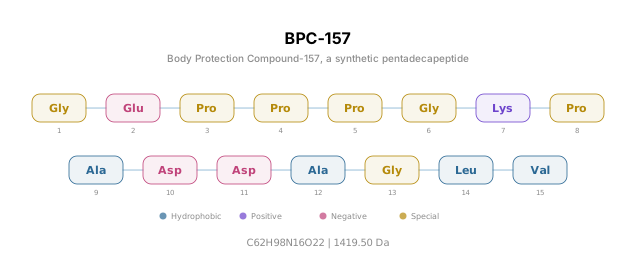
BPC-157 is the interesting exception, and the reason is its origin. It is a 15-residue fragment, GEPPPGKPADDAGLV, of a protein identified in human gastric juice, and the published work on it has consistently described it as stable in gastric-acid-like conditions rather than degraded by them.[1] That is why oral-route work on this compound exists in the literature and why a capsule is a defensible format here in a way it would not be for, say, tesamorelin.

The caveat worth stating plainly: acid stability is not the same claim as oral bioavailability, and the published record on the second question is much thinner than on the first. A capsule format is scientifically coherent for this compound. It is not a demonstrated equivalence to reconstituted material.
Amino Acid Sequence
Amino Acid Sequence diagram
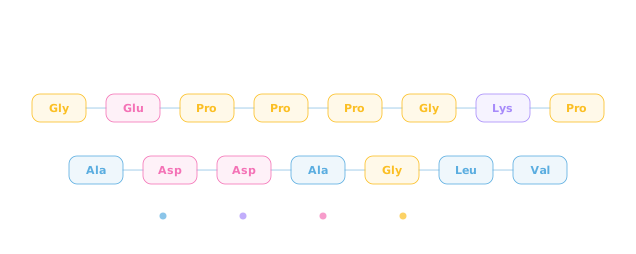
The same 15-residue sequence sits behind both formats. Format changes the delivery vehicle, not the molecule.

What differs, format by format

  • ·Contents. A vial holds the peptide alone, as a lyophilised cake, reconstituted before use. A capsule holds a fixed quantity of the same peptide together with excipients that make a capsule a capsule.
  • ·Concentration control. This is the substantive difference. Reconstitution lets a researcher choose the concentration by choosing the solvent volume, so any molarity the protocol calls for is available. A capsule fixes the quantity at manufacture, and the only adjustment available is a whole number of capsules.
  • ·What testing has to measure. For a vial, purity and measured content against the labelled mass. For a capsule, the same two questions asked per capsule rather than per vial, because the number a researcher relies on is the content of the unit they actually take out of the bottle.
  • ·Handling. A vial needs a reconstitution vehicle and refrigeration once it is in solution. A capsule needs neither, which is genuinely simpler when reconstitution is impractical.
  • ·Fit to the literature. Most published protocols on this compound use reconstituted material, so a vial is the format that matches the methods sections a researcher is likely to be reading against.
Research Material
General Image
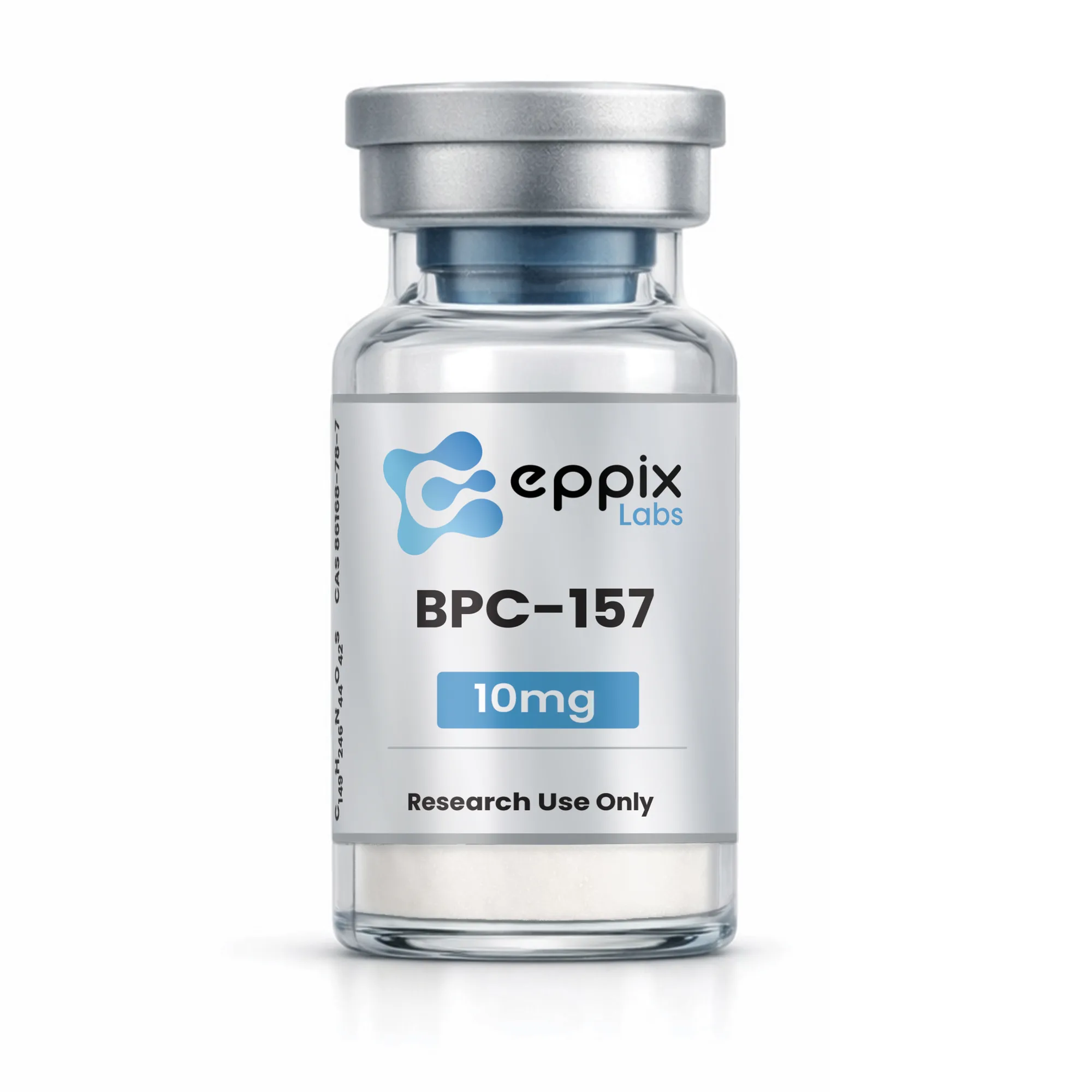
Lyophilised BPC-157, the format most published protocols use and the one currently stocked.

The verification standard does not change

A common assumption is that capsules are the less rigorous format because they look like a consumer product. That is a packaging intuition, not an analytical one. The three questions are identical in both cases: is the molecule what the label says, how pure is it, and how much of it is actually there.

Identity comes from mass spectrometry against the sequence's theoretical mass, purity from HPLC, and content from quantitative measurement. Two of the three is an incomplete certificate regardless of what the material is packed in. The mechanics are set out in how to verify a peptide COA and what HPLC testing can and cannot prove.

Every lot published here carries all three figures before the lot goes on sale, and the certificate is checkable on the testing laboratory's own database rather than only on ours. Where a capsule format is offered, it is held to the same standard, with content measured per capsule.

Published Certificate
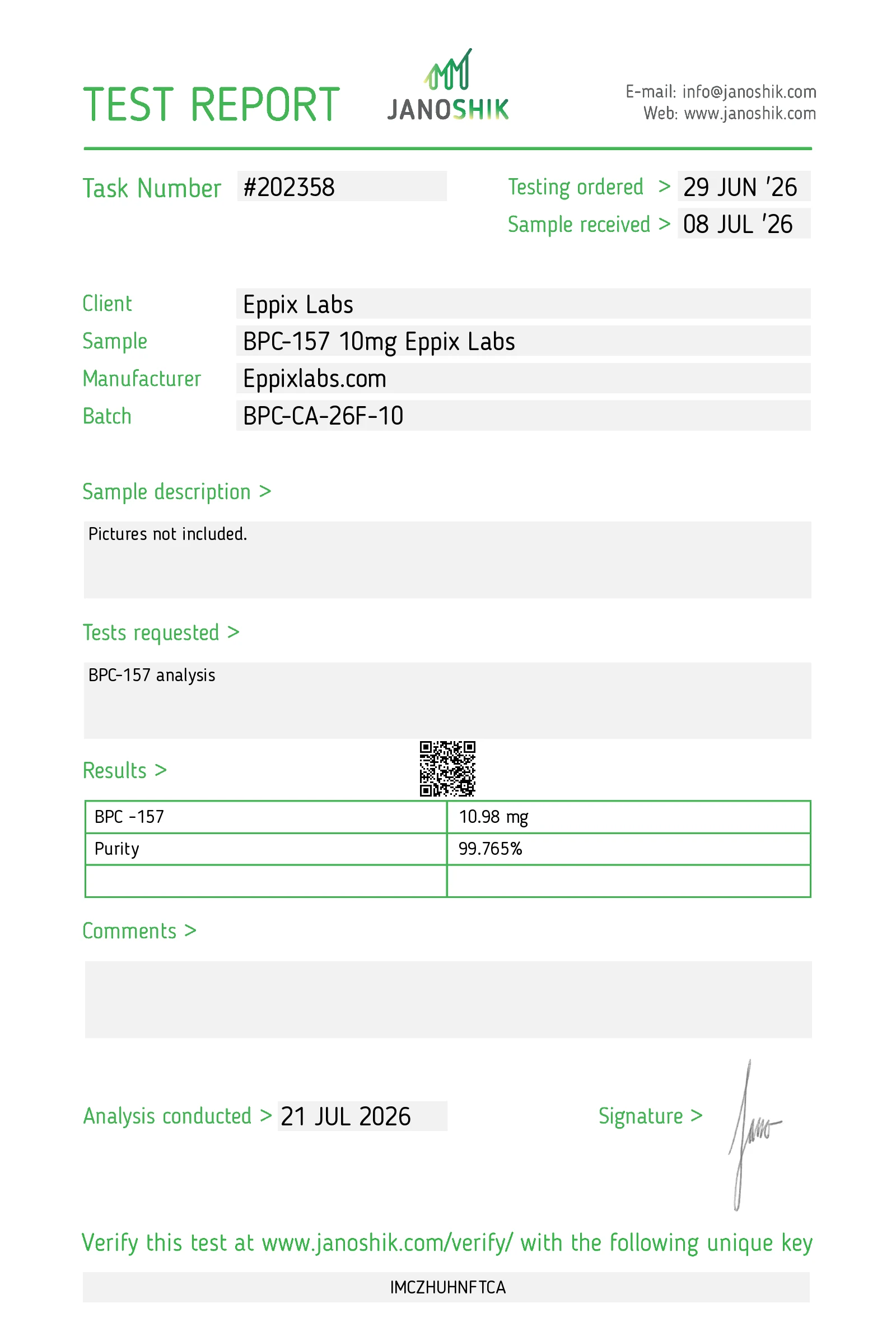
Certificate of analysis for Buy BPC-157 Canada | 10mg & 20mg Vials 10mg, batch BPC-CA-26F-10, 99.765% purity, 10.98 mg measured content

Select strength

Batch
BPC-CA-26F-10
Purity (HPLC)
99.765%
Measured content
10.98 mglabelled 10 mg
Laboratory
Janoshik
The current published BPC-157 certificate, by strength.

Which format suits which work

Vials suit anything that needs an exact concentration: in-vitro work, dose-response designs, and any protocol following a published method, since the published methods overwhelmingly use reconstituted material. Capsules suit oral-route research questions and settings where reconstitution is not practical.

Neither format is stronger than the other in any meaningful sense. They are two presentations of one molecule, and the honest selection rule is that the format should follow the protocol rather than the other way around.

Regulatory position, both formats

Format has no bearing on regulatory status. BPC-157 is not an authorised health product in Canada in any presentation: no DIN, no NPN, no Health Canada authorisation for human or veterinary use, and both formats are supplied strictly as laboratory research material.

In July 2026 the US FDA's Pharmacy Compounding Advisory Committee voted to recommend BPC-157 for the Section 503A bulk drug substances list, against FDA staff's own recommendation. That vote is non-binding, no final determination has been issued, the compound does not appear in 21 CFR 216.23, and it has no effect at all on the position in Canada.

Frequently Asked

Are BPC-157 capsules tested to the same standard as vials?

Yes. Each lot is tested for identity, purity and content before it is listed, and the certificate is published before sale. The difference is that content is measured per capsule rather than per vial, because that is the unit a researcher actually uses.

Why do capsules make sense for BPC-157 but not for most peptides?

Published work describes BPC-157 as stable in gastric-acid-like conditions, which is why oral-route research on it exists. Most peptide sequences degrade rapidly under the same conditions, so an oral format for them would not deliver the intact molecule.

Which format do published studies use?

The large majority of the preclinical literature uses reconstituted material. Oral-route studies exist specifically for this compound, but they are the smaller share of the record.

Can I verify a capsule batch the same way?

Yes, and by the same chain: the lot code on the label resolves to a published certificate, and that certificate carries a key checkable on the testing laboratory's own database.

Is one format more potent than the other?

No. Both contain the same 15-residue molecule. What differs is how much control a researcher has over concentration, and how the content figure on the certificate is expressed.

References

  1. Sikirić, P. et al. (1993). A new gastric juice peptide, BPC. An overview of the stomach-stress-organoprotection hypothesis and beneficial effects of BPC. J Physiol Paris 87(5):313-327. PMID 8298609
  2. Chang, C.H. et al. (2011). The promoting effect of pentadecapeptide BPC 157 on tendon healing involves tendon outgrowth, cell survival, and cell migration. J Appl Physiol (1985) 110(3):774-780. PMID 21030672
  3. Huang, T. et al. (2015). Body protective compound-157 enhances alkali-burn wound healing in vivo and promotes proliferation, migration, and angiogenesis in vitro. Drug Des Devel Ther 9:2485-2499. PMID 25995620
  4. US Food and Drug Administration (2026). Pharmacy Compounding Advisory Committee meeting, 23-24 July 2026: bulk drug substances nominated for inclusion on the Section 503A Bulks List. FDA Advisory Committee Calendar. Source
  5. US Food and Drug Administration (2026). FDA briefing document, Pharmacy Compounding Advisory Committee: BPC-157, KPV, TB-500, MOTS-c, Emideltide, Semax and Epitalon. Agency review recommended against inclusion for each substance. FDA. Source
  6. Office of the Federal Register (2026). 21 CFR 216.23: bulk drug substances that can be used to compound drug products under section 503A. None of the six peptides appear on the list as of publication. eCFR. Source

Research Use Only

This article summarizes published preclinical research literature. Compounds referenced are supplied by Eppix Labs strictly as research materials for laboratory investigation within Canada. They are not approved by Health Canada for human or veterinary use, and nothing on this page should be interpreted as medical advice or guidance on human or animal administration.