Same tail, different heads
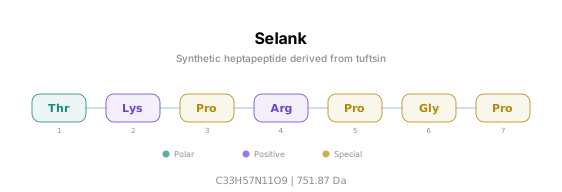
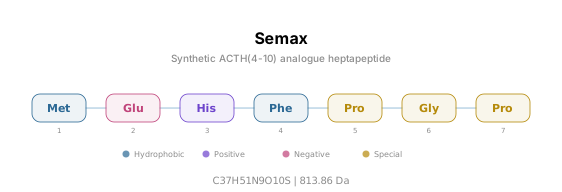
Both molecules end in Pro-Gly-Pro. That tripeptide tail is not incidental biology; it was added deliberately, because short peptides are cleaved quickly by aminopeptidases and the PGP terminus slows that down. It is the reason both compounds exist as usable research materials rather than as sequences that disappear on contact with plasma. It is also the reason the two look superficially related when they are not.
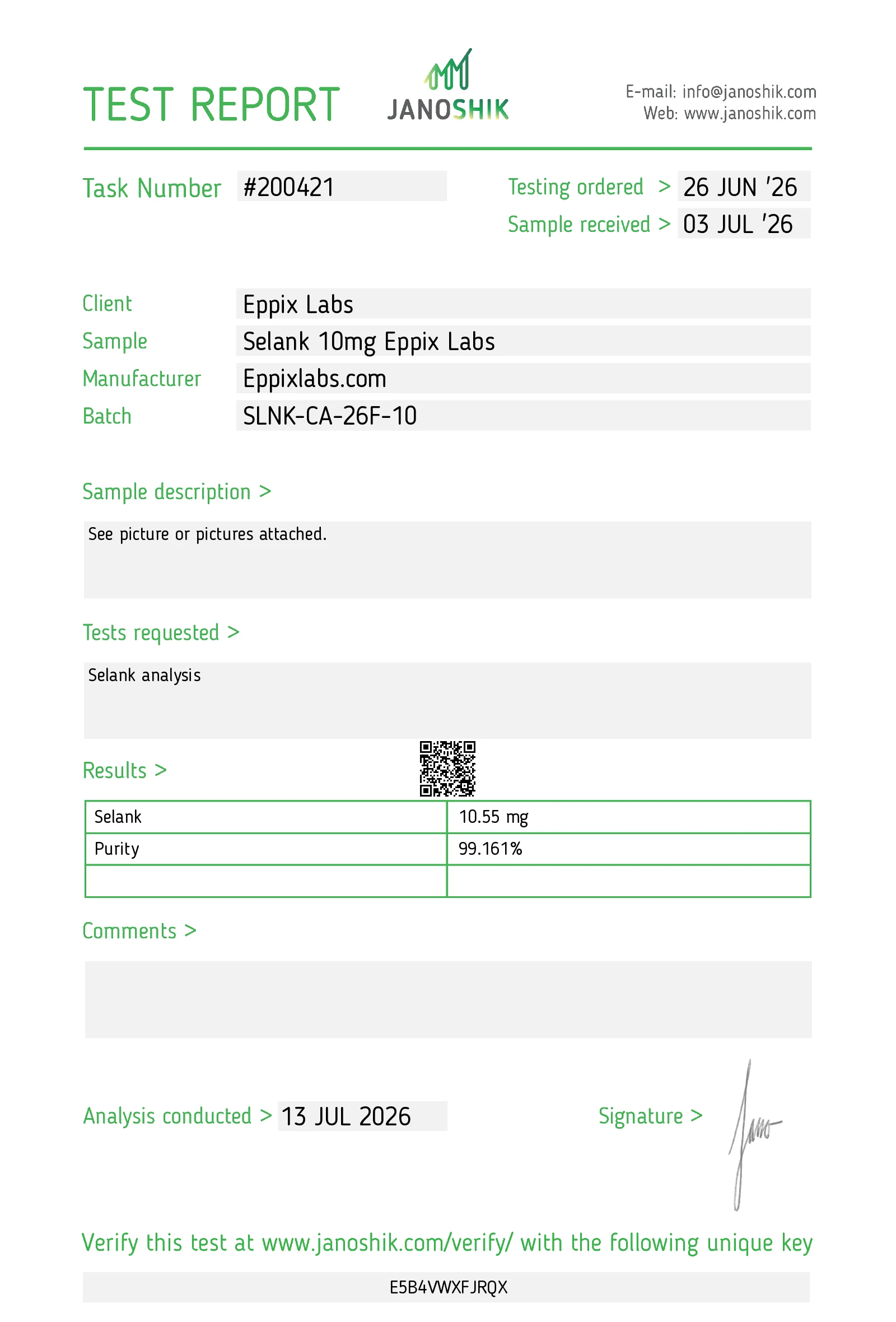
Selank is built on tuftsin, a four-residue fragment (Thr-Lys-Pro-Arg) of the heavy chain of immunoglobulin G. Its origin is therefore immunological, and a good part of the literature on it reports immune-marker and cytokine effects alongside the behavioural work.[2]
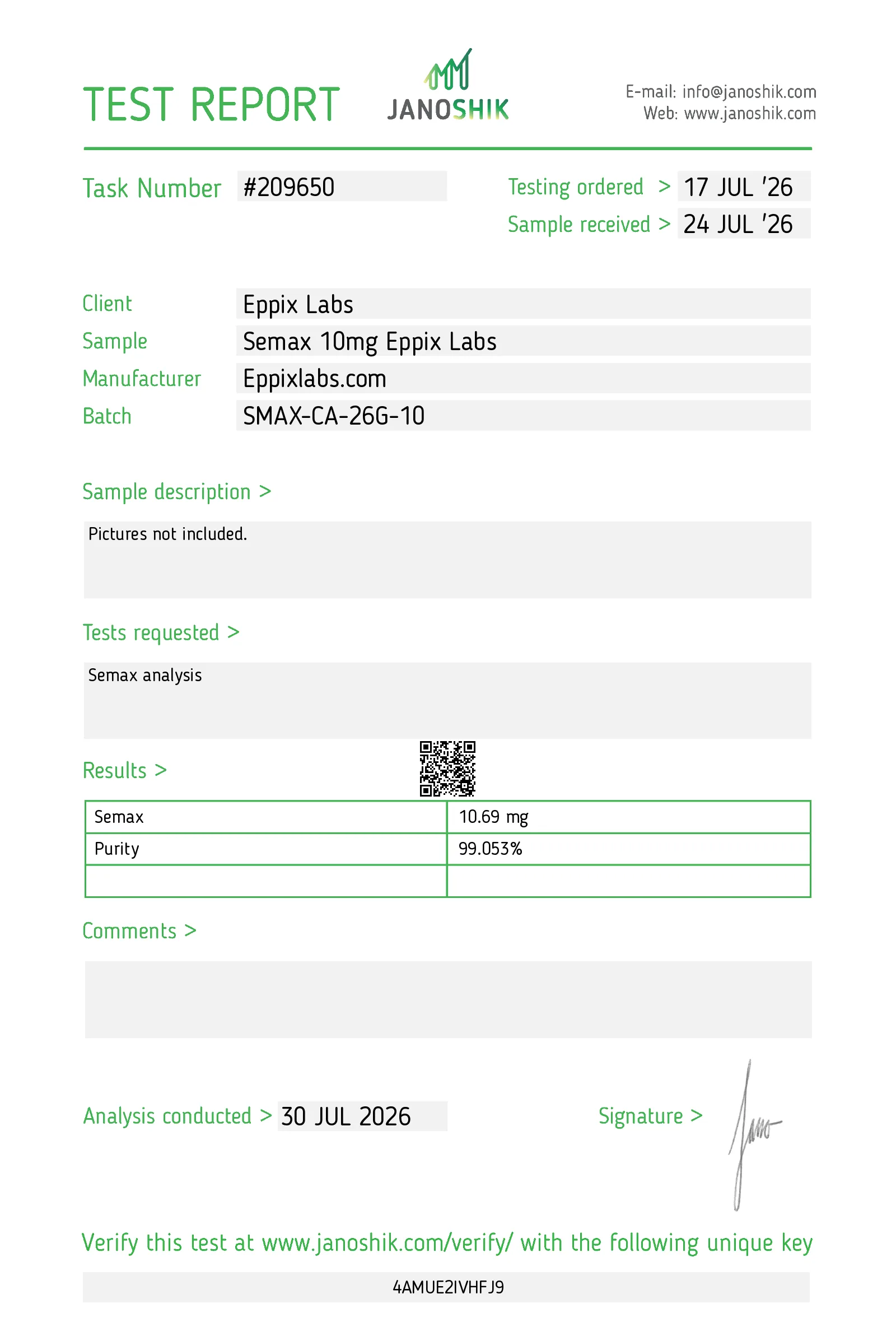
Semax is built on ACTH(4-7), a fragment of adrenocorticotropic hormone stripped of the hormone's endocrine activity. Its origin is neuroendocrine, and the published work on it centres on cognition and neuroprotection, including regulation of BDNF and its receptor in the rat hippocampus.[4]
One is an immune fragment stabilised for the brain; the other is a hormone fragment stabilised for the brain. That difference in ancestry is what shows up in what each literature measures.