The mechanism split
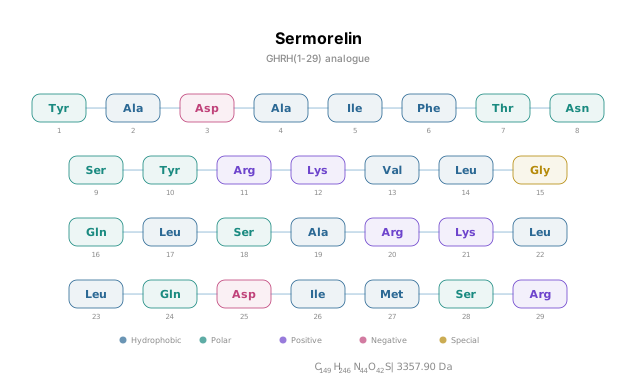
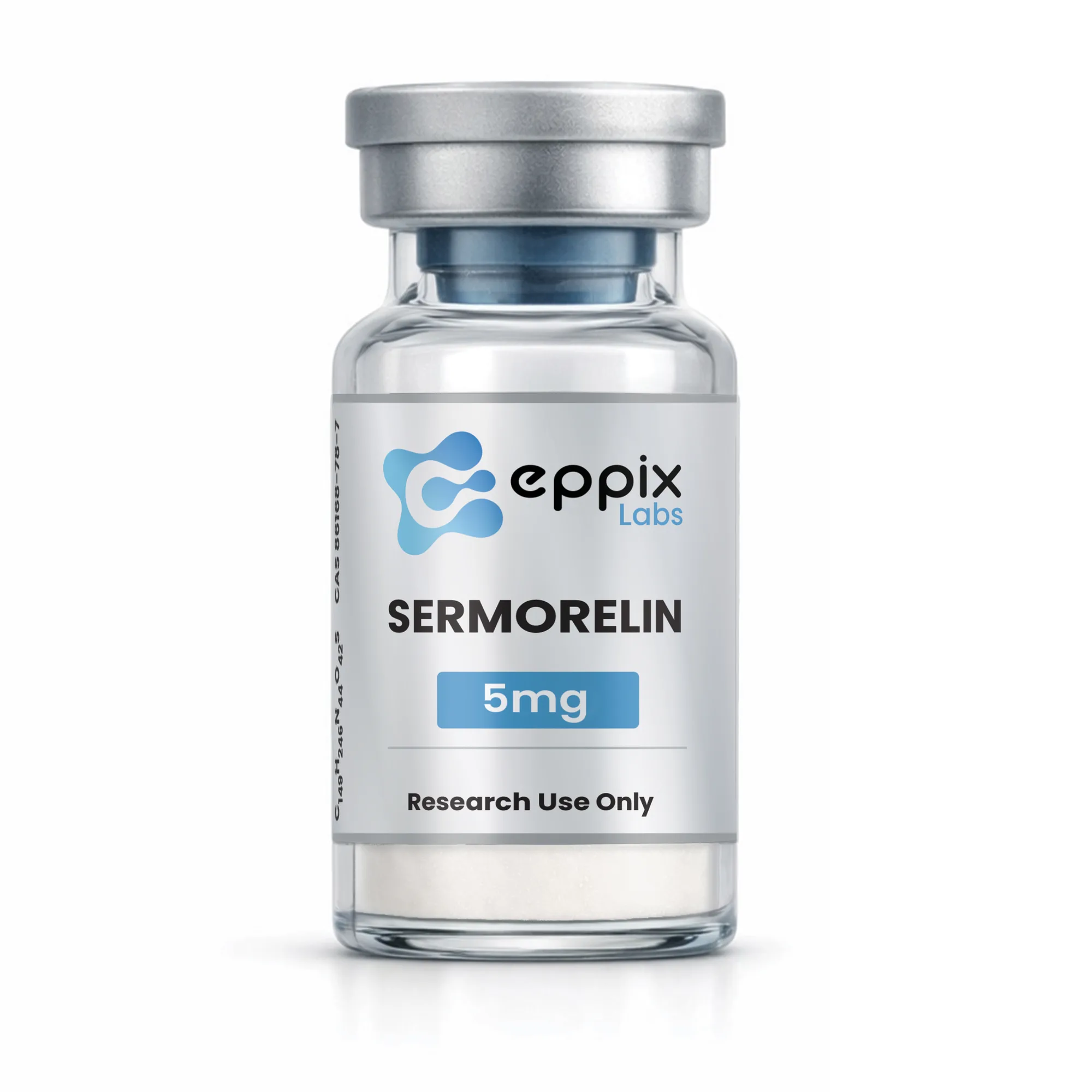
Sermorelin is GHRH(1-29), the shortest fragment of growth-hormone-releasing hormone that retains the parent hormone's activity. GHRH itself was characterised in the early 1980s from a pancreatic tumour that had caused acromegaly,[3] and sermorelin acts where the hormone does: at the GHRH receptor on the pituitary somatotroph, providing the hypothalamic release signal.
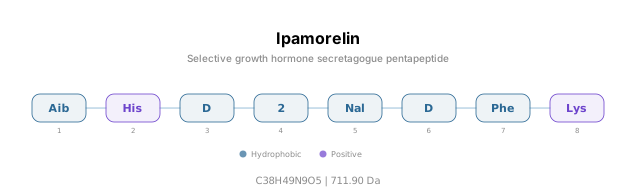
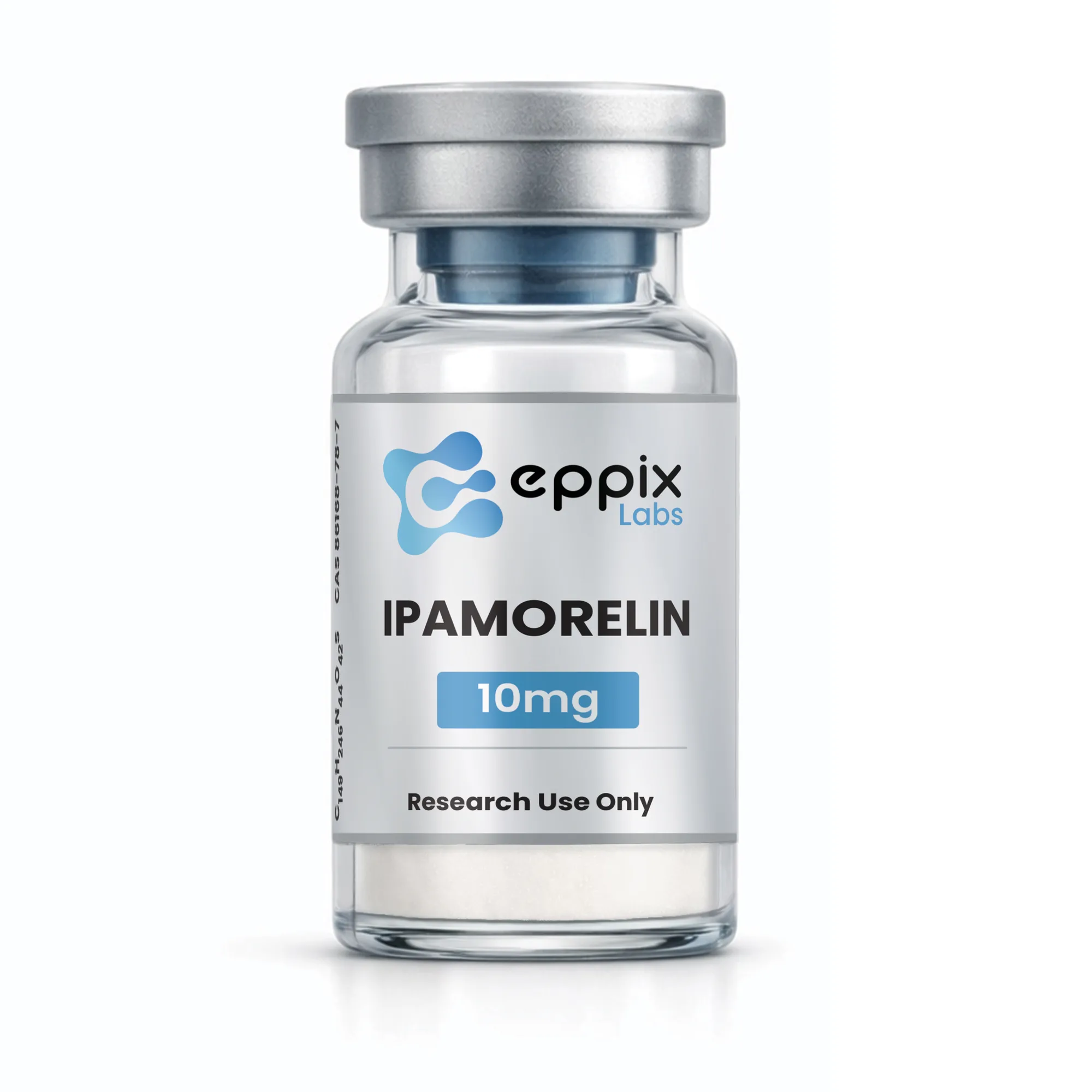
Ipamorelin is a synthetic pentapeptide, Aib-His-D-2-Nal-D-Phe-Lys-NH2, and it does not touch the GHRH receptor at all. It is an agonist at the ghrelin receptor, the growth-hormone secretagogue arm of the same axis. Its original characterisation is explicit about what made it notable: it released growth hormone with minimal effect on ACTH, cortisol and prolactin, which distinguished it from the earlier secretagogues.[1]
The two receptors are synergistic in the physiology. GHRH provides the release signal; ghrelin-receptor agonism amplifies the response to it. That is the reason axis research so often pairs a GHRH analogue with a secretagogue instead of choosing, and the reason the combined stimulation exceeds either alone in the classic studies.