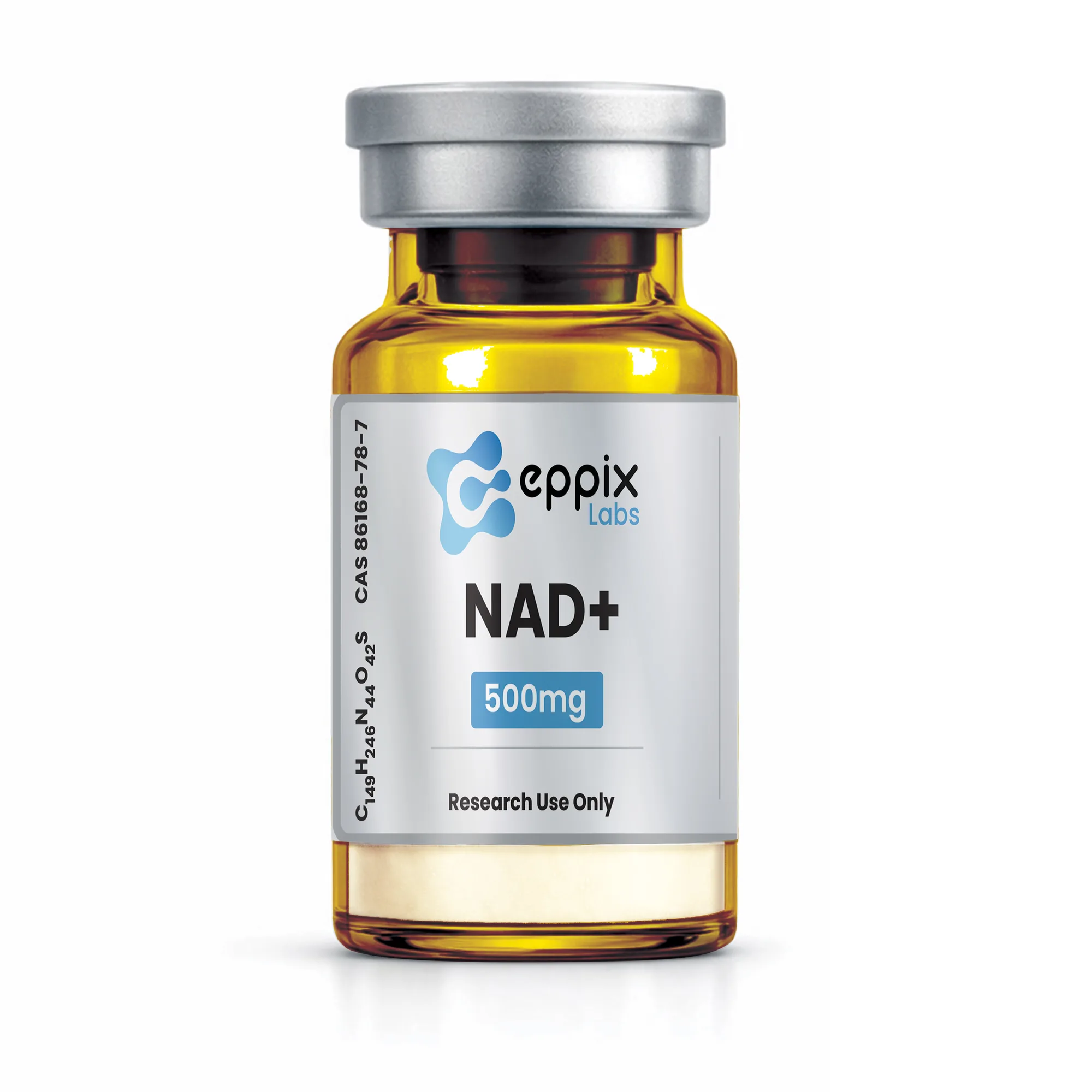
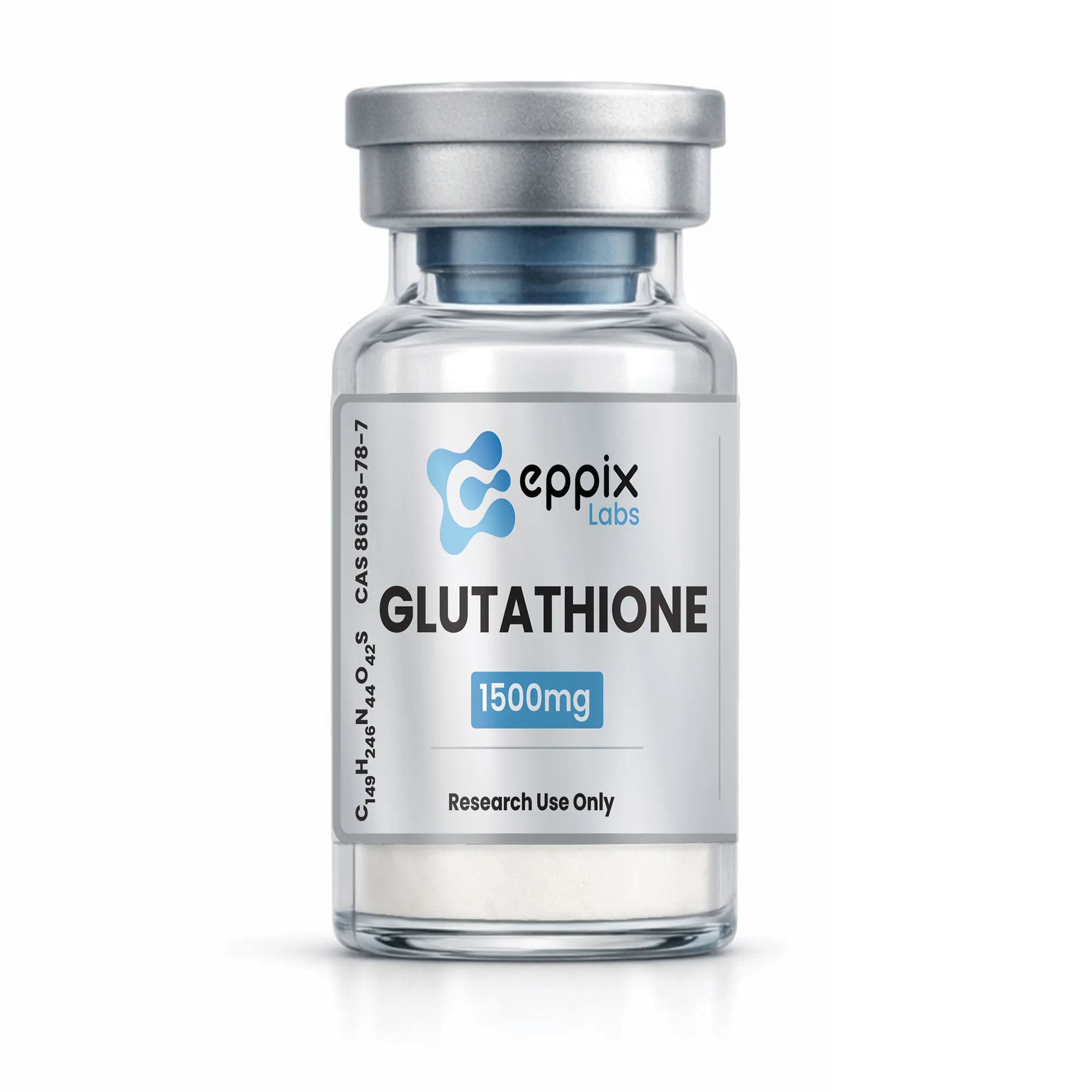
Not everything on a peptide shelf is a peptide, and this category keeps the ones that are not from being shelved as if they were. NAD+ is a dinucleotide coenzyme, studied in cellular-energetics and ageing models for its role in redox reactions and as a substrate for the sirtuins and PARPs. Glutathione is a tripeptide (γ-glutamyl-cysteinyl-glycine) — technically a peptide, but studied as the cell’s principal small-molecule antioxidant rather than as a signalling peptide, which is why it sits here with the cofactors rather than with BPC-157.
The quantities are larger than on the peptide shelf — 500 mg and 1000 mg vials of NAD+, 1500 mg of glutathione — and that changes what to read on the certificate. Purity is the usual figure; measured content is the one that matters at this scale, because a 1500 mg label that holds 1350 mg is a different product. Both are published for every lot, against the batch code on the vial.
Both compounds are sensitive to light and moisture in solution, and the product pages state the storage condition. Supplied strictly for laboratory research use, shipped within Canada.