Canada Post Xpresspost1–2 day delivery across CanadaFree on orders over $200

Regulatory

Importing Research Peptides Into Canada: The Risks Nobody Prices In

Overseas listings are sometimes cheaper on paper. The paper leaves out what the border does to gray-area compounds, and the omission is larger than the discount

·By Adam Reeves · Research Editor, Eppix Labs

The cheapest listing for most research compounds is on a site shipping from outside Canada, and the saving is real at the point of checkout. What the comparison omits is the segment of the journey where the parcel is not in anyone's control.

This page is an honest risk accounting of that segment. It is general information rather than legal advice, and the compounds concerned are laboratory research materials that are not authorised for human or veterinary use in Canada. The regulatory position itself is covered in are peptides legal in Canada.

What happens at the border

Inbound international parcels are subject to examination by the Canada Border Services Agency, which administers import requirements on behalf of Health Canada among other departments.[2] Research compounds sit in exactly the category that attracts attention: substances lawful to supply for laboratory research and unlawful to supply for human consumption, arriving in a small parcel addressed to a residence.

Three outcomes are ordinary rather than exceptional:

  • ·Delay. A flagged parcel sits in examination for days or weeks, tracking as in customs while a research timeline runs out. Nothing has gone wrong in a formal sense and there is nobody to escalate to.
  • ·Detention or seizure. Where a shipment is assessed as an unauthorised health product being imported for consumption, it can be detained or destroyed. The recipient generally receives a notice rather than a refund, and the foreign seller has the money and no obligation to return it.
  • ·Compounding scrutiny. Repeated import attempts to the same address do not become less likely to be examined over time.
The enforcement context

Health Canada has maintained an active compliance and enforcement posture toward unauthorised health products, publishing advisories and enforcement actions against sellers.[1] That does not change the legal analysis of any particular shipment, which is fact-specific, but it does bear on how much attention the category is getting.

What follows from it practically is simple: the risk on a cross-border research-compound parcel is not a tail risk being invoked to sell domestic stock. It is an ordinary operating condition of that route.

The arithmetic that actually matters

Take a 20% saving on a $200 order: $40. One seized parcel erases the savings from five such orders and leaves the research without material. One three-week examination hold can cost a protocol its schedule, which for most researchers is the more expensive loss of the two.

Expressed as an expected value, a cross-border purchase is a small certain saving against an uncertain loss that is several times larger, with no recourse in the loss case. That is the whole reason a domestic research-peptide category exists in this country, and it is a stronger argument than any quality claim.

What domestic fulfilment changes

A parcel moving inside Canada has no import step, which removes examination, detention, seizure and brokerage from the picture entirely. It also removes the part of the transaction where nobody is accountable: a domestic supplier is reachable, answerable and operating under Canadian consumer expectations.

The second gap the overseas discount leaves open is quality, and it is the one that persists even when the parcel arrives. Verification is materially harder across a border, and the market-surveillance literature on peptide products sold online without prescription has documented failures on both content and identity.[3] Domestic stock with lot-linked, externally verifiable certificates closes both gaps at once. What that fulfilment actually looks like is in how we ship peptides across Canada.

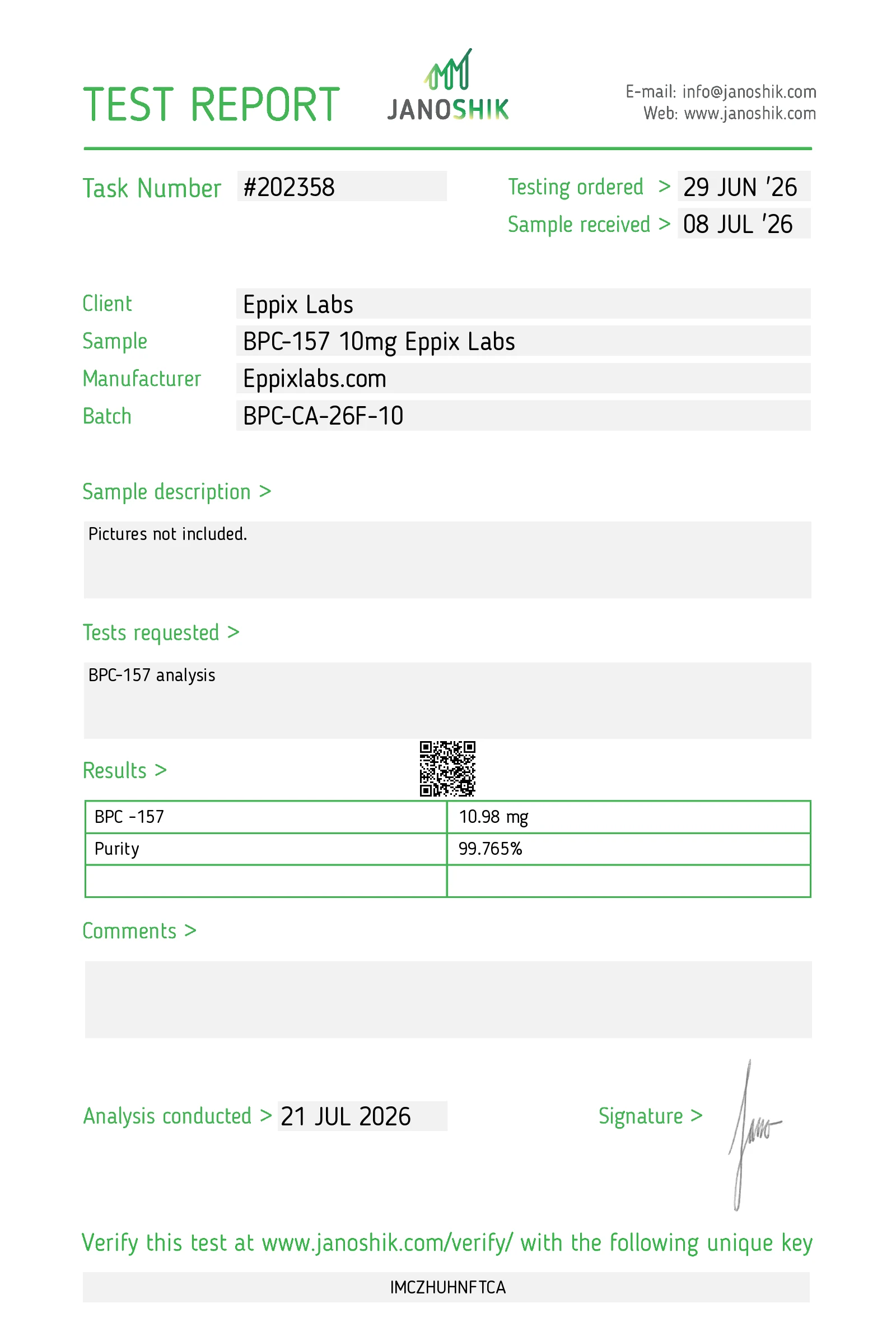
Published Certificate
Certificate of analysis for Buy BPC-157 Canada | 10mg & 20mg Vials 10mg, batch BPC-CA-26F-10, 99.765% purity, 10.98 mg measured content

Select strength

Batch
BPC-CA-26F-10
Purity (HPLC)
99.765%
Measured content
10.98 mglabelled 10 mg
Laboratory
Janoshik
The second half of the argument: a lot-linked certificate readable before purchase, which an overseas discount does not provide.

Frequently Asked

Is importing research peptides illegal?

The legal analysis is fact-specific and this is not legal advice. Practically, cross-border research-compound parcels are subject to examination and to detention or seizure risk that domestic orders never encounter.

Do overseas suppliers refund seized orders?

Policies vary and most disclaim customs risk entirely. The safe assumption is that a seized parcel is a total loss.

Are overseas peptides lower quality?

Not inherently. What is materially worse is verifiability and recourse: harder to check the material, and effectively impossible to resolve a problem afterwards.

What about ordering from the Eppix Labs US store?

Canadian buyers should order from the Canadian store. It is the same standard applied to Canadian stock, and the parcel does not cross a border.

Does a customs delay damage the material?

Lyophilised powder tolerates ambient conditions well, so a delay is usually a schedule problem rather than a stability one. The stability profile is set out in the storage guide.

References

  1. Health Canada (2026). Drug and health product compliance and enforcement: unauthorised health products and their sale in Canada. Government of Canada. Source
  2. Canada Border Services Agency (2026). Importing goods into Canada: examination, prohibited and controlled goods. Government of Canada. Source
  3. Ashraf, A.R., Mackey, T.K., Vida, R.G. et al. (2024). Multifactor quality and safety analysis of semaglutide products sold by online sellers without a prescription: market surveillance, content analysis, and product purchase evaluation study. J Med Internet Res 26:e65440. PMID 39509151

Research Use Only

This article summarizes published preclinical research literature. Compounds referenced are supplied by Eppix Labs strictly as research materials for laboratory investigation within Canada. They are not approved by Health Canada for human or veterinary use, and nothing on this page should be interpreted as medical advice or guidance on human or animal administration.