Canada Post Xpresspost1–2 day delivery across CanadaFree on orders over $200

Verification

Underfilled Vials: The Market's Quietest Fraud

Adulterated peptides make headlines. Underfilled ones make margins. Selling six milligrams in a ten-milligram vial is invisible to the eye, invisible to purity testing, and across thousands of vials the most profitable dishonesty available

·By Adam Reeves · Research Editor, Eppix Labs

The frauds this market talks about are the dramatic ones: the wrong compound, the contaminated batch, the forged document. The one that actually happens at scale is duller and better hidden, because it requires no substitution, no contamination and no forgery. It requires putting less in the vial.

This page covers why purity testing cannot see it, why the economics favour it, and the single number that catches it.

Why purity testing cannot see it

HPLC purity is a ratio: what fraction of the peptide content in the sample is the target compound. It is computed from peak areas within one injection, and it carries no information about how much material the vial held before the sample was drawn.

So a vial labelled 10 mg that actually holds 6 mg of 99.5% pure peptide reports 99.5%. Not approximately, not with a caveat: exactly the same number a correctly filled vial of the same lot would report, because 99.5% of 6 mg and 99.5% of 10 mg are both 99.5%. The purity figure is mathematically blind to quantity.

That blindness is not a flaw in the method. It is what the method is for. The problem is a market trained to ask about purity and nothing else, which makes the blind spot a business opportunity. The general form of the argument is in purity vs fill accuracy, and the method's own limits in what is HPLC testing.
The economics of the short fill

In a vial of research peptide, the peptide is the cost. Glass, stoppers, labels, cartons and shipping are pennies against it, and they do not scale with how much powder went in.

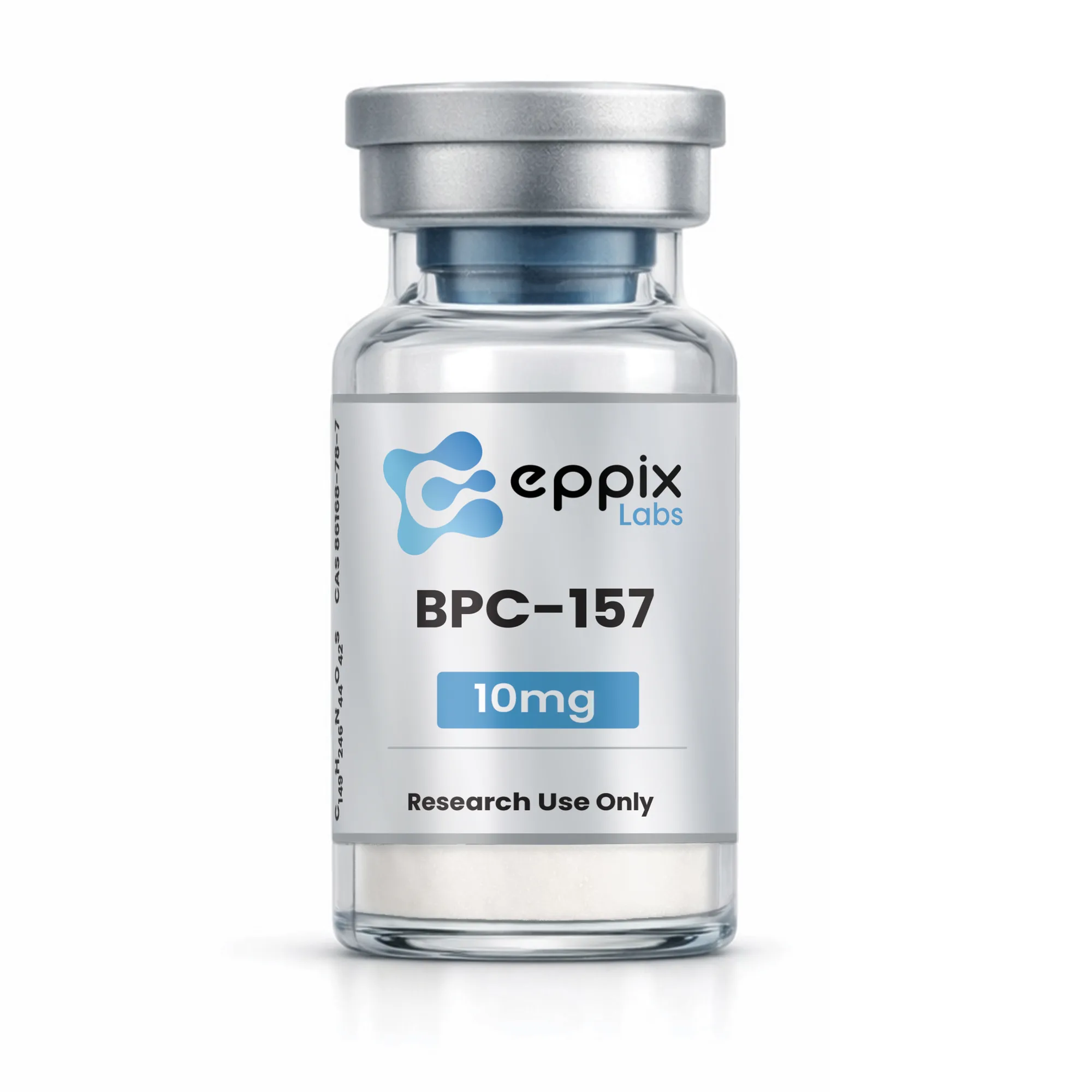
A supplier filling at 60 to 70% of label claim therefore cuts its largest input cost by roughly a third with no visible change to the product, the paperwork or the customer experience. Nothing about the vial looks different. The lyophilised cake in a 10 mg vial and a 6 mg vial are both small white deposits whose apparent volume depends more on the freeze-drying cycle than on the mass.

What the researcher observes downstream is that results came out weaker than the literature suggested, and the natural inference is that the compound underperformed. The fraud is self-concealing: its symptom looks like a finding.

This is not hypothetical. Market-surveillance work on peptide products sold online without prescription has documented products failing on content against label claim, alongside identity and safety failures.[1]

The number that catches it

Measured mass: quantitative analysis reporting the actual milligrams in the vial, published against the labelled amount. On a complete certificate it sits beside purity, and it is the only figure on the document that answers the question "how much did I get".

A useful thing to know about the honest pattern: careful suppliers tend to fill slightly over label, because filling exactly to claim means half the vials come in under it once ordinary process variation is accounted for. Seeing a measured content a little above 100% of label on a certificate is therefore a good sign rather than a discrepancy. What is not a good sign is a certificate that reports purity and says nothing at all about mass.

Every lot published here reports both figures before the lot goes on sale, each against a named lot and a named laboratory, and each verifiable on that laboratory's own database.

Published Certificate
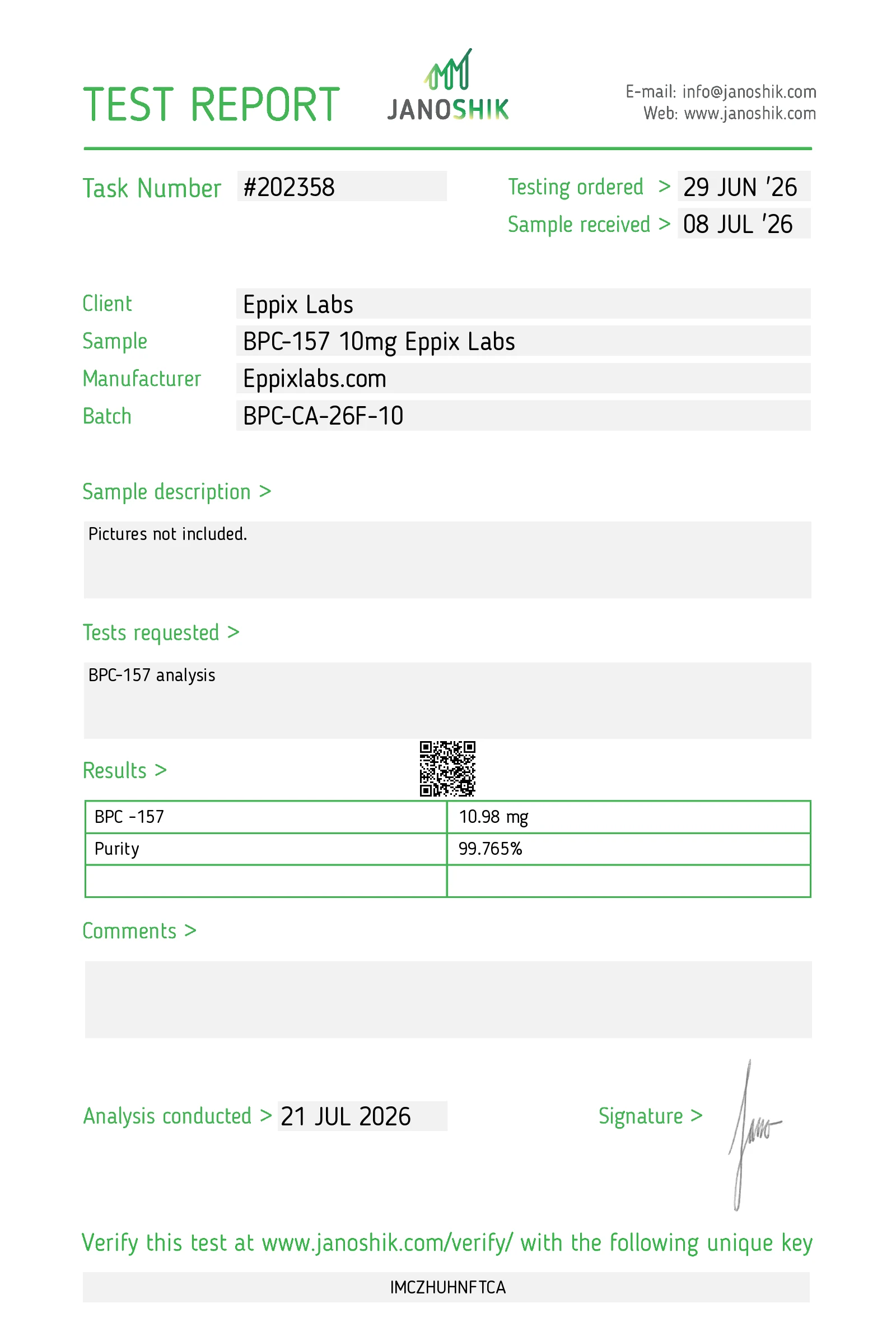
Certificate of analysis for Buy BPC-157 Canada | 10mg & 20mg Vials 10mg, batch BPC-CA-26F-10, 99.765% purity, 10.98 mg measured content

Select strength

Batch
BPC-CA-26F-10
Purity (HPLC)
99.765%
Measured content
10.98 mglabelled 10 mg
Laboratory
Janoshik
A current published certificate. Measured content against label sits beside the purity figure rather than in place of it.

Checking any supplier in one minute

  • ·Open the certificate for the lot you would actually receive, not a representative one and not a product-level document.
  • ·Look for a milligram figure describing content. If the certificate reports only a percentage, it has answered one of three questions.
  • ·Compare that figure against the labelled amount. It should be at or slightly above label.
  • ·Then confirm the certificate exists at the testing laboratory rather than only on the supplier's site. The chain is set out in how to verify a peptide COA.

Why the number is so often missing

Quantitative content analysis costs more than a purity run, and it makes a shortfall provable in a way a percentage never can. A supplier that fills honestly has an incentive to publish the number; a supplier that does not has an incentive to omit it and to describe itself as "third-party tested" instead.

That is why the omission is more informative than most of what a listing does say. A missing measured-mass figure is not an oversight in a document that took the trouble to include a purity figure.

Frequently Asked

Can I detect underfilling visually?

No. Lyophilised cakes vary in appearance and apparent volume depending on the freeze-drying cycle, so 6 mg and 10 mg can look identical. Only quantitative measurement settles it.

Is slight overfill normal?

Yes, and it is the honest pattern. Filling exactly to label means ordinary process variation puts half the vials under it, so careful suppliers target slightly above. Modest overfill on a certificate is a good sign.

Why do so few suppliers publish measured content?

Because filling honestly costs money and testing makes any shortfall provable. The omission is the tell, particularly on a certificate that found room for a purity figure.

What is an acceptable fill range?

The research convention is within a few percent of label and not under it. What matters as much as the range is that the certificate publishes the number rather than implying it.

Does a high purity figure make underfilling less likely?

No. The two are independent. A supplier can purify carefully and fill dishonestly, and the purity figure will look excellent either way.

References

  1. Ashraf, A.R., Mackey, T.K., Vida, R.G. et al. (2024). Multifactor quality and safety analysis of semaglutide products sold by online sellers without a prescription: market surveillance, content analysis, and product purchase evaluation study. J Med Internet Res 26:e65440. PMID 39509151
  2. Farid, N.A., Atkins, L.M., Becker, G.W. (1989). Liquid chromatographic control of the identity, purity and "potency" of biomolecules used as drugs. J Pharm Biomed Anal 7(2):185-188. PMID 2488619

Research Use Only

This article summarizes published preclinical research literature. Compounds referenced are supplied by Eppix Labs strictly as research materials for laboratory investigation within Canada. They are not approved by Health Canada for human or veterinary use, and nothing on this page should be interpreted as medical advice or guidance on human or animal administration.