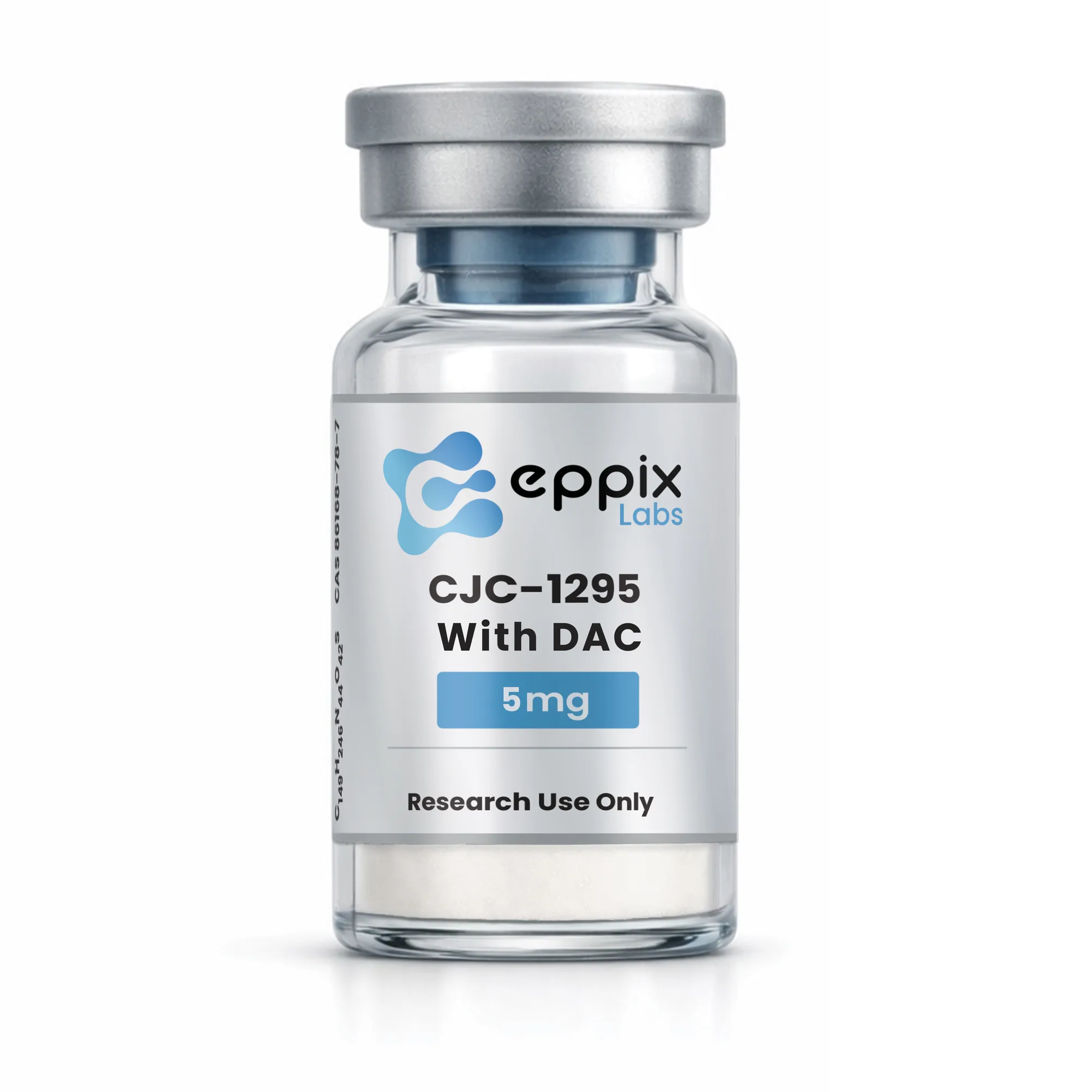
Also known as CJC-1295 DAC / hGRF(1-29) bioconjugate
CJC-1295 with DAC is a synthetic analogue of growth-hormone-releasing hormone (GHRH 1-29) bearing a Drug Affinity Complex that extends its half-life, studied in research on the GH/IGF-1 axis.
$44.95CAD
Mix & Match
1 vial — no vial discount yet.
Add 2 more vials for 5% off vials.
After that, 10% at 5 vials, 20% at 10 vials.
Purity VerifiedLab TestedSecure
Research Use Only
This product is intended strictly for laboratory research use within Canada. It is not approved by Health Canada for the diagnosis, treatment, cure, or prevention of any disease. Not for human or veterinary use.
By purchasing, you confirm the material will be used solely for lawful research purposes in accordance with applicable Canadian regulations.
CJC-1295 with DAC is a synthetic analogue of growth-hormone-releasing hormone (GHRH 1-29) bearing a Drug Affinity Complex that extends its half-life, studied in research on the GH/IGF-1 axis.
Experimental models examine prolonged GHRH-receptor stimulation and downstream secretory dynamics.
Purity
Third-party tested for purity, ID, quantity.
Coming Soon
The certificate of analysis for the 5mg lot is being finalised and will be published here as soon as the lab returns it.
CJC-1295 with DAC couples a tetrasubstituted GHRH(1-29) analogue to a maleimide group that binds serum albumin, markedly prolonging its circulating half-life. Research has examined sustained stimulation of growth-hormone and IGF-1 secretion in controlled studies.
Investigations evaluate the kinetics of GH release and IGF-1 elevation under structured experimental conditions.
History
CJC-1295 was developed from research into albumin-binding bioconjugates designed to extend the activity of short-lived GHRH peptides.
Early clinical pharmacology characterized its prolonged stimulation of the GH/IGF-1 axis, distinguishing the DAC-bearing form from shorter-acting analogues.
Key Research Areas
Research into CJC-1295 with DAC focuses on GHRH-receptor signaling and GH/IGF-1 axis kinetics. Frameworks evaluate albumin-binding half-life extension and secretory dynamics under controlled clinical and preclinical conditions.
1 of the 4 areas below are addressed directly by a paper cited on this page.
GHRH-receptor activation models
Addressed on this page by Alba 2006. Each is linked to its source record in the references below, so what was measured — and in what system — can be read rather than taken on trust.
Alba, M. et al. (2006) — Once-daily administration of CJC-1295, a long-acting growth hormone-releasing hormone (GHRH) analog, normalizes growth in the GHRH knockout mouse
GH/IGF-1 axis kinetics research
No paper cited on this page reports on axis or kinetics. This heading marks where CJC-1295 (With DAC) is discussed in the category rather than a question the cited literature answers, and it is worth knowing which of these areas has work behind it and which does not.
Albumin-binding half-life extension studies
No paper cited on this page reports on albumin, binding or half. This heading marks where CJC-1295 (With DAC) is discussed in the category rather than a question the cited literature answers, and it is worth knowing which of these areas has work behind it and which does not.
Secretory-dynamics endpoint investigations
No paper cited on this page reports on secretory, dynamics or endpoint. This heading marks where CJC-1295 (With DAC) is discussed in the category rather than a question the cited literature answers, and it is worth knowing which of these areas has work behind it and which does not.
The references section of this page cites 3 primary papers published in 2006 — a thin record. Every citation is linked to its PubMed or DOI record so it can be read rather than taken on trust, and the summaries above describe what those papers report rather than what the compound is claimed to do.
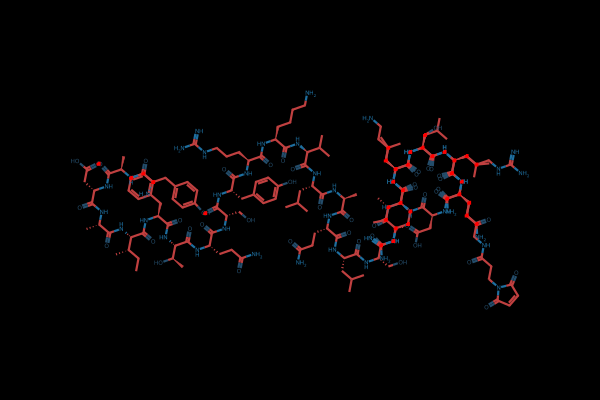
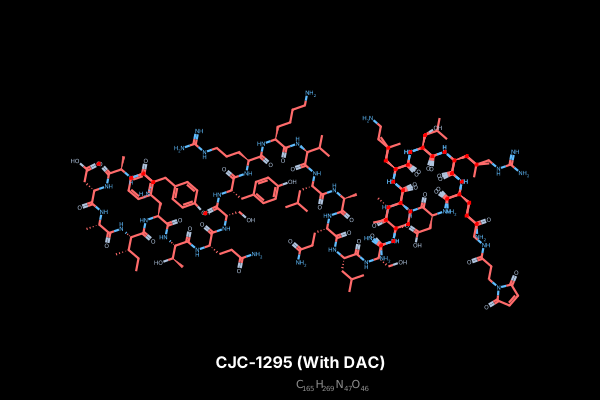
CJC-1295 (With DAC) is frequently listed as a peptide by suppliers in this market. It is not one. The structure published on this page is the compound's actual chemistry, and research on it should be read against its own class rather than against peptide literature.
Research compounds attract claims that outrun their evidence. Below are the ones most often encountered for CJC-1295 (With DAC), set against what the papers cited on this page actually report. Where the record is thin or contested, that is stated rather than smoothed over.
Also called
CJC-1295 (With DAC) is also referred to as CJC DAC, and technically as CJC-1295 DAC / hGRF(1-29) bioconjugate.
Preclinical only
CJC-1295 (With DAC) is commonly described online in connection with muscle growth, fat loss and improved recovery. In the research literature the same compound is filed under GHRH-receptor activation models, GH/IGF-1 axis kinetics research and albumin-binding half-life extension studies.
The 3 papers cited on this page, published between 2006 and 2006 (1 in animal models) describe laboratory and animal work. None reports a controlled trial in humans. Findings in cell culture or in a rodent model describe what happened in that system; they do not establish that the same occurs in humans, and this compound is not approved for human use.
Nothing above is a statement of what this material does. It is a summary of what has been published and what has not. Eppix Labs supplies research materials only and provides no dosing, administration or protocol guidance.
Every lot of CJC-1295 (With DAC) is independently assayed before it is released, and the certificate for the lot shipped is published rather than summarised. Where a certificate for a current lot is not yet posted, the lot has not yet been released against it.
Researchers who buy CJC-1295 (With DAC) in Canada through Eppix Labs receive a batch-labelled vial whose certificate is published against that lot code, so the material can be matched to its analysis rather than to a generic specification.
−20 °C long-term; stable at room temperature in transit
After reconstitution
2–8 °C
Light
Protect from UV and direct light
Freeze-thaw
Avoid repeated cycles
Vehicle
Solvent selection depends on the compound; consult the published literature
Format
Lyophilized powder
CJC-1295 (With DAC) is supplied as lyophilized powder. It is not a peptide, and solvent behaviour follows from its own chemistry rather than from the aqueous-vehicle conventions that apply to peptide material — the published literature for this compound is the reference for solvent selection, not a general peptide protocol.
Dry storage below freezing and protection from light are the general controls. As with any lyophilized material, the powder frequently sits as a thin film at the base of the vial and is easy to mistake for an empty vial before inspection.
Vials may appear empty on arrival. Lyophilized material collects at the base of the vial and is often not visible until the vial is inspected under direct light.
1 × sealed glass vial in the strength selected (5mg / Single Vial, 5mg / 5-Pack, 5mg / 10-Pack available), batch-labelled
Batch documentation for the lot shipped, once its certificate is published
Discreet outer packaging with no product names on the exterior
Canada Post Xpresspost, tracked, typically 1–2 business days from Canadian stock
Not included
Bacteriostatic water or any other reconstitution vehicle
Syringes, needles or filters
Dosing, administration or protocol guidance of any kind
Reconstitution materials are sourced separately. The reconstitution calculator on this site works out concentrations for a given volume, but it is an arithmetic tool for laboratory record-keeping and not a protocol.
No. Eppix Labs products are supplied exclusively for laboratory research. We do not provide dosing, administration, or usage guidance.
Each unit contains the labeled quantity of cjc 1295 with dac. Independent third-party analysis verifies purity, identity, and net content per batch.
The unit contains only the research compound. Any laboratory materials required for reconstitution or experimental procedures must be sourced separately.
Duration depends entirely on research design, storage conditions, and laboratory protocol.
Teichman, SL. et al.(2006)
Prolonged stimulation of growth hormone (GH) and insulin-like growth factor I secretion by CJC-1295, a long-acting analog of GH-releasing hormone, in healthy adults
Triple GIP / GLP-1 / Glucagon Agonist · 10, 20, 40 & 120 mg
Retatrutide is a synthetic peptide developed for controlled laboratory research involving multi-receptor signaling systems. It is structurally designed to interact with GLP-1, GIP, and glucagon receptor pathways within experimental environments.
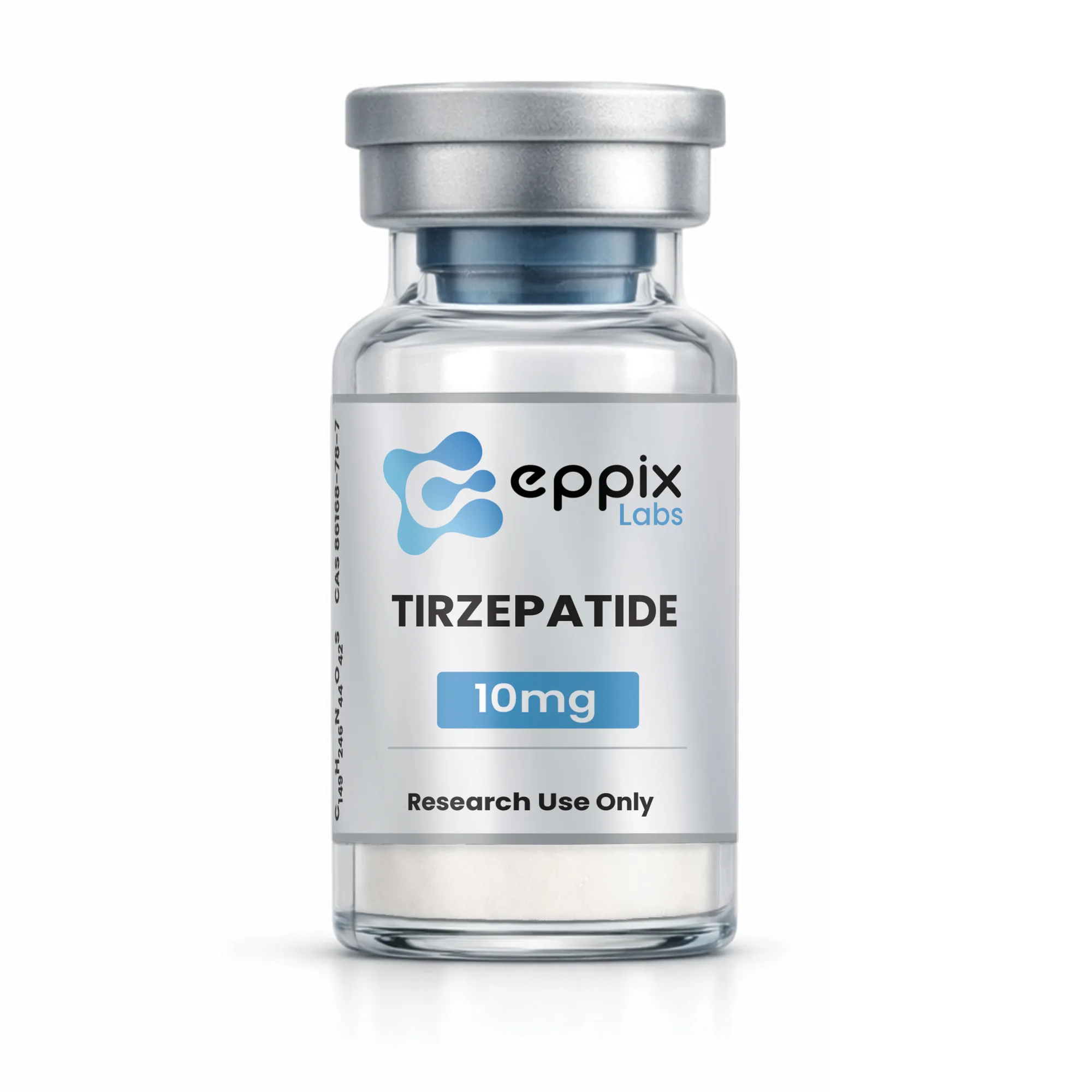
Dual GIP / GLP-1 Agonist · 10, 30 & 65 mg
Tirzepatide is a synthetic peptide developed for controlled laboratory research involving dual incretin receptor signaling systems. It is structurally designed to interact with GLP-1 and GIP receptor pathways within experimental environments.
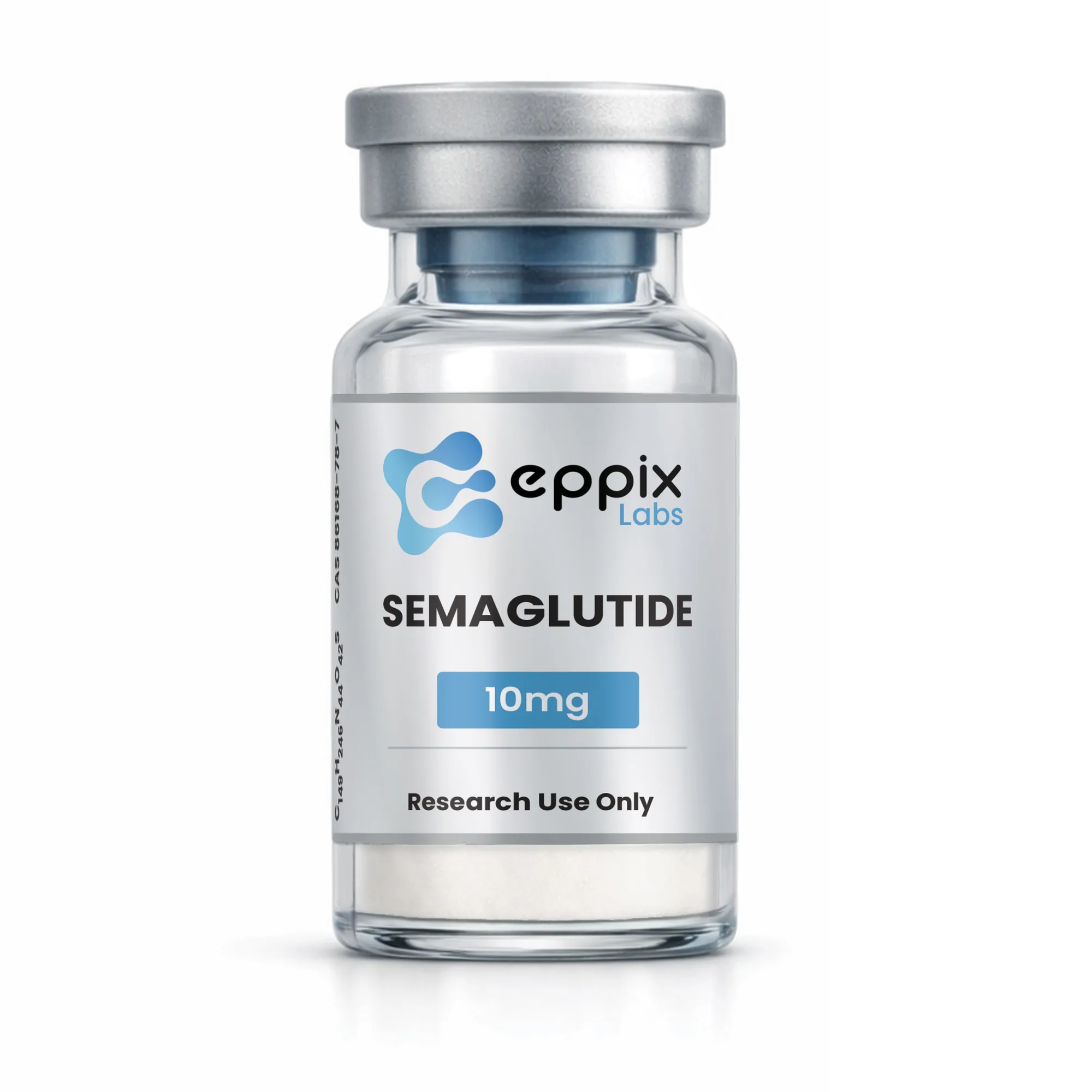
GLP-1 Receptor Agonist · 10 mg
Semaglutide is a synthetic analogue of glucagon-like peptide-1 (GLP-1), a naturally occurring incretin hormone involved in glucose-dependent signaling. It is developed for controlled laboratory investigation within regulated experimental environments.
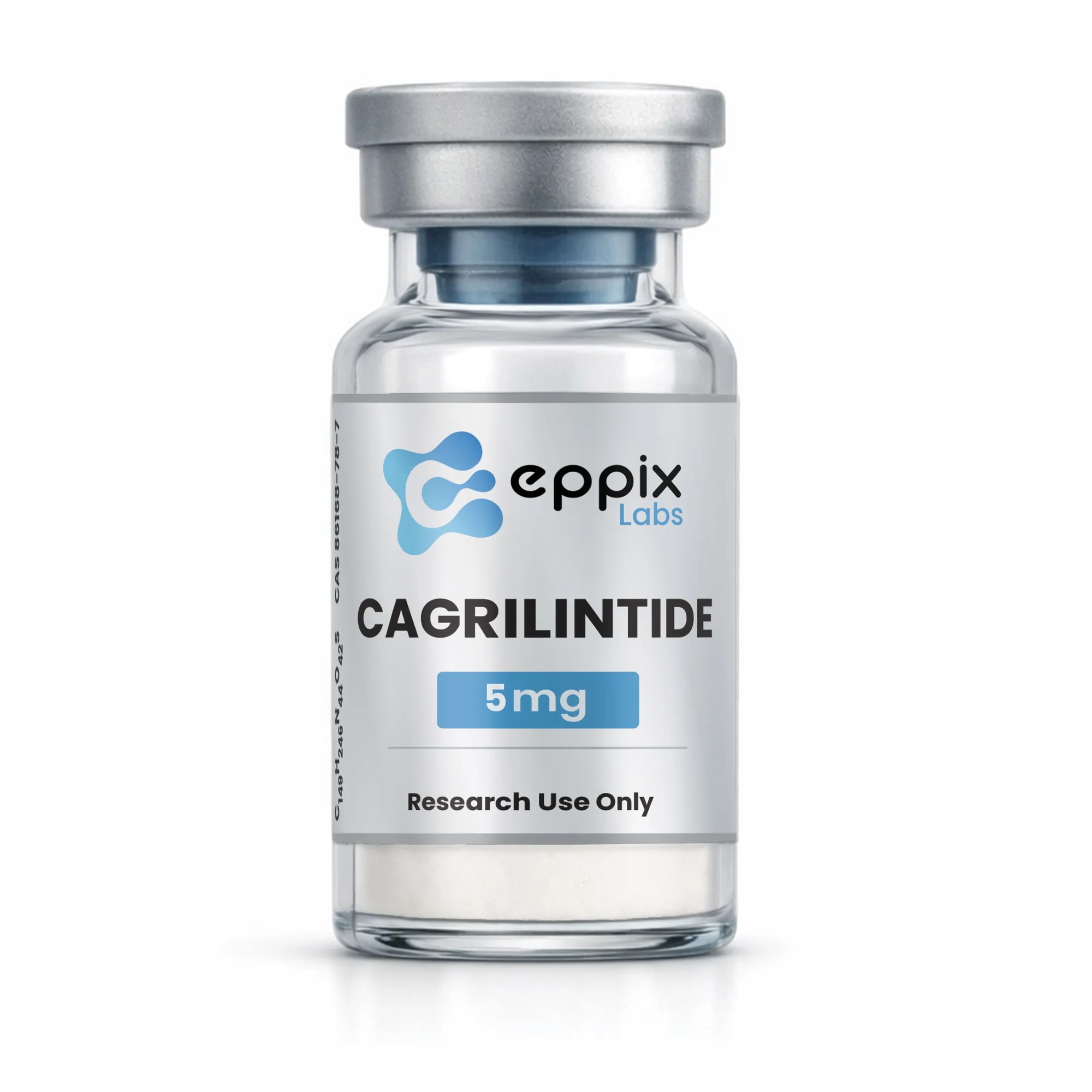
Long-Acting Amylin Analogue · 5 & 10 mg
Cagrilintide is a synthetic peptide developed for controlled laboratory research involving amylin receptor signaling systems. It is structurally designed to interact with amylin-associated pathways within experimental environments.
Have questions about batch verification, documentation, or research specifications? Our team is available to assist with product and compliance inquiries.