Research Use OnlyAll materials supplied for laboratory research within Canada
Form
Oral capsule
Storage
Cool, dry, away from direct light
Low on StockCapsule
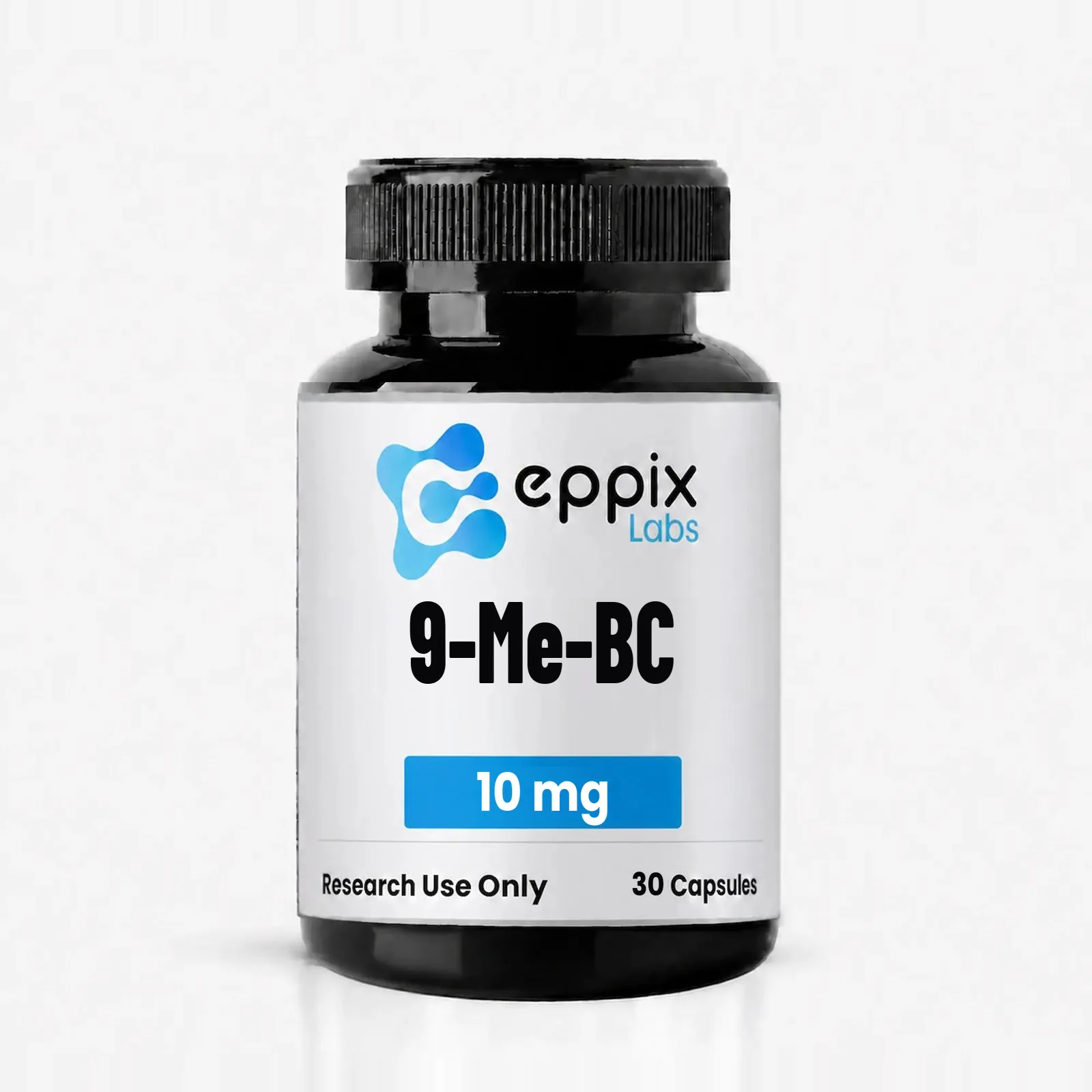
9-Me-BC Capsules
9-Me-BC Capsules Canada — Capsules
Methylated Beta-Carboline Alkaloid
9-Me-BC is 9-methyl-beta-carboline, a small methylated member of the beta-carboline class of heterocyclic compounds. It is supplied for laboratory research and has been examined in cell culture and rodent research models.
$17.47$24.95Eppix Flash Sale −30%CAD
⚡ Flash sale −30%Ends in 00:00:00Applied automatically at checkout
Purity VerifiedLab TestedSecure
Research Use Only
This product is intended strictly for laboratory research use within Canada. It is not approved by Health Canada for the diagnosis, treatment, cure, or prevention of any disease. Not for human or veterinary use.
By purchasing, you confirm the material will be used solely for lawful research purposes in accordance with applicable Canadian regulations.
9-Me-BC is 9-methyl-beta-carboline, a small methylated member of the beta-carboline class of heterocyclic compounds. It is supplied for laboratory research and has been examined in cell culture and rodent research models.
In scientific literature, 9-Me-BC appears in studies of dopaminergic cell systems, monoamine oxidase activity, and the expression of neurotrophic factors in glial cultures. The published record is limited to a small number of preclinical reports.
Purity
Third-party tested for purity, ID, quantity.
Coming Soon
The certificate of analysis for this lot is being finalised and will be published here as soon as the lab returns it.
Compound Properties
Overview
9-Me-BC has been characterised in vitro as an inhibitor of monoamine oxidase activity and as a stimulus for neurotrophic factor expression in astrocyte cultures, with those two observations reported together as possible contributors to its activity in dopaminergic systems. Work in primary mesencephalic culture examined changes in the number of cells displaying differentiated dopaminergic markers following exposure, and additional culture work described effects framed by the authors as stimulatory, protective, regenerative, and anti-inflammatory within those specific model systems.
Rodent work has examined hippocampal dopamine content alongside measures of dendritic and synaptic density, reported in association with performance changes in cognitive testing paradigms. The endpoints evaluated across the available literature are narrow: monoamine oxidase enzyme activity, neurotrophic and inflammatory gene and protein expression, dopaminergic marker expression in culture, tissue monoamine levels, and histological measures of dendritic and synaptic structure. No clinical research record for this compound was identified among the available references.
History
Beta-carbolines are a broad class of compounds that occur endogenously and in plant material, and they have long been studied in the context of monoamine metabolism. 9-Me-BC entered the research literature through work on this class in dopaminergic culture systems, where the methylated derivative was reported to behave differently from related beta-carbolines. The specific circumstances of its first synthesis are not well documented in the available references.
The research record developed through a short sequence of preclinical reports: first in primary mesencephalic culture examining dopaminergic marker expression, then in broader culture work describing effects on dopaminergic neurons and inflammatory readouts, then in rodent models combining monoamine measurement with structural histology, and later in work addressing monoamine oxidase inhibition and astrocyte-derived neurotrophic factor expression as candidate mechanisms. The literature remains small and preclinical.
Key Research Areas
9-Me-BC appears primarily in dopaminergic neurobiology research frameworks. Published investigations have used primary mesencephalic cultures to examine dopaminergic marker expression, astrocyte cultures to examine neurotrophic factor and inflammatory signalling, enzyme assays addressing monoamine oxidase activity, and rodent models pairing hippocampal monoamine measurement with dendritic and synaptic histology. All available work is preclinical and the total number of published reports is small.
5 of the 5 areas below are addressed directly by a paper cited on this page.
Dopaminergic neuron culture models
Addressed on this page by Hamann 2008, Polanski 2010. Each is linked to its source record in the references below, so what was measured — and in what system — can be read rather than taken on trust.
Hamann, J. et al. (2008) — 9-Methyl-beta-carboline up-regulates the appearance of differentiated dopaminergic neurones in primary mesencephalic culture
Polanski, W. et al. (2010) — The exceptional properties of 9-methyl-beta-carboline: stimulation, protection and regeneration of dopaminergic neurons coupled with anti-inflammatory effects
Monoamine oxidase enzyme activity assays
Addressed on this page by Keller 2020. Each is linked to its source record in the references below, so what was measured — and in what system — can be read rather than taken on trust.
Keller, S. et al. (2020) — 9-Methyl-β-carboline inhibits monoamine oxidase activity and stimulates the expression of neurotrophic factors by astrocytes
Astrocyte neurotrophic factor expression studies
Addressed on this page by Keller 2020. Each is linked to its source record in the references below, so what was measured — and in what system — can be read rather than taken on trust.
Keller, S. et al. (2020) — 9-Methyl-β-carboline inhibits monoamine oxidase activity and stimulates the expression of neurotrophic factors by astrocytes
Rodent hippocampal monoamine research
Addressed on this page by Keller 2020, Gruss 2012. Each is linked to its source record in the references below, so what was measured — and in what system — can be read rather than taken on trust.
Keller, S. et al. (2020) — 9-Methyl-β-carboline inhibits monoamine oxidase activity and stimulates the expression of neurotrophic factors by astrocytes
Gruss, M. et al. (2012) — 9-Methyl-β-carboline-induced cognitive enhancement is associated with elevated hippocampal dopamine levels and dendritic and synaptic proliferation
Dendritic and synaptic density histology
Addressed on this page by Gruss 2012. Each is linked to its source record in the references below, so what was measured — and in what system — can be read rather than taken on trust.
Gruss, M. et al. (2012) — 9-Methyl-β-carboline-induced cognitive enhancement is associated with elevated hippocampal dopamine levels and dendritic and synaptic proliferation
The references section of this page cites 4 primary papers published between 2008 and 2020 — a limited but non-trivial record. Every citation is linked to its PubMed or DOI record so it can be read rather than taken on trust, and the summaries above describe what those papers report rather than what the compound is claimed to do.
9-Me-BC Capsules is frequently listed as a peptide by suppliers in this market. It is not one. The structure published on this page is the compound's actual chemistry, and research on it should be read against its own class rather than against peptide literature.
Research compounds attract claims that outrun their evidence. Below are the ones most often encountered for 9-Me-BC Capsules, set against what the papers cited on this page actually report. Where the record is thin or contested, that is stated rather than smoothed over.
Preclinical only
9-Me-BC Capsules is commonly described online in connection with faster healing from injury and improved recovery. In the research literature the same compound is filed under dopaminergic neuron culture models, monoamine oxidase enzyme activity assays and astrocyte neurotrophic factor expression studies.
The 4 papers cited on this page, published between 2008 and 2020 describe laboratory and animal work. None reports a controlled trial in humans. Findings in cell culture or in a rodent model describe what happened in that system; they do not establish that the same occurs in humans, and this compound is not approved for human use.
Nothing above is a statement of what this material does. It is a summary of what has been published and what has not. Eppix Labs supplies research materials only and provides no dosing, administration or protocol guidance.
Every lot of 9-Me-BC Capsules is independently assayed before it is released, and the certificate for the lot shipped is published rather than summarised. Where a certificate for a current lot is not yet posted, the lot has not yet been released against it.
Researchers who buy 9-Me-BC Capsules in Canada through Eppix Labs receive a batch-labelled vial whose certificate is published against that lot code, so the material can be matched to its analysis rather than to a generic specification.
9-Me-BC Capsules is supplied in capsule form, which removes the reconstitution step entirely: there is no vehicle to add, no reconstitution volume to record and no post-reconstitution stability window to track. What that leaves a laboratory to control is storage — capsule shells draw moisture from the air, so the container should be kept sealed and dry rather than decanted into an open vessel.
Because the material is already at its labelled quantity per capsule, batch verification carries more weight in this format than it does for powder: there is no point at which the researcher independently confirms mass by weighing. The measured content published for each lot is the figure that answers that question.
1 × sealed capsule bottle (10mg per capsule / Single Bottle - Pack of 30), batch-labelled
Batch documentation for the lot shipped, once its certificate is published
Discreet outer packaging with no product names on the exterior
Canada Post Xpresspost, tracked, typically 1–2 business days from Canadian stock
Not included
Laboratory consumables of any kind
Dosing, administration or protocol guidance of any kind
No. Eppix Labs products are supplied exclusively for laboratory research. We do not provide dosing, administration, or usage guidance.
Each unit contains the labeled quantity of 9-Me-BC. Independent third-party analysis verifies purity, identity, and net content per batch.
The unit contains only the compound itself. Any laboratory materials required for handling, solubilisation, or experimental procedures must be sourced separately.
Duration depends entirely on research design, storage conditions, and laboratory protocol.
Keller, S. et al.(2020)
9-Methyl-β-carboline inhibits monoamine oxidase activity and stimulates the expression of neurotrophic factors by astrocytes
The exceptional properties of 9-methyl-beta-carboline: stimulation, protection and regeneration of dopaminergic neurons coupled with anti-inflammatory effects
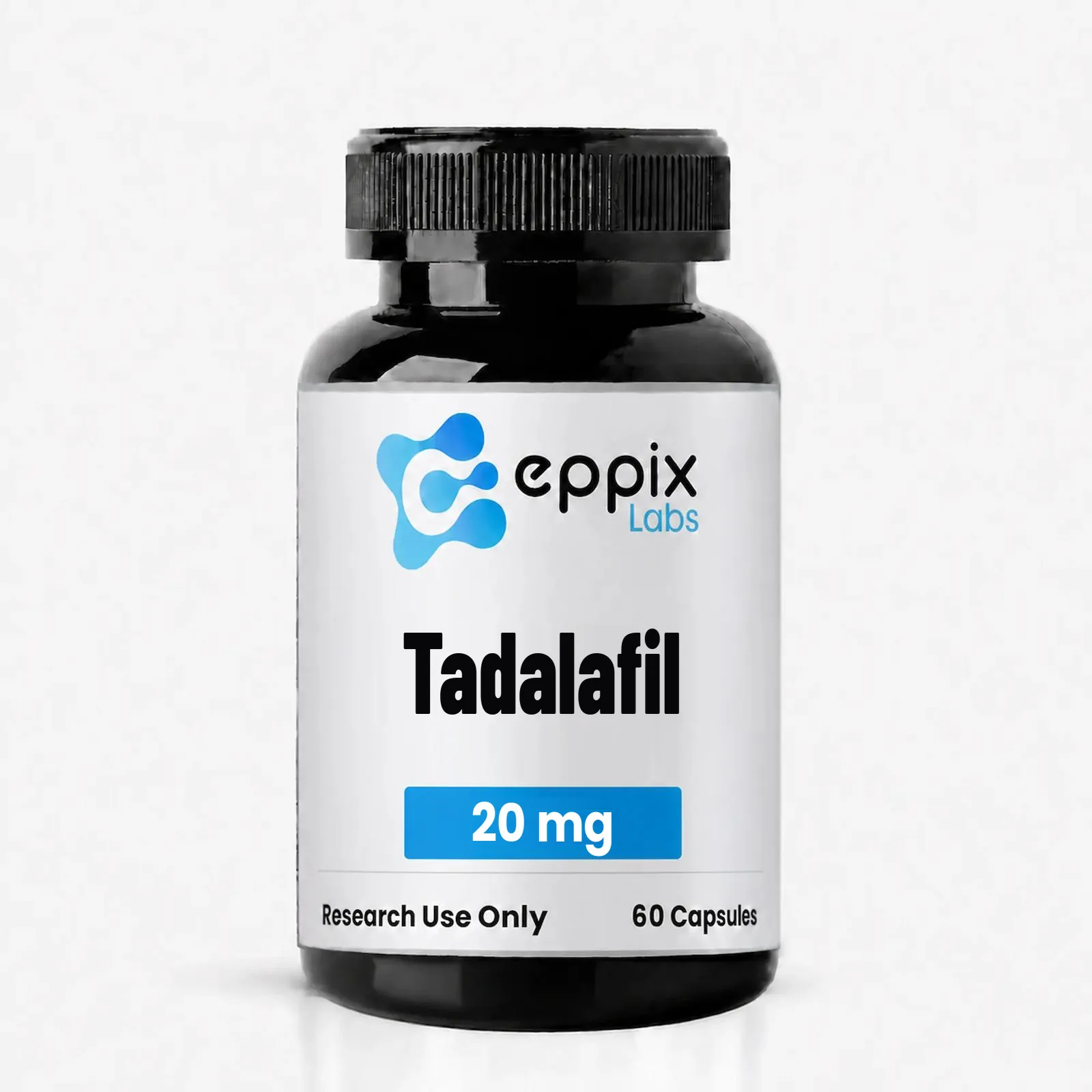
PDE5 Inhibitor Research Compound
Tadalafil is a small-molecule phosphodiesterase type 5 (PDE5) inhibitor supplied in capsule form for laboratory research. It is handled as a reference compound in controlled experimental and analytical settings.
AMPA Receptor Potentiator
TAK-653 is a small molecule described in the literature as an AMPA receptor positive allosteric modulator. It is supplied in capsule form strictly for laboratory research use.
Unidentified Capsule Preparation
SANA Capsules is supplied as a capsule-format research item. No molecular identity, sequence, or defined active constituent could be established for this designation from the available chemical records or published literature.
Oral Non-Peptide GLP-1 Receptor Agonist
Orforglipron is an orally available, non-peptide small molecule characterised as an agonist at the glucagon-like peptide-1 (GLP-1) receptor. It is supplied here in capsule form for laboratory research within controlled experimental environments.
$52.46$74.95CAD
⚡Flash sale ends in 0h 00m
Support
Need help?
Have questions about batch verification, documentation, or research specifications? Our team is available to assist with product and compliance inquiries.


 Eppix Flash Sale −30%