Research Use OnlyAll materials supplied for laboratory research within Canada
Form
Oral capsule
Storage
Cool, dry, away from direct light
Low on StockCapsule
SANA Capsules
SANA Capsules Canada — Capsules
Unidentified Capsule Preparation
SANA Capsules is supplied as a capsule-format research item. No molecular identity, sequence, or defined active constituent could be established for this designation from the available chemical records or published literature.
$66.47$94.95Eppix Flash Sale −30%CAD
⚡ Flash sale −30%Ends in 00:00:00Applied automatically at checkout
Purity VerifiedLab TestedSecure
Research Use Only
This product is intended strictly for laboratory research use within Canada. It is not approved by Health Canada for the diagnosis, treatment, cure, or prevention of any disease. Not for human or veterinary use.
By purchasing, you confirm the material will be used solely for lawful research purposes in accordance with applicable Canadian regulations.
SANA Capsules is supplied as a capsule-format research item. No molecular identity, sequence, or defined active constituent could be established for this designation from the available chemical records or published literature.
Because the compound behind the name is not documented, there is no scientific literature describing its composition, mechanism, or experimental use. The candidate references retrieved for this name concern capsule-format devices and encapsulation technologies in gastrointestinal research generally, not this product.
Purity
Third-party tested for purity, ID, quantity.
Coming Soon
The certificate of analysis for this lot is being finalised and will be published here as soon as the lab returns it.
Compound Properties
Overview
No mechanism can be described for SANA Capsules. A mechanism statement requires a known molecular entity, and no identifier, sequence, or constituent list is associated with this name in the sources available. Any mechanistic description would be invented rather than reported.
Likewise, no research endpoints have been evaluated under this designation. The published record that overlaps with the term "capsule" in this context relates to separate subjects: telemetric and photometric ingestible capsules used in gastrointestinal investigation, small-bowel capsule endoscopy as a diagnostic modality, and biopolymer microencapsulation used to stabilise compounds for physicochemical study. None of this literature examines SANA Capsules, and it should not be read as doing so.
History
The origin of SANA Capsules is not documented. No synthesis report, patent lineage, originating laboratory, or first-characterisation paper could be identified for this name.
Where a compound's history cannot be established, the accurate statement is that it is unknown. That is the case here. Researchers requiring provenance or identity information should seek it from batch-specific analytical documentation rather than from the published literature, which does not address this item.
Key Research Areas
There is no research framework associated with SANA Capsules. The published literature adjacent to this name addresses capsule-based gastrointestinal investigation and encapsulation chemistry as separate fields: ingestible telemetric and photometric capsules evaluated for detection of upper gastrointestinal bleeding, small-bowel and colon capsule endoscopy as diagnostic approaches, and biopolymer-stabilised microcapsules studied for the physicochemical stability of encapsulated constituents. These are included for context on capsule-format research only and do not characterise this product.
4 of the 4 areas below are addressed directly by a paper cited on this page.
Addressed on this page by Brand 2026, Brunk 2022, Rondonotti 2018. Each is linked to its source record in the references below, so what was measured — and in what system — can be read rather than taken on trust.
Brand, M. et al. (2026) — Pilot study on using a photometric capsule to stratify patients with suspected nonvariceal upper gastrointestinal bleeding into emergency versus elective endoscopy
Brunk, T. et al. (2022) — Telemetric capsule-based upper gastrointestinal tract - blood detection - first multicentric experience
Rondonotti, E. et al. (2018) — Small-bowel capsule endoscopy and device-assisted enteroscopy for diagnosis and treatment of small-bowel disorders: European Society of Gastrointestinal Endoscopy (ESGE) Technical Review
Telemetric and photometric ingestible capsule studies
Addressed on this page by Brand 2026, Brunk 2022, Rondonotti 2018. Each is linked to its source record in the references below, so what was measured — and in what system — can be read rather than taken on trust.
Brand, M. et al. (2026) — Pilot study on using a photometric capsule to stratify patients with suspected nonvariceal upper gastrointestinal bleeding into emergency versus elective endoscopy
Brunk, T. et al. (2022) — Telemetric capsule-based upper gastrointestinal tract - blood detection - first multicentric experience
Rondonotti, E. et al. (2018) — Small-bowel capsule endoscopy and device-assisted enteroscopy for diagnosis and treatment of small-bowel disorders: European Society of Gastrointestinal Endoscopy (ESGE) Technical Review
Capsule endoscopy diagnostic modalities
Addressed on this page by Brand 2026, Rondonotti 2018, Brunk 2022. Each is linked to its source record in the references below, so what was measured — and in what system — can be read rather than taken on trust.
Brand, M. et al. (2026) — Pilot study on using a photometric capsule to stratify patients with suspected nonvariceal upper gastrointestinal bleeding into emergency versus elective endoscopy
Rondonotti, E. et al. (2018) — Small-bowel capsule endoscopy and device-assisted enteroscopy for diagnosis and treatment of small-bowel disorders: European Society of Gastrointestinal Endoscopy (ESGE) Technical Review
Brunk, T. et al. (2022) — Telemetric capsule-based upper gastrointestinal tract - blood detection - first multicentric experience
Biopolymer microencapsulation and stability research
Addressed on this page by Hashim 2024. Each is linked to its source record in the references below, so what was measured — and in what system — can be read rather than taken on trust.
Hashim, SBH. et al. (2024) — Fabrication of biopolymer stabilized microcapsules for enhancing physicochemical stability, antioxidant and antimicrobial properties of cinnamon essential oil
The references section of this page cites 4 primary papers published between 2018 and 2026 — a limited but non-trivial record. Every citation is linked to its PubMed or DOI record so it can be read rather than taken on trust, and the summaries above describe what those papers report rather than what the compound is claimed to do.
SANA Capsules is frequently listed as a peptide by suppliers in this market. It is not one. The structure published on this page is the compound's actual chemistry, and research on it should be read against its own class rather than against peptide literature.
Research compounds attract claims that outrun their evidence. Below are the ones most often encountered for SANA Capsules, set against what the papers cited on this page actually report. Where the record is thin or contested, that is stated rather than smoothed over.
Preclinical only
SANA Capsules is described across this category in connection with capsule-format gastrointestinal investigation (unrelated literature), telemetric and photometric ingestible capsule studies and capsule endoscopy diagnostic modalities.
The 4 papers cited on this page, published between 2018 and 2026 (1 review) describe laboratory and animal work. None reports a controlled trial in humans. Findings in cell culture or in a rodent model describe what happened in that system; they do not establish that the same occurs in humans, and this compound is not approved for human use.
Nothing above is a statement of what this material does. It is a summary of what has been published and what has not. Eppix Labs supplies research materials only and provides no dosing, administration or protocol guidance.
Every lot of SANA Capsules is independently assayed before it is released, and the certificate for the lot shipped is published rather than summarised. Where a certificate for a current lot is not yet posted, the lot has not yet been released against it.
Researchers who buy SANA Capsules in Canada through Eppix Labs receive a batch-labelled vial whose certificate is published against that lot code, so the material can be matched to its analysis rather than to a generic specification.
SANA Capsules is supplied in capsule form, which removes the reconstitution step entirely: there is no vehicle to add, no reconstitution volume to record and no post-reconstitution stability window to track. What that leaves a laboratory to control is storage — capsule shells draw moisture from the air, so the container should be kept sealed and dry rather than decanted into an open vessel.
Because the material is already at its labelled quantity per capsule, batch verification carries more weight in this format than it does for powder: there is no point at which the researcher independently confirms mass by weighing. The measured content published for each lot is the figure that answers that question.
1 × sealed capsule bottle (100mg per capsule / Single Bottle - Pack of 30), batch-labelled
Batch documentation for the lot shipped, once its certificate is published
Discreet outer packaging with no product names on the exterior
Canada Post Xpresspost, tracked, typically 1–2 business days from Canadian stock
Not included
Laboratory consumables of any kind
Dosing, administration or protocol guidance of any kind
No. Eppix Labs products are supplied exclusively for laboratory research. We do not provide dosing, administration, or usage guidance.
Each unit contains the labeled quantity and count of capsules. Because no reference identity is published for this designation, batch analytical documentation is the only source for composition and net content.
The unit contains only the capsules as supplied. Any laboratory materials required for analytical characterisation or experimental procedures must be sourced separately.
Duration depends entirely on research design, storage conditions, and laboratory protocol.
Brand, M. et al.(2026)
Pilot study on using a photometric capsule to stratify patients with suspected nonvariceal upper gastrointestinal bleeding into emergency versus elective endoscopy
Small-bowel capsule endoscopy and device-assisted enteroscopy for diagnosis and treatment of small-bowel disorders: European Society of Gastrointestinal Endoscopy (ESGE) Technical Review
Fabrication of biopolymer stabilized microcapsules for enhancing physicochemical stability, antioxidant and antimicrobial properties of cinnamon essential oil
PDE5 Inhibitor Research Compound
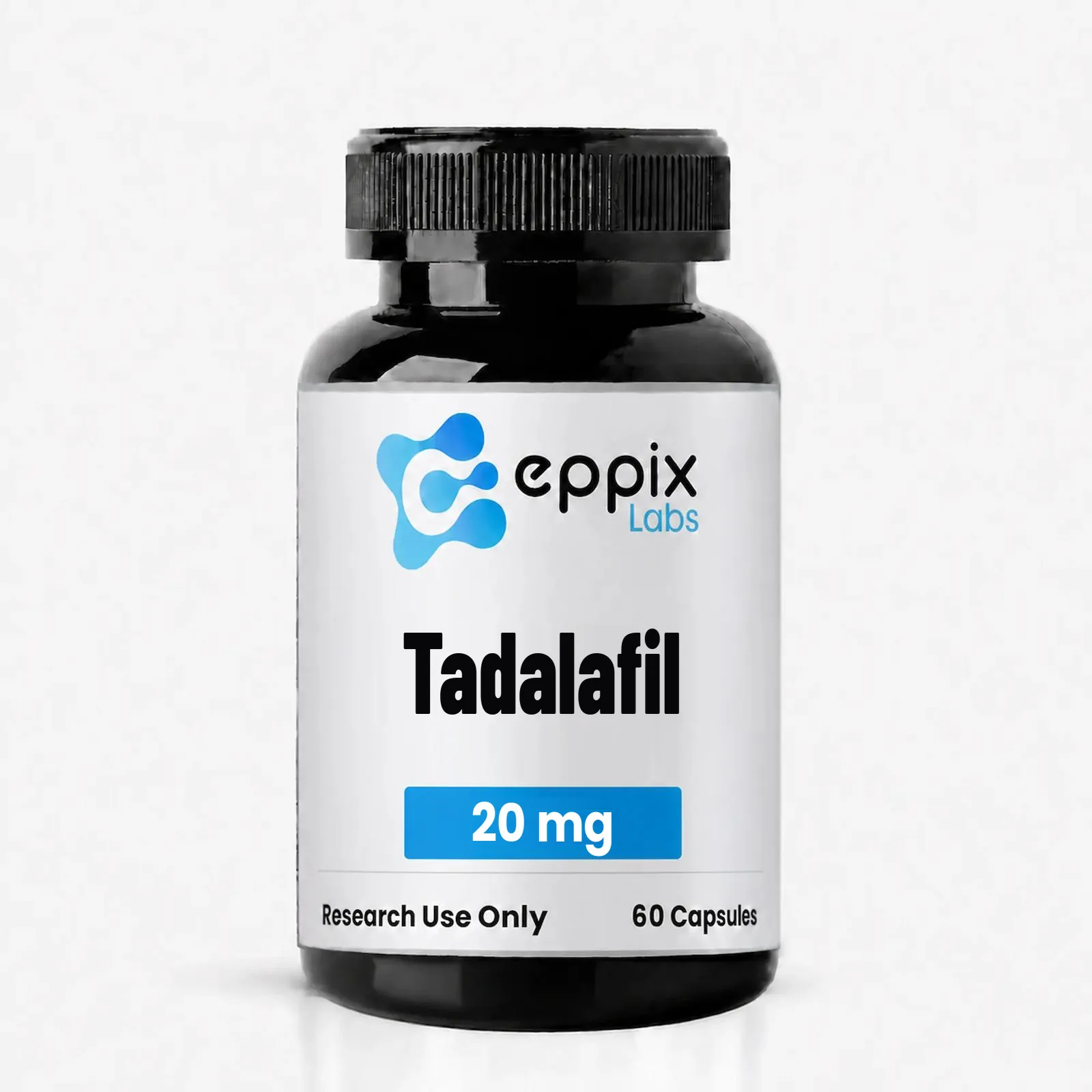
Tadalafil is a small-molecule phosphodiesterase type 5 (PDE5) inhibitor supplied in capsule form for laboratory research. It is handled as a reference compound in controlled experimental and analytical settings.
AMPA Receptor Potentiator
TAK-653 is a small molecule described in the literature as an AMPA receptor positive allosteric modulator. It is supplied in capsule form strictly for laboratory research use.
Oral Non-Peptide GLP-1 Receptor Agonist
Orforglipron is an orally available, non-peptide small molecule characterised as an agonist at the glucagon-like peptide-1 (GLP-1) receptor. It is supplied here in capsule form for laboratory research within controlled experimental environments.
Synthetic Dipeptide Compound
Noopept is a synthetic dipeptide compound supplied in capsule form for laboratory research. It is handled exclusively within controlled experimental environments.
Have questions about batch verification, documentation, or research specifications? Our team is available to assist with product and compliance inquiries.


 Eppix Flash Sale −30%