What TB-500 is, and what it is not
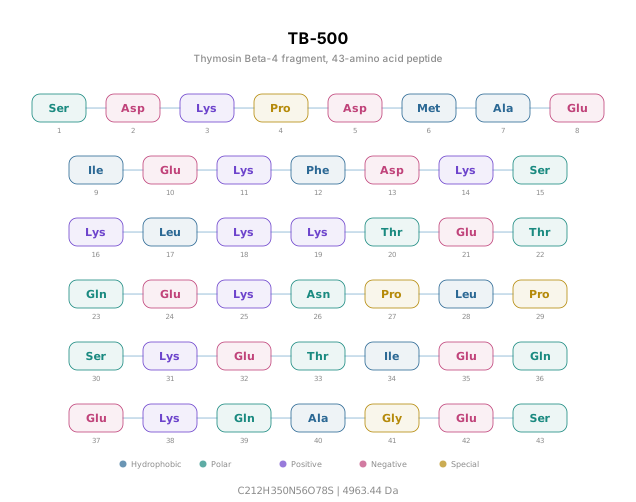
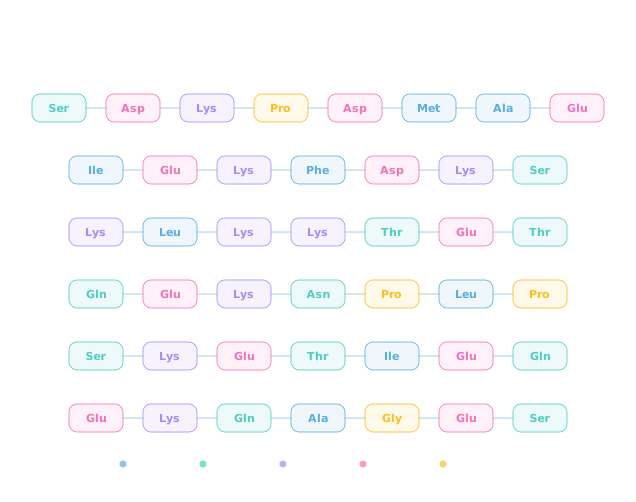
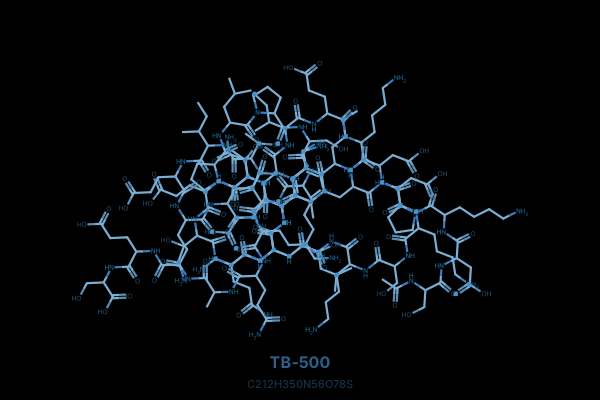
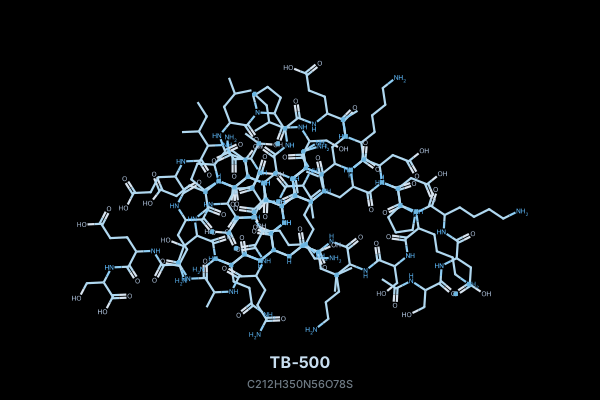
Thymosin β4 is a 43-amino-acid, 4.9 kDa actin-sequestering protein present in most mammalian cells, first characterized as a thymic peptide and later shown to be a major intracellular G-actin binding protein.[1] Its actin-binding activity localizes substantially to the heptapeptide motif LKKTETQ, residues 17 to 23.
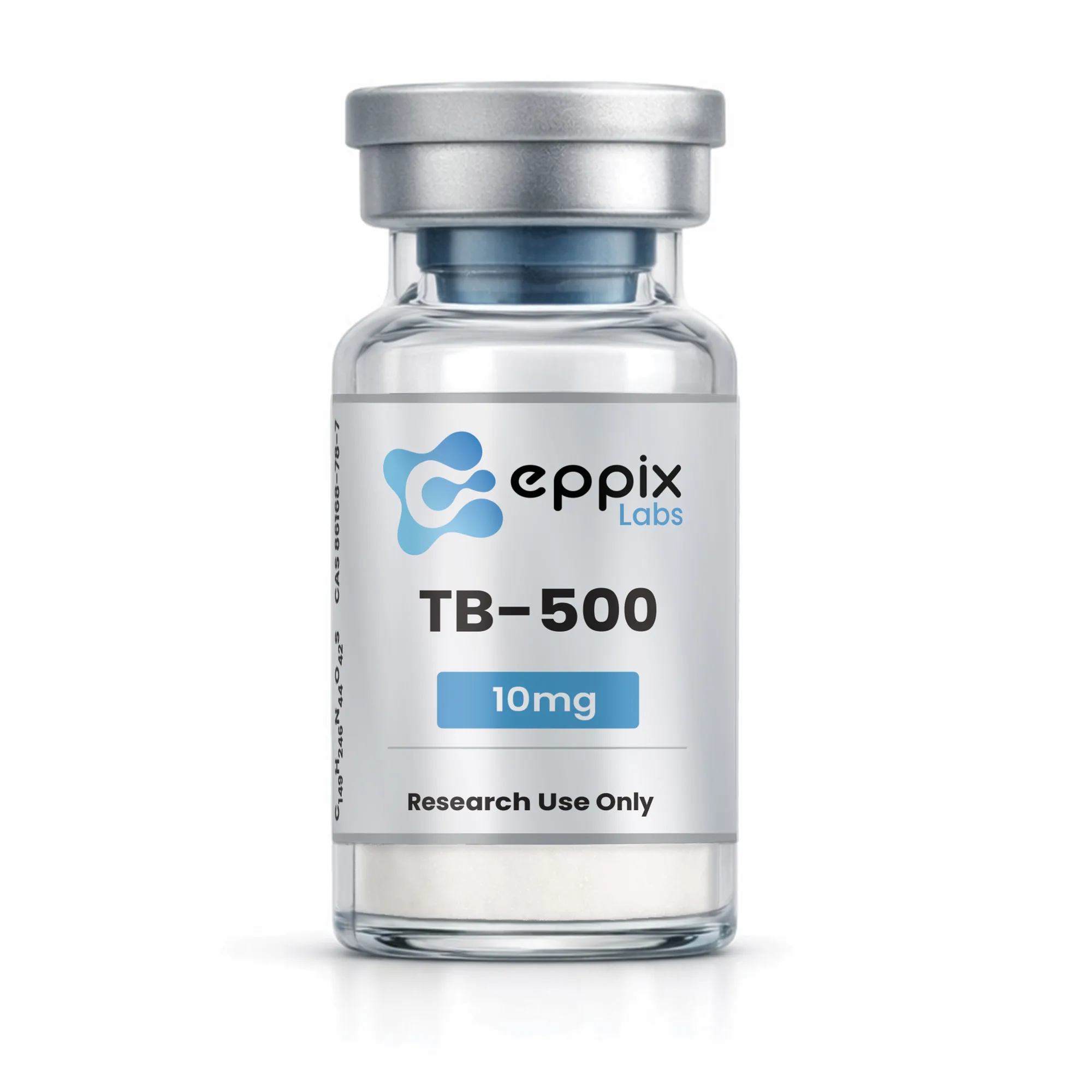
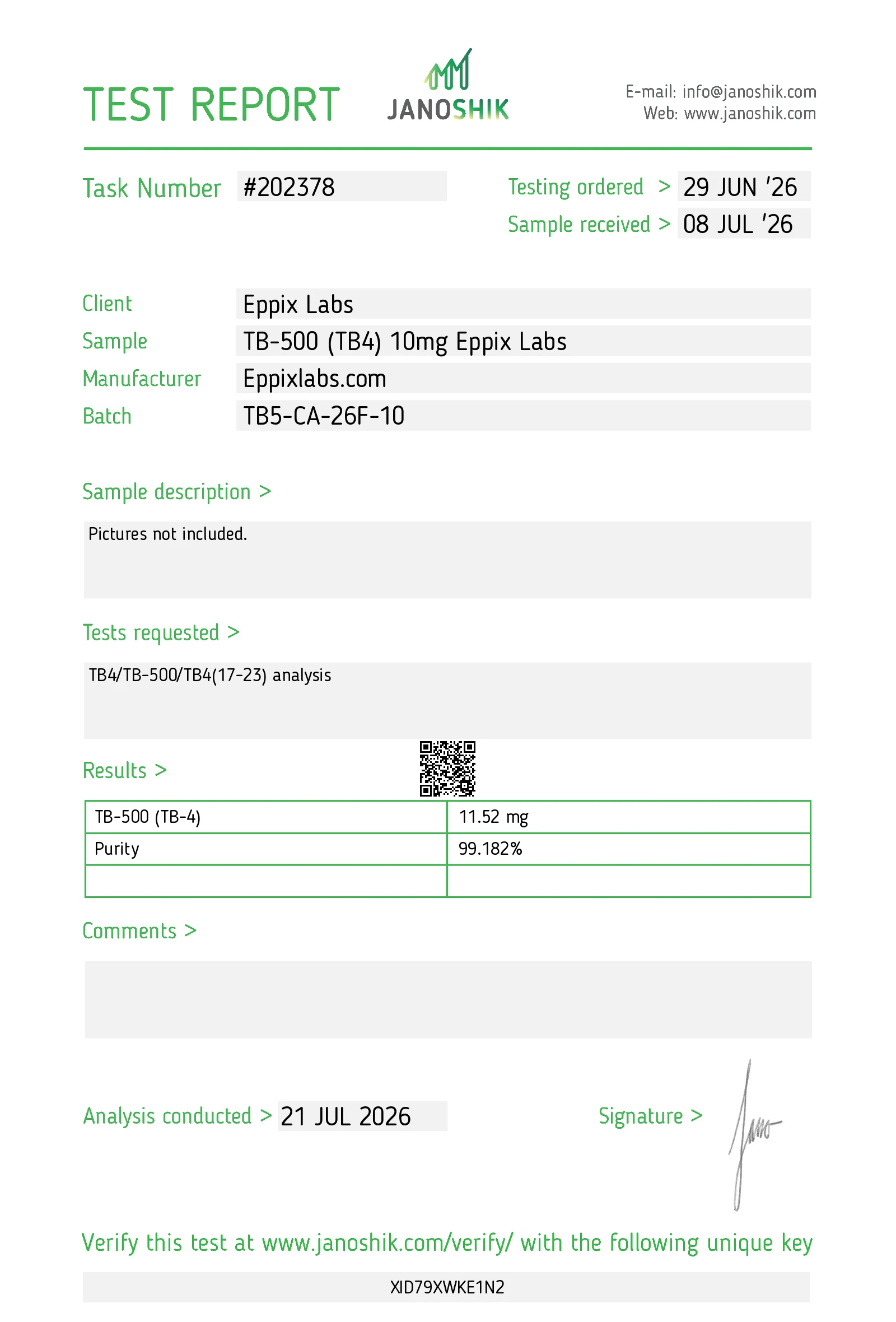
That motif, acetylated, is also sold as "TB-500". It is under a fifth of the mass of the parent protein (889 g/mol against roughly 4,963 g/mol), which is exactly why the name alone tells you nothing. The measured mass on a certificate is unambiguous: an identity result near 4.96 kDa is the full protein, one near 0.89 kDa is the fragment.