Canada Post Xpress1–2 day delivery across CanadaFree on orders over $200

Sourcing Guide

Retatrutide in Canada: The Triple Agonist, and What Is Actually Published

A phase 2 compound with real trial data, no approval anywhere, and a research supply market moving faster than the evidence

·Compiled by Eppix Labs

Retatrutide is the most requested metabolic research compound in Canada that has never been approved anywhere. It is a single-molecule agonist at three receptors: GIP, GLP-1 and glucagon. Its published phase 2 data are unusually strong, which is exactly why the gap between what the trials showed and what the research-chemical market implies has become worth writing down.

This guide covers the molecule, the published trials, the honest limits, and what to check on a certificate before ordering. Retatrutide is supplied for in-vitro laboratory research only, and is not authorized for human use in Canada or anywhere else.

Chemical Identity

Name
Retatrutide (LY3437943)
Also known as
Retatrutide, LY3437943, GGG tri-agonist
Molecular formula
C₂₂₁H₃₄₂N₄₄O₆₈
Molecular weight
4731.4 g/mol
CAS number
2381089-83-2
Salt forms
Acetate (research supply)

What retatrutide is

Retatrutide, development code LY3437943, is a synthetic 39-residue peptide developed by Eli Lilly, lipidated with a C20 fatty diacid to extend half-life to a once-weekly interval. Its distinguishing feature is receptor coverage: it is an agonist at the GIP, GLP-1 and glucagon receptors in a single molecule, where tirzepatide covers two of the three and semaglutide covers one.[3]

The glucagon-receptor arm is the mechanistically interesting one and the reason the compound is described as a triple agonist rather than a longer dual agonist. Glucagon-receptor engagement is associated with increased energy expenditure, which is a different lever from the appetite and gastric-emptying effects that carry the GLP-1 class.
Research Material
General Image
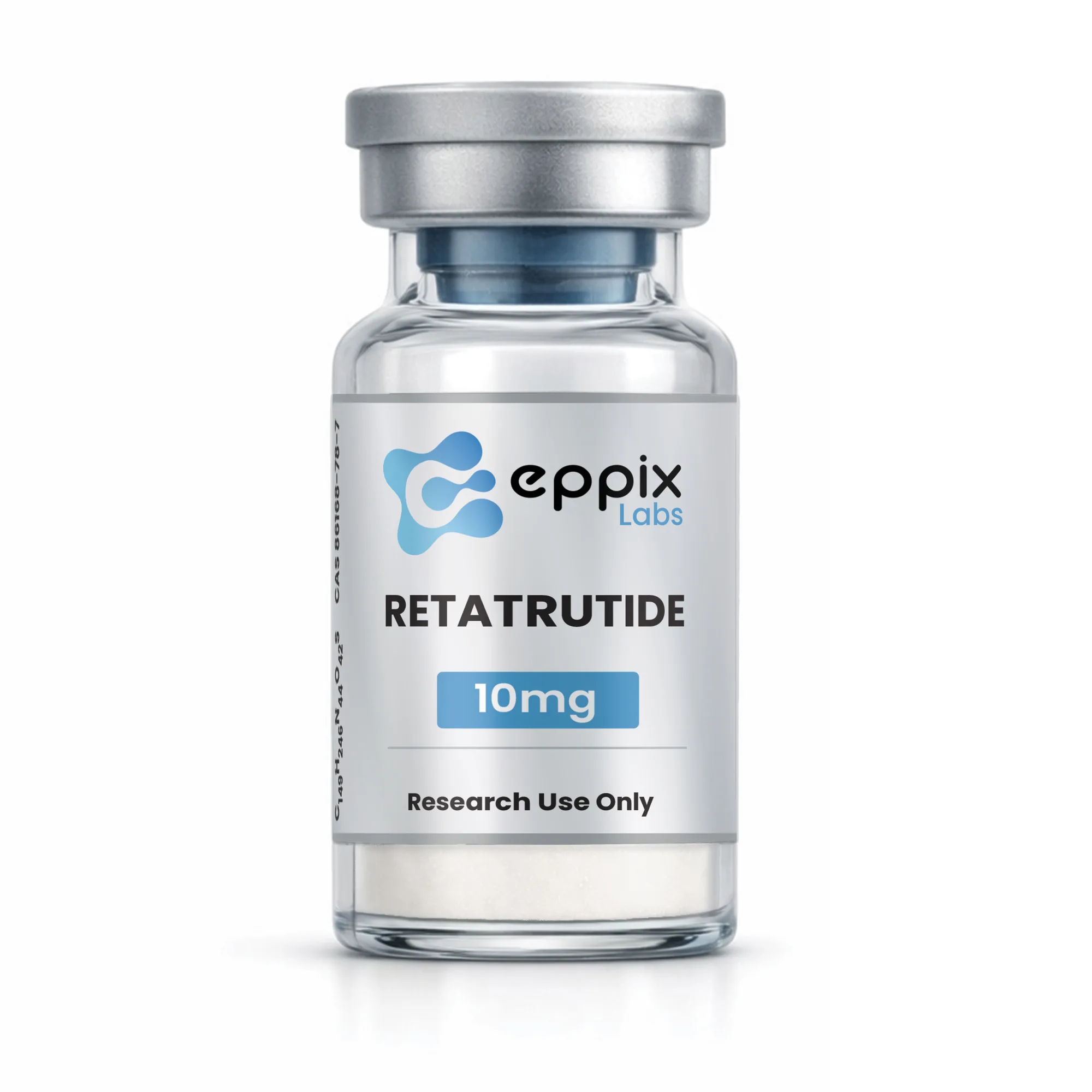
Retatrutide lyophilized research material as supplied by Eppix Labs. Labelled and measured content are stated on the certificate below.

Sequence and structure

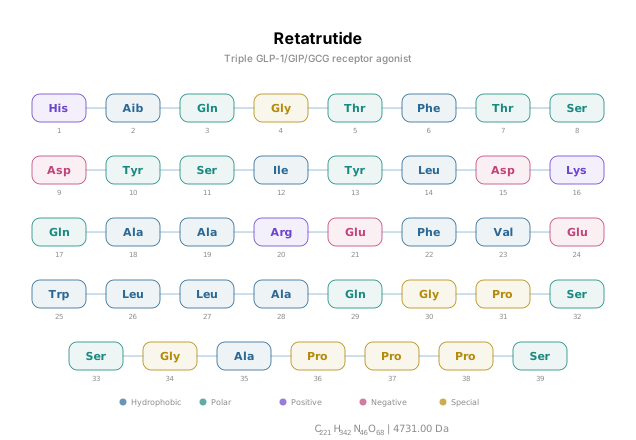
At around 4731 Da with a lipid side chain and non-natural residues, retatrutide is a genuinely difficult synthesis. That matters commercially in a way that a short peptide does not: the failure modes are truncation sequences, deletion sequences and incomplete lipidation, all of which produce material close enough in mass to pass a careless check and wrong enough to behave differently. A purity figure without an identity confirmation is close to meaningless at this molecular size.

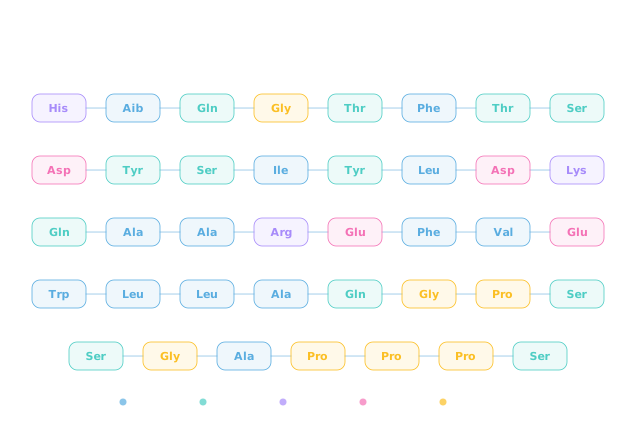
Amino Acid Sequence
Amino Acid Sequence diagram
Amino-acid sequence of retatrutide, read N-terminus to C-terminus.
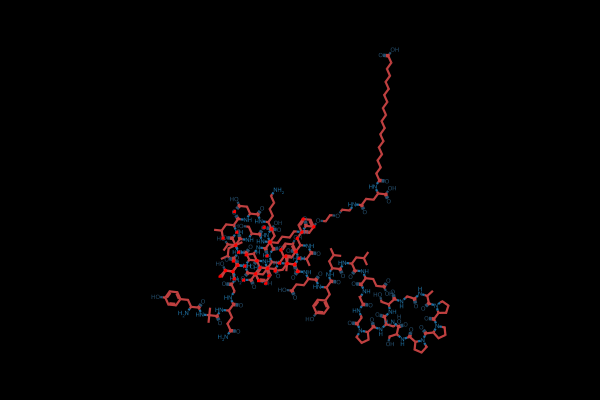
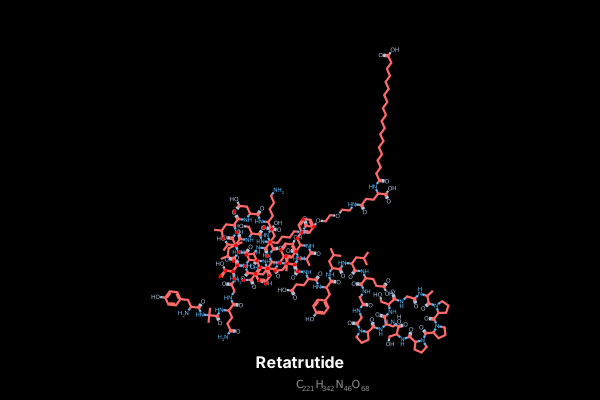
Chemical Structure
Chemical Structure diagram
Chemical structure of retatrutide.

What the published trials reported

Unusually for a compound in research supply, retatrutide has published, peer-reviewed, randomised human data. Reported here as findings from named trials, not as claims about what the material in a vial will do:

  • ·Phase 2, obesity. Jastreboff et al., New England Journal of Medicine 2023: a 48-week randomised, double-blind, placebo-controlled trial in adults with obesity. The trial met its primary endpoint across dose arms, with the highest arm reporting mean weight reduction substantially greater than placebo.[1]
  • ·Phase 2, type 2 diabetes. Rosenstock et al., Lancet 2023: a 36-week randomised trial in adults with type 2 diabetes, reporting glycaemic and weight outcomes against placebo and against an active comparator.[2]
  • ·Discovery and pharmacology. Coskun et al., Cell Metabolism 2022: the characterization paper for LY3437943, describing receptor activity, potency at each of the three receptors, and the preclinical basis for the once-weekly interval.[3]

The limit of the evidence

Retatrutide has published phase 2 results. It has no published phase 3 dataset, no marketing authorization in Canada, the United States or anywhere else, and no regulator has cleared its full safety dossier. The published trials were conducted with pharmaceutical-grade material manufactured under GMP, in supervised clinical settings, at defined doses. None of those conditions attach to a research-grade vial.

Health Canada has authorized no retatrutide product. The compound is a laboratory research material here and nothing else. Any supplier quoting trial percentages as if they were properties of the vial being sold has quietly substituted one thing for another.

Verifying a retatrutide lot

For a peptide of this length and complexity, three certificate lines do the work. Identity by mass spectrometry, matched against the expected mass near 4731 Da, is the one that catches substitution with a cheaper GLP-1 analogue, which is the most economically attractive form of fraud in this category. HPLC purity measures how much of the vial is the correct compound rather than synthesis by-products. Measured content against the labelled amount catches underfilling, which for a compound priced per milligram is a direct financial loss.

Every Eppix retatrutide lot is tested by Janoshik Analytical, with the certificate published before sale and verifiable on the laboratory's own database. Use the strength buttons under the certificate to move between strengths.

Published Certificate
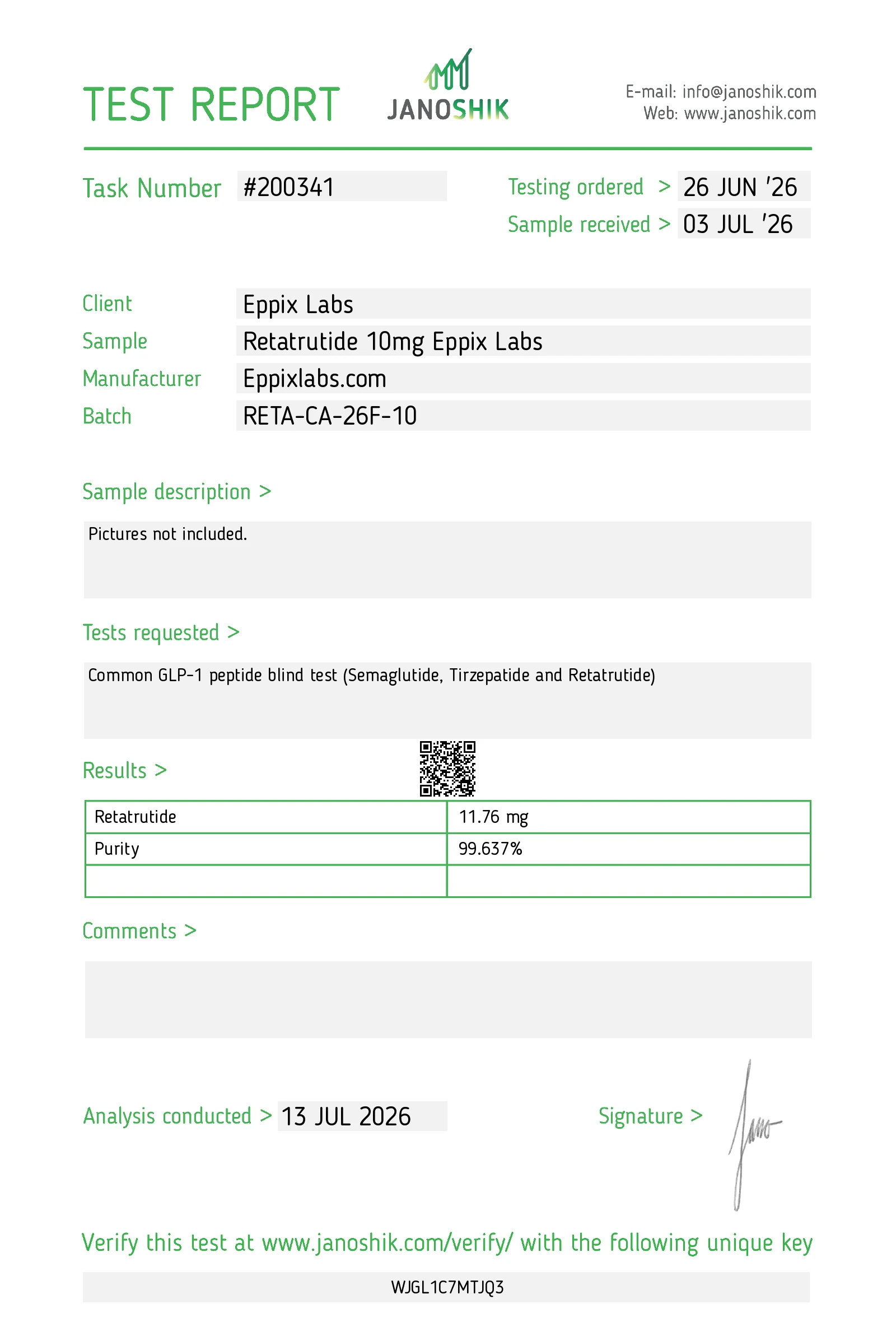
Certificate of analysis for Buy Retatrutide Canada | Triple Agonist 10mg, batch RETA-CA-26E-01, 99.637% purity, 11.76 mg measured content

Select strength

Batch
RETA-CA-26E-01
Purity (HPLC)
99.637%
Measured content
11.76 mglabelled 10 mg
Laboratory
Janoshik
Published certificates for the current retatrutide lots, by strength. Batch, purity and measured content read live from the batch record.

Sourcing in Canada

Domestic fulfilment is by Canada Post Xpresspost, typically one to two days nationwide, free over $200, with an additional Interac e-Transfer discount and mix-and-match pricing at 5 and 10 vials.

The mechanistic and evidential comparison against the dual agonist is set out in retatrutide vs tirzepatide. The tirzepatide sourcing guide is at buy tirzepatide in Canada.

Frequently Asked

Is retatrutide approved anywhere?

No. As of August 2026 retatrutide has no marketing authorization in any jurisdiction. It has published phase 2 trials in obesity and type 2 diabetes and is in later-stage development.

Is retatrutide legal in Canada?

It may be sold and held as a laboratory research material. It is not authorized by Health Canada for human or veterinary use, and it is not a controlled substance. This is not legal advice.

What is the difference between retatrutide and tirzepatide?

Receptor coverage. Tirzepatide is a dual GIP and GLP-1 receptor agonist; retatrutide adds glucagon-receptor agonism. Tirzepatide is approved and has phase 3 data; retatrutide is not approved and its published record stops at phase 2.

What should a retatrutide certificate show?

Batch number matching the vial, named testing laboratory with an independent verification path, MS identity confirmation against the expected mass, HPLC purity, and measured vial content against the labelled amount. Identity confirmation matters more here than for short peptides, because a cheaper GLP-1 analogue is a plausible substitute.

Why is retatrutide more expensive than semaglutide per milligram?

Synthesis difficulty and demand. A 39-residue lipidated peptide with a triple-receptor design is substantially harder to make cleanly than a shorter analogue, and yields are correspondingly lower.

How is retatrutide stored?

Lyophilized: cool, dry, dark, at -20 °C for long-term storage. Reconstituted: refrigerated and used within the window your protocol defines. See the peptide storage guide.

References

  1. Jastreboff, A.M. et al. (2023). Triple-hormone-receptor agonist retatrutide for obesity: a phase 2 trial. N Engl J Med 389(6):514-526. PMID 37366315
  2. Rosenstock, J. et al. (2023). Retatrutide, a GIP, GLP-1 and glucagon receptor agonist, for people with type 2 diabetes: a randomised, double-blind, placebo- and active-controlled, parallel-group, phase 2 trial. Lancet 402(10401):529-544. PMID 37385280
  3. Coskun, T. et al. (2022). LY3437943, a novel triple glucagon, GIP, and GLP-1 receptor agonist for glycemic control and weight loss: from discovery to clinical proof of concept. Cell Metab 34(9):1234-1247. PMID 35985340

Research Use Only

This article summarizes published preclinical research literature. Compounds referenced are supplied by Eppix Labs strictly as research materials for laboratory investigation within Canada. They are not approved by Health Canada for human or veterinary use, and nothing on this page should be interpreted as medical advice or guidance on human or animal administration.