Canada Post Xpress1–2 day delivery across CanadaFree on orders over $200

Sourcing Guide

CJC-1295 and Ipamorelin in Canada: The Blend, and What Each Half Does

Two compounds with different mechanisms sold in one vial, and the certificate problem that creates

·Compiled by Eppix Labs

CJC-1295 and ipamorelin are almost always sold together, and the pairing is not arbitrary: they act on two different receptors in the growth-hormone axis, which is the entire rationale for combining them. What is less well handled is the consequence for verification, because a two-compound vial cannot be certified the way a single-compound vial can.

This guide covers what each half is, which CJC-1295 you are actually buying, and how to read a blend certificate. Both compounds are supplied for laboratory research use only.

Chemical Identity

Name
CJC-1295 (mod GRF 1-29) with ipamorelin
Also known as
CJC-1295 / Ipamorelin blend, Mod GRF 1-29, CJC-1295 no-DAC
Molecular formula
C₁₅₂H₂₅₂N₄₄O₄₂ (CJC-1295 no-DAC); C₃₈H₄₉N₉O₅ (ipamorelin)
Molecular weight
3367.9 g/mol (CJC-1295 no-DAC); 711.9 g/mol (ipamorelin)
CAS number
863288-34-0 (CJC-1295 no-DAC); 170851-70-4 (ipamorelin)
Salt forms
Acetate

What the two compounds are

CJC-1295 is a modified fragment of growth-hormone-releasing hormone, GHRH(1-29), with four amino-acid substitutions that resist enzymatic degradation. It acts at the GHRH receptor. The name is used for two distinct molecules, which is the single biggest source of confusion in this category, and the distinction is covered in the next section.

Ipamorelin is a synthetic pentapeptide ghrelin-receptor (GHS-R1a) agonist, described by Raun et al. (1998) as the first selective growth hormone secretagogue: it stimulated GH release in their models without the prolactin and ACTH elevation seen with earlier secretagogues.[3]

The two therefore engage different receptors on the same axis, which is why they are studied together.
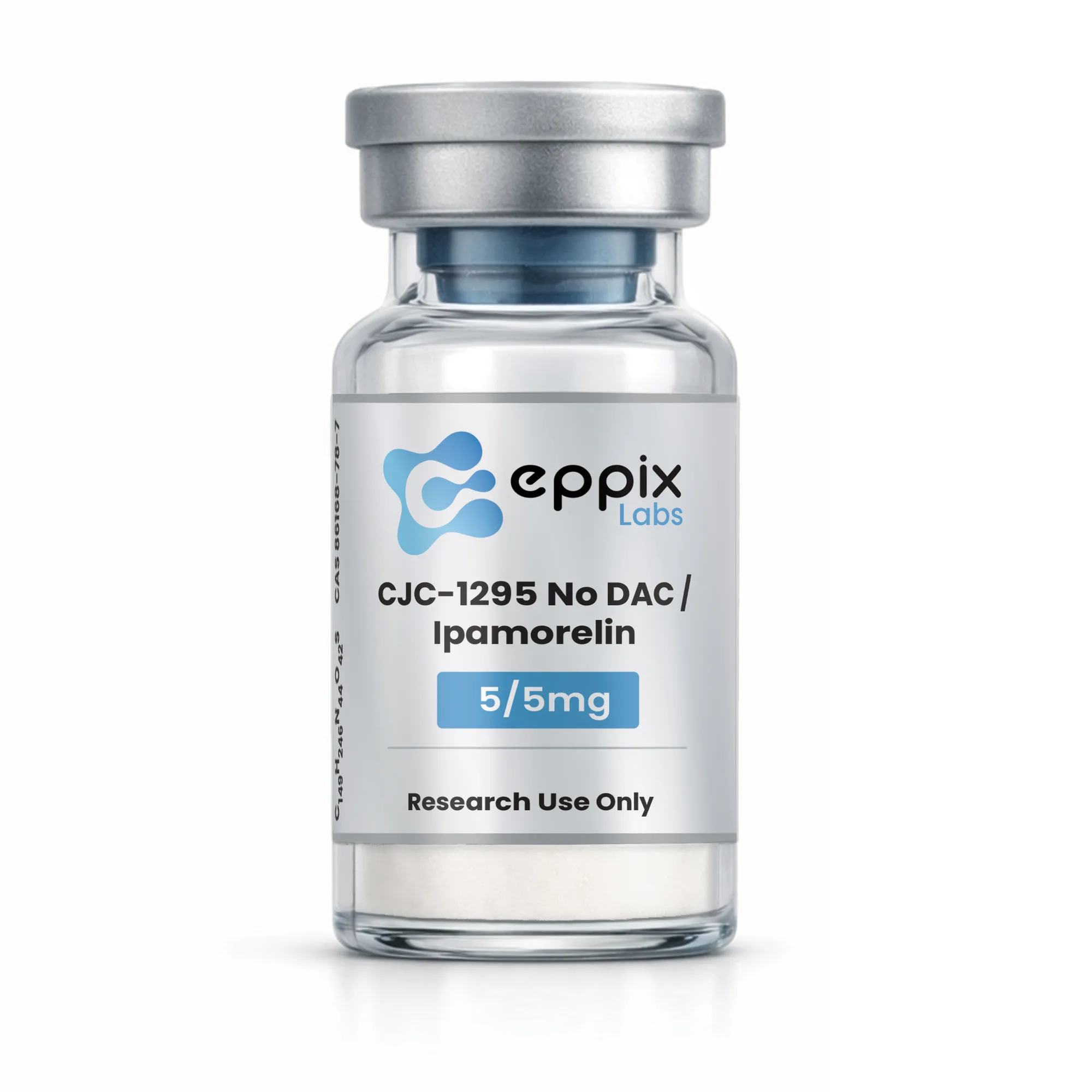
Research Material
General Image
CJC-1295 and ipamorelin blend as supplied by Eppix Labs. Per-component measured content is stated on the certificate below.

DAC and no-DAC: two different molecules, one name

CJC-1295 with DAC carries a Drug Affinity Complex, a maleimidoproprionic acid linker that binds covalently to serum albumin and extends the half-life to roughly a week. This is the molecule from the published human pharmacokinetic work: Teichman et al. (2006) reported sustained GH and IGF-1 elevation over days after single administration,[1] and Ionescu and Frohman (2006) reported that GH secretion remained pulsatile under continuous stimulation.[2]

CJC-1295 without DAC, correctly called mod GRF 1-29, is the same modified GHRH fragment without the linker, with a half-life measured in minutes rather than days. It is the form usually supplied in blends, because a short-acting GHRH analogue pairs sensibly with a short-acting secretagogue.

These are not interchangeable, they have different masses, and the published pharmacokinetics attach to only one of them. A supplier that does not state which one is in the vial has not told you what you are buying.

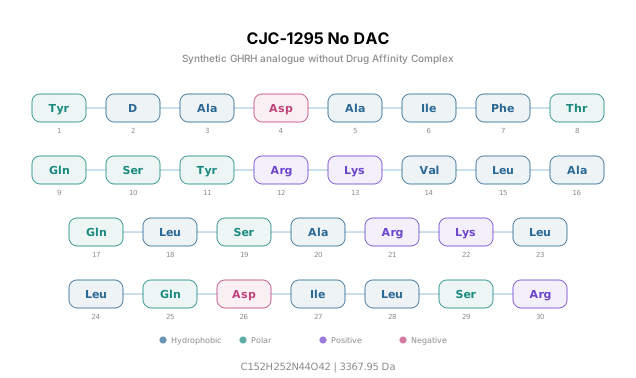
Sequence and structure

CJC-1295 no-DAC is a 29-residue peptide near 3368 Da; ipamorelin is a pentapeptide near 712 Da. The mass difference is large, which is convenient: a mass-spectrometry report on a blend can resolve both components cleanly, and a missing or wrong component is obvious.

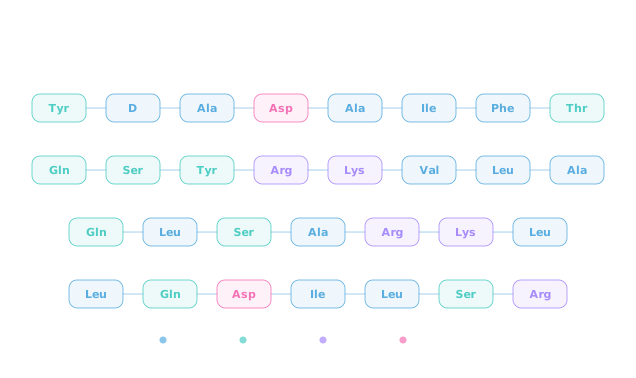
Amino Acid Sequence
Amino Acid Sequence diagram
Amino-acid sequences of the blend components.
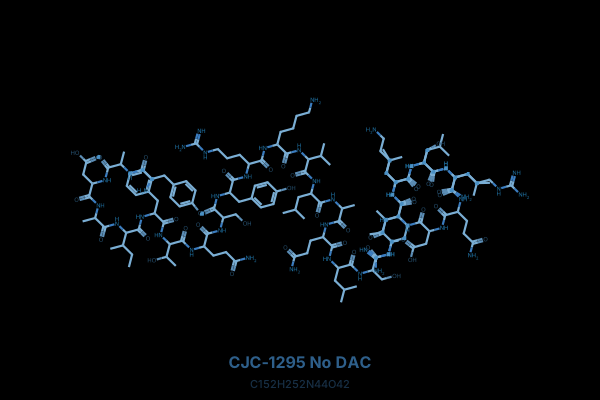
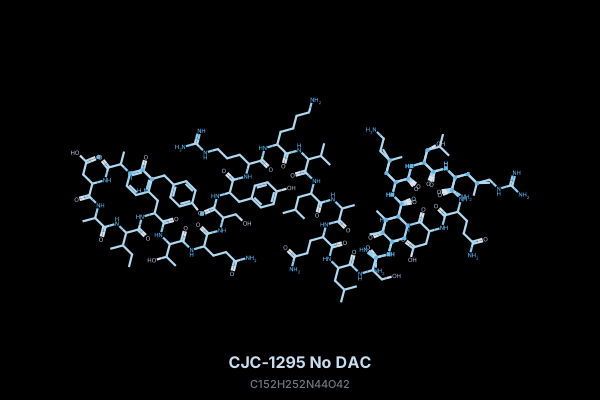
Chemical Structure
Chemical Structure diagram
Chemical structures of the CJC-1295 and ipamorelin components.

What the published research shows

Each compound separately, because that is how the work was done:

  • ·CJC-1295 with DAC, human pharmacokinetics. Teichman et al. (2006): single subcutaneous administration in healthy adults produced sustained increases in GH and IGF-1 over several days.[1]
  • ·Pulsatility preserved. Ionescu and Frohman (2006): under continuous GHRH-receptor stimulation by CJC-1295, GH secretion remained pulsatile rather than flattening, which was the mechanistically interesting result.[2]
  • ·Ipamorelin selectivity. Raun et al. (1998): GH release in rat and swine models with a selectivity profile distinguishing it from earlier secretagogues.[3]
  • ·Ipamorelin in bone models. Johansen et al. (1999) reported longitudinal bone growth in rats,[4] and Andersen et al. (2001) reported counteraction of glucocorticoid-induced decrease in bone formation in adult rats.[5]

The limit of the evidence

CJC-1295 with DAC has published early-phase human pharmacokinetic data and no efficacy trials. Ipamorelin reached early clinical investigation and was not developed further. The no-DAC form supplied in most blends has essentially no human literature of its own. Neither compound is approved anywhere, and there is no published trial of the blend as a blend.

Reading DAC pharmacokinetics onto a no-DAC vial is the specific error this category invites. The half-lives differ by orders of magnitude.

Verifying a blend: why the certificate looks different

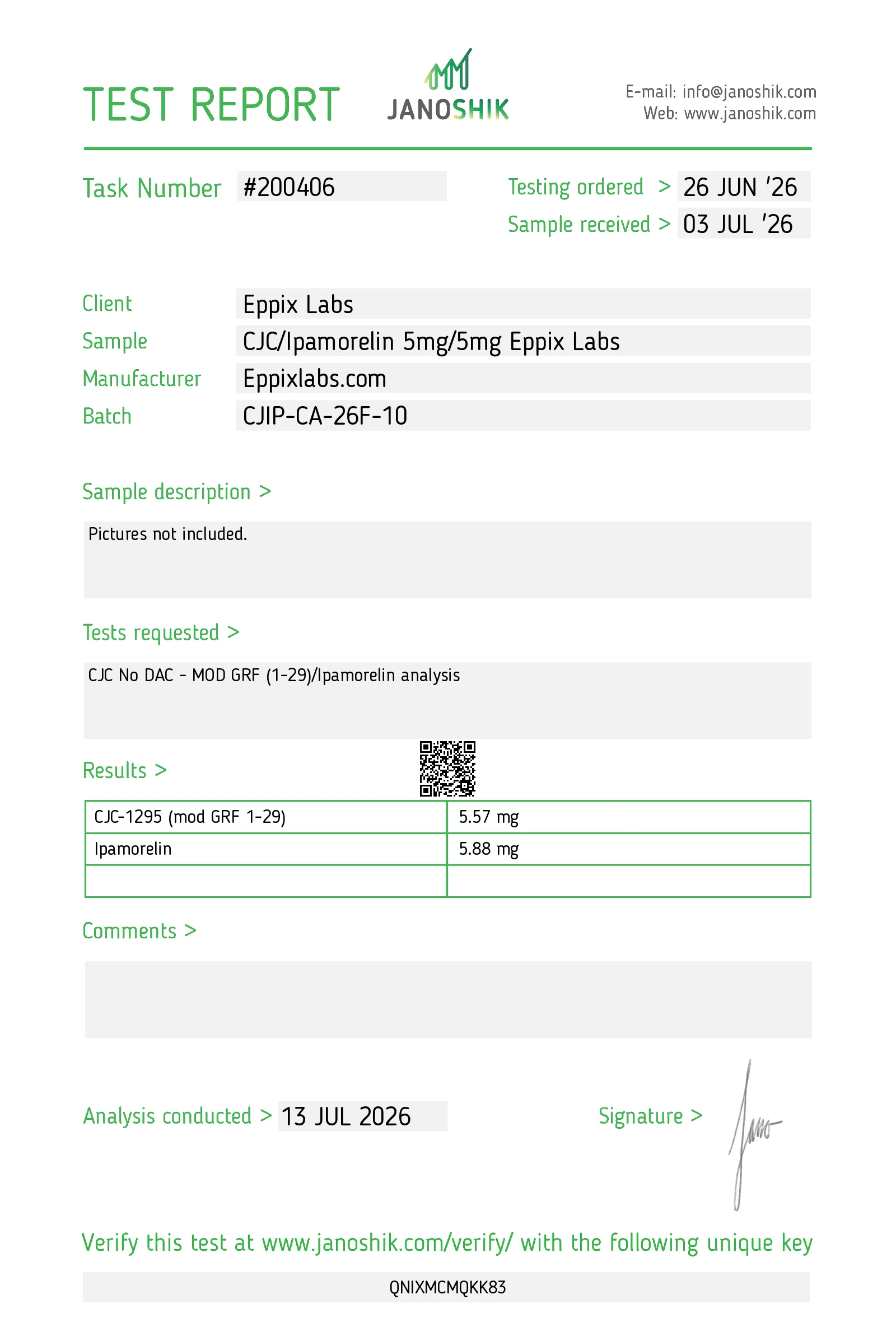
A single-compound certificate reports one purity figure and one measured mass. A blend certificate cannot: HPLC purity is defined against a single analyte, so a two-component vial is reported instead as two measured masses, one per component, with identity confirmed for each. A blend certificate showing a single purity percentage has either tested only one component or is reporting something that does not mean what it appears to mean.

What to look for on an Eppix blend certificate: both components named, both masses measured against their labelled amounts, identity confirmed for each, and the batch number matching the vial. The certificate is published before sale and verifiable on Janoshik's own database.

Published Certificate
Certificate of analysis for CJC-1295 Ipamorelin Blend Canada 5mg, batch CJIP-CA-26A-01

Select strength

Batch
CJIP-CA-26A-01
Purity (HPLC)
Not reported
Measured content
Not reported
Laboratory
Not reported
Published certificate for the current blend lots. Blend certificates report per-component measured mass rather than a single purity figure.

Sourcing in Canada

Domestic fulfilment is by Canada Post Xpresspost, typically one to two days nationwide, free over $200, with an Interac e-Transfer discount and mix-and-match pricing at 5 and 10 vials.

Ipamorelin is also supplied on its own, and the single-compound guide is at buy ipamorelin in Canada. Other GH-axis compounds are covered in buy tesamorelin in Canada and buy sermorelin in Canada.

Frequently Asked

What is the difference between CJC-1295 with DAC and without DAC?

The DAC form carries a linker that binds covalently to serum albumin, extending the half-life to roughly a week. The no-DAC form, properly called mod GRF 1-29, lacks the linker and has a half-life measured in minutes. They are different molecules with different masses, and the published human pharmacokinetic work is on the DAC form.

Why do the two compounds get sold together?

They act on different receptors in the same axis: CJC-1295 at the GHRH receptor, ipamorelin at the ghrelin receptor (GHS-R1a). The pairing is a mechanistic one, not a marketing convention.

Why does a blend certificate have no purity percentage?

HPLC purity is defined against one analyte. With two compounds in the vial there is no single meaningful percentage, so a correct blend certificate reports measured mass per component with identity confirmed for each. A single purity figure on a blend certificate is a red flag.

Is CJC-1295 or ipamorelin legal in Canada?

Both may be sold and held as laboratory research materials. Neither is authorized by Health Canada for human or veterinary use. This is not legal advice.

Are these compounds banned in sport?

Growth hormone secretagogues and GHRH analogues appear on the World Anti-Doping Agency Prohibited List. That is a competition matter, separate from research-material status, and is noted here because researchers working with athletes ask.

How is the blend stored?

Lyophilized: cool, dry, dark, at -20 °C for long-term storage. Reconstituted: refrigerated, used within the window your protocol defines.

References

  1. Teichman, S.L. et al. (2006). Prolonged stimulation of growth hormone (GH) and insulin-like growth factor I secretion by CJC-1295, a long-acting analog of GH-releasing hormone, in healthy adults. J Clin Endocrinol Metab 91(3):799-805. PMID 16352683
  2. Ionescu, M., Frohman, L.A. (2006). Pulsatile secretion of growth hormone (GH) persists during continuous stimulation by CJC-1295, a long-acting GH-releasing hormone analog. J Clin Endocrinol Metab 91(12):4792-4797. PMID 17018654
  3. Raun, K. et al. (1998). Ipamorelin, the first selective growth hormone secretagogue. Eur J Endocrinol 139(5):552-561. PMID 9849822
  4. Johansen, P.B. et al. (1999). Ipamorelin, a new growth-hormone-releasing peptide, induces longitudinal bone growth in rats. Growth Horm IGF Res 9(2):106-113. PMID 10373343
  5. Andersen, N.B. et al. (2001). The growth hormone secretagogue ipamorelin counteracts glucocorticoid-induced decrease in bone formation of adult rats. Growth Horm IGF Res 11(5):266-272. PMID 11735244

Research Use Only

This article summarizes published preclinical research literature. Compounds referenced are supplied by Eppix Labs strictly as research materials for laboratory investigation within Canada. They are not approved by Health Canada for human or veterinary use, and nothing on this page should be interpreted as medical advice or guidance on human or animal administration.