Canada Post Xpresspost1–2 day delivery across CanadaFree on orders over $200

Laboratory Practice

Bacteriostatic Water: The Complete Laboratory Guide

The least interesting item in a peptide order is the one most protocols depend on. What it is, when sterile water is the wrong substitute, and the handling rules that keep a reconstituted vial usable

·By Adam Reeves · Research Editor, Eppix Labs

Lyophilised peptide does not dissolve itself. Every protocol that starts from powder starts with a reconstitution vehicle, and the choice between plain sterile water and bacteriostatic water is not a preference: it is decided by how many times the vial will be entered.

This page covers what the preservative does, when it matters, and the handling that follows from it. Everything here concerns laboratory research materials and laboratory practice; nothing here is guidance for human or veterinary use. The reconstitution technique itself is covered in the peptide reconstitution lab guide, and the volume arithmetic in the peptide calculator.

What it is

Bacteriostatic water is sterile water containing benzyl alcohol, conventionally at 0.9%, as a bacteriostatic preservative. Bacteriostatic means what it says: the preservative suppresses bacterial growth rather than killing an established population. That is the entire chemical difference from plain sterile water, and it is a decisive one.

The reason it is decisive is the multi-entry problem. A sealed vial of sterile solution is sterile. A vial that has been entered several times over several weeks has had several opportunities for introduction, and an aqueous solution at room or refrigerator temperature is a perfectly adequate growth medium. The preservative is what stops a small introduction from becoming a colonised vial between one use and the next.
Bacteriostatic against sterile water

  • ·Preservative. Bacteriostatic: benzyl alcohol, conventionally 0.9%. Sterile: none.
  • ·Multi-entry use. Bacteriostatic: designed for it. Sterile: single-use, because nothing in the vial suppresses growth after the first entry.
  • ·Typical protocol role. Bacteriostatic: the standard vehicle for work that runs over days or weeks. Sterile: single-draw contexts, and any protocol where the preservative itself would be a confound.
  • ·In-use life once opened. Bacteriostatic: conventionally treated as roughly 28 days refrigerated after first entry. Sterile: use immediately.
  • ·When sterile is the correct choice. When the assay is sensitive to benzyl alcohol, or when the whole vial is consumed in one operation. Preservative is a tool, not a default virtue.

Handling rules that actually matter

  • ·Refrigerate after first entry and discard on schedule. The preservative suppresses growth; it does not sterilise a contaminated vial and it does not extend indefinitely. Label the vial with the date of first entry, because nobody remembers it a fortnight later.
  • ·Fresh sterile needle every entry, and never return solution to the vial. Both rules exist for the same reason: the vial's cleanliness is a function of what has been put into it.
  • ·Solvent down the vial wall, then swirl. Do not inject the stream directly into the lyophilised cake and do not shake. Peptides are chains, and shear denatures them. Technique is covered in the reconstitution guide.
  • ·Check the vial before use. Visible particulates or cloudiness mean discard, regardless of the printed expiry date.
  • ·Watch for compound-specific exceptions. A small number of sequences are sensitive to benzyl alcohol at reconstitution. Where that applies, the product page for the compound flags it; where a compound has no note, the ordinary rule applies.
Research Material
General Image
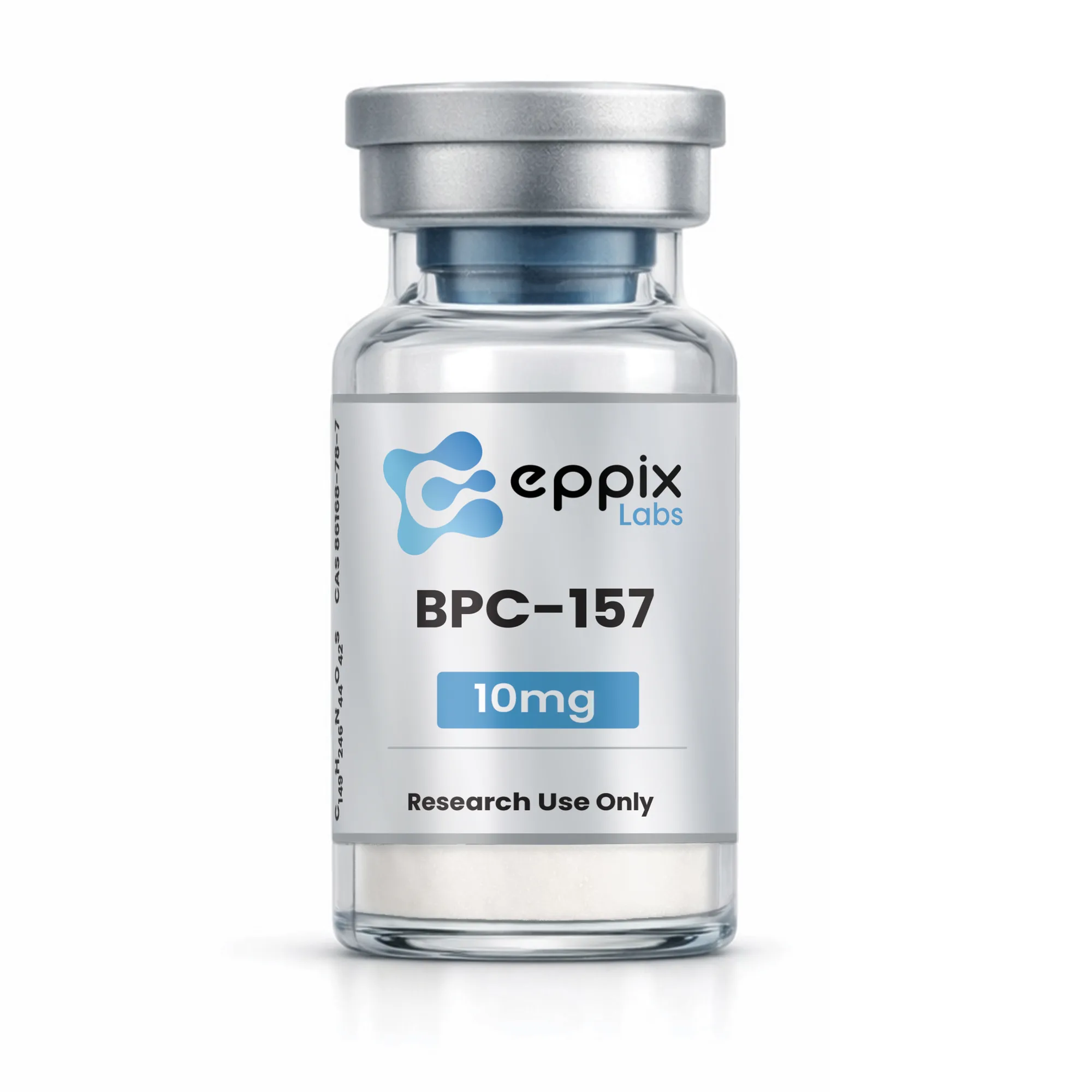
Lyophilised material of the kind a reconstitution vehicle exists to dissolve. What goes into the vial determines how long the solution stays usable.

Storage, before and after

Unopened bacteriostatic water is shelf-stable and should be stored per its printed conditions and expiry. There is no benefit to refrigerating an unopened vial and no harm either.

After first entry, refrigerate. The same applies to the peptide solution it produced: reconstituted material belongs in the body of the refrigerator rather than the door, which is the warmest part of the appliance and is temperature-cycled every time it is opened. Long-term holding of unreconstituted powder is a separate question, covered in the peptide storage guide.

A sourcing note

Bacteriostatic water is among the easiest items in this supply chain to counterfeit, precisely because nobody inspects it. Unpreserved water in a relabelled vial looks and behaves identically until the point at which the preservative would have mattered, which is weeks later and invisible when it fails.

The sensible standard is the one applied to everything else: buy from a supplier that documents what it is selling, and treat a bottle with no manufacturer, no lot and no stated benzyl alcohol concentration as an unknown liquid. The specification to look for is short, which is what makes its absence informative: water, benzyl alcohol at 0.9%, a named manufacturer and a lot number.

One thing worth being precise about, because the category invites imprecision: what belongs in a research protocol is a laboratory reagent. "Bacteriostatic Water for Injection" is a separate regulated drug product carrying a DIN in Canada, and a supplier blurring the two is telling you something about how it reads the rest of its obligations.

Eppix Labs does not currently stock bacteriostatic water, so this section is guidance rather than a pitch. Source it from a laboratory supplier that publishes the specification, and add it to the bench before the peptides arrive rather than after.

Frequently Asked

Can I use sterile water instead?

For a single immediate draw, yes. For a multi-entry protocol running over days or weeks, no. The preservative is the entire reason bacteriostatic water exists, and a multi-entry vial without one is an unpreserved aqueous solution.

How long does an opened vial last?

The convention is roughly 28 days refrigerated after first puncture. Label the vial with the date of first entry, because the schedule only works if the date is recorded.

Does bacteriostatic water expire?

Yes. Respect the printed expiry, and discard any vial showing particulates or cloudiness regardless of date.

What is benzyl alcohol doing?

Suppressing bacterial growth in the vial across repeated entries. It is bacteriostatic rather than bactericidal, so it prevents a small introduction from proliferating rather than sterilising a vial that has already been contaminated.

Are there peptides that should not be reconstituted with it?

A small number of sequences are sensitive to benzyl alcohol at reconstitution. Where that applies to a compound in this catalogue, its product page says so; otherwise the ordinary multi-entry rule applies.

References

  1. Behrendt, R., White, P., Offer, J. (2016). Advances in Fmoc solid-phase peptide synthesis. J Pept Sci 22(1):4-27. PMID 26785684

Research Use Only

This article summarizes published preclinical research literature. Compounds referenced are supplied by Eppix Labs strictly as research materials for laboratory investigation within Canada. They are not approved by Health Canada for human or veterinary use, and nothing on this page should be interpreted as medical advice or guidance on human or animal administration.