Research Use OnlyAll materials supplied for laboratory research within Canada
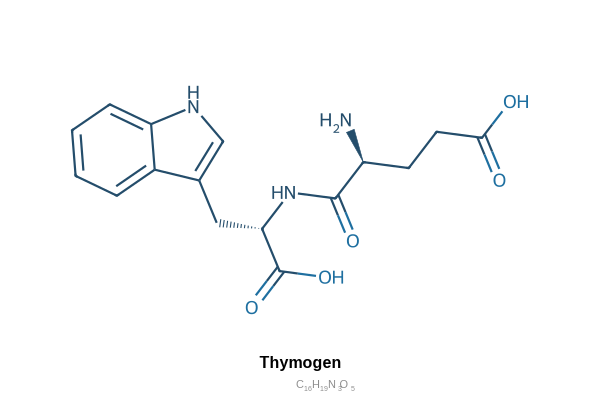
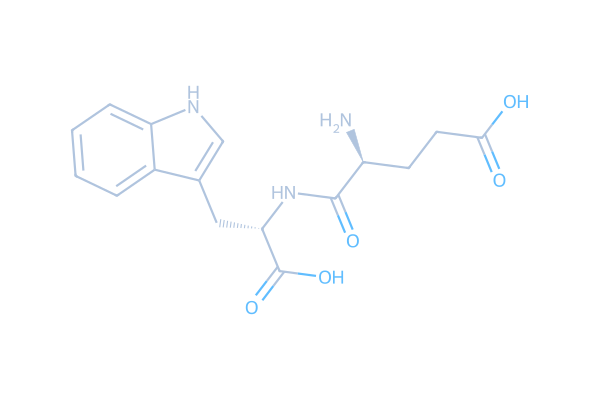
Chemical Structure
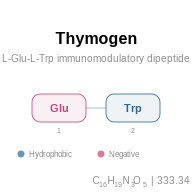
Amino Acid Sequence
CAS
38101-59-6
Formula
C16H19N3O5
Mol. weight
333.34 g/mol
Form
Lyophilized powder
In StockNew Releases
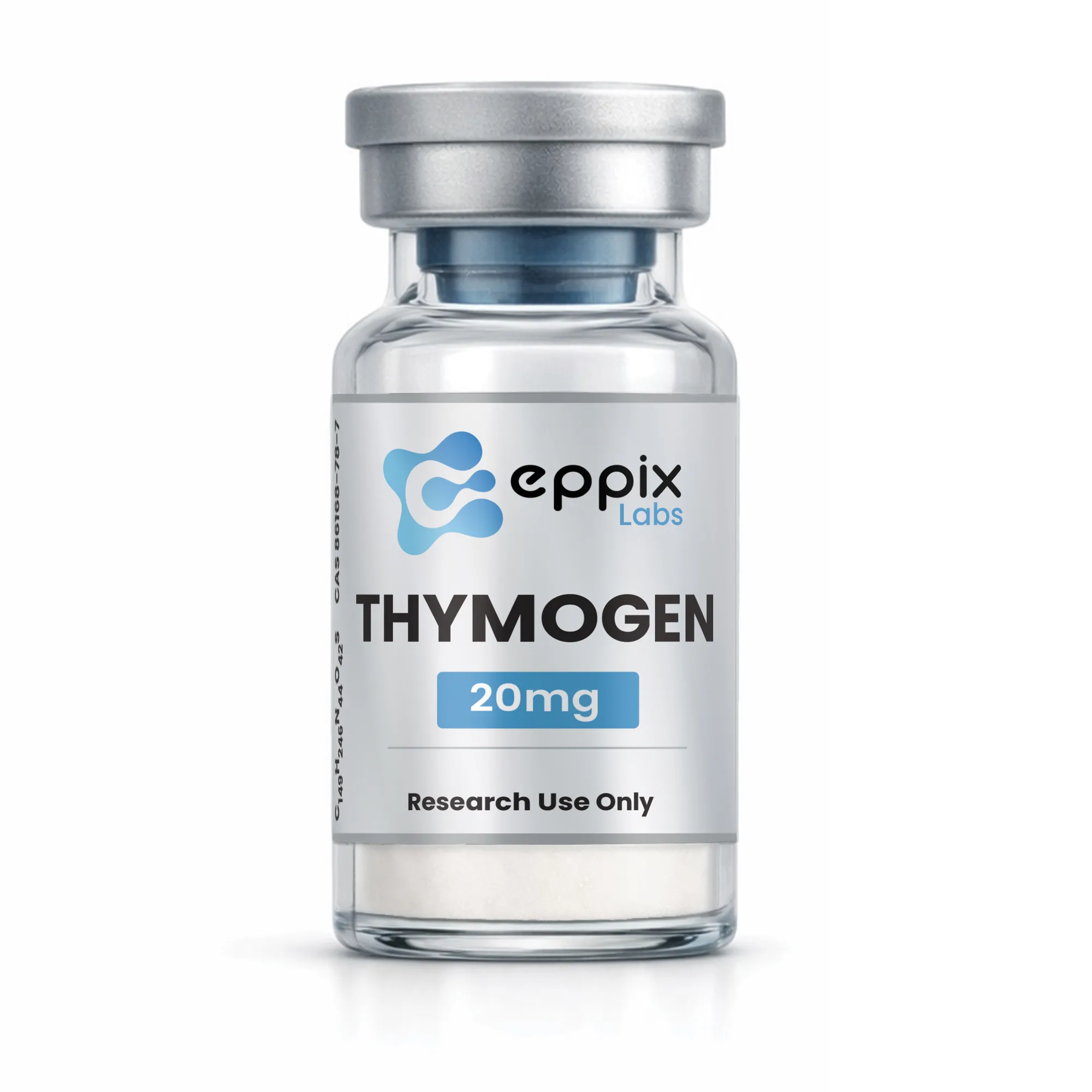
Thymogen 20 mg
Thymogen Canada — 20 mg Lyophilized Vials
Immunomodulatory Dipeptide
Also known as L-Glu-L-Trp (glutamyl-tryptophan)
Thymogen is the dipeptide L-glutamyl-L-tryptophan, studied in research on immune modulation and, in rodent models, on carcinogenesis endpoints.
$44.95CAD
Mix & Match
1 vial — no vial discount yet.
Add 2 more vials for 5% off vials.
After that, 10% at 5 vials, 20% at 10 vials.
Purity VerifiedLab TestedSecure
Research Use Only
This product is intended strictly for laboratory research use within Canada. It is not approved by Health Canada for the diagnosis, treatment, cure, or prevention of any disease. Not for human or veterinary use.
By purchasing, you confirm the material will be used solely for lawful research purposes in accordance with applicable Canadian regulations.
Thymogen is the dipeptide L-glutamyl-L-tryptophan, studied in research on immune modulation and, in rodent models, on carcinogenesis endpoints.
Experimental work examines natural-killer-cell activity and immune-system behaviour under controlled conditions.
Purity
Third-party tested for purity, ID, quantity.
Coming Soon
The certificate of analysis for the 20mg lot is being finalised and will be published here as soon as the lab returns it.
Thymogen is a two-residue peptide derived from thymic peptide research. Published studies have reported that the synthetic dipeptide slows age-related change and inhibits spontaneous carcinogenesis in rats, and that natural-killer-cell cytolytic activity is required for its in vivo antitumour effect.
Additional work covers oral absorption enhancement through lipid and glycosyl conjugation, and analogues evaluated in liver-damage models.
History
Thymogen originated in research on thymic peptide preparations, from which the active dipeptide was isolated and synthesized.
Work from the 1990s onward characterized its immunomodulatory profile across infection, oncology, and surgical research models, giving it an unusually broad literature for a dipeptide.
Key Research Areas
Research into the Glu-Trp dipeptide focuses on immunomodulation and NK-cell-dependent antitumour activity. Frameworks evaluate carcinogenesis endpoints, immune-cell function, and peptide delivery chemistry under controlled preclinical conditions.
4 of the 4 areas below are addressed directly by a paper cited on this page.
Immunomodulation and NK-cell activity models
Addressed on this page by Smith 2003. Each is linked to its source record in the references below, so what was measured — and in what system — can be read rather than taken on trust.
Smith, DL. et al. (2003) — Natural killer cell cytolytic activity is necessary for in vivo antitumor activity of the dipeptide L-glutamyl-L-tryptophan
Carcinogenesis endpoint research
Addressed on this page by Anisimov 2000. Each is linked to its source record in the references below, so what was measured — and in what system — can be read rather than taken on trust.
Anisimov, VN. et al. (2000) — Immunomodulatory synthetic dipeptide L-Glu-L-Trp slows down aging and inhibits spontaneous carcinogenesis in rats
Peptide oral-absorption chemistry
Addressed on this page by Bergeon 2008, Anisimov 2000, Smith 2003. Each is linked to its source record in the references below, so what was measured — and in what system — can be read rather than taken on trust.
Bergeon, JA. et al. (2008) — Oral absorption enhancement of dipeptide L-Glu-L-Trp-OH by lipid and glycosyl conjugation
Anisimov, VN. et al. (2000) — Immunomodulatory synthetic dipeptide L-Glu-L-Trp slows down aging and inhibits spontaneous carcinogenesis in rats
Smith, DL. et al. (2003) — Natural killer cell cytolytic activity is necessary for in vivo antitumor activity of the dipeptide L-glutamyl-L-tryptophan
Thymic peptide structure-activity studies
Addressed on this page by Anisimov 2000, Smith 2003, Bergeon 2008. Each is linked to its source record in the references below, so what was measured — and in what system — can be read rather than taken on trust.
Anisimov, VN. et al. (2000) — Immunomodulatory synthetic dipeptide L-Glu-L-Trp slows down aging and inhibits spontaneous carcinogenesis in rats
Smith, DL. et al. (2003) — Natural killer cell cytolytic activity is necessary for in vivo antitumor activity of the dipeptide L-glutamyl-L-tryptophan
Bergeon, JA. et al. (2008) — Oral absorption enhancement of dipeptide L-Glu-L-Trp-OH by lipid and glycosyl conjugation
The references section of this page cites 4 primary papers published between 2000 and 2023 — a limited but non-trivial record. Every citation is linked to its PubMed or DOI record so it can be read rather than taken on trust, and the summaries above describe what those papers report rather than what the compound is claimed to do.
Research compounds attract claims that outrun their evidence. Below are the ones most often encountered for Thymogen, set against what the papers cited on this page actually report. Where the record is thin or contested, that is stated rather than smoothed over.
Preclinical only
Thymogen is commonly described online in connection with stronger immune function and resistance to infection. In the research literature the same compound is filed under immunomodulation and NK-cell activity models, carcinogenesis endpoint research and peptide oral-absorption chemistry.
The 4 papers cited on this page, published between 2000 and 2023 (1 in animal models) describe laboratory and animal work. None reports a controlled trial in humans. Findings in cell culture or in a rodent model describe what happened in that system; they do not establish that the same occurs in humans, and this compound is not approved for human use.
Nothing above is a statement of what this material does. It is a summary of what has been published and what has not. Eppix Labs supplies research materials only and provides no dosing, administration or protocol guidance.
Every lot of Thymogen is independently assayed before it is released, and the certificate for the lot shipped is published rather than summarised. Where a certificate for a current lot is not yet posted, the lot has not yet been released against it.
Researchers who buy Thymogen in Canada through Eppix Labs receive a batch-labelled vial whose certificate is published against that lot code, so the material can be matched to its analysis rather than to a generic specification.
−20 °C long-term; stable at room temperature in transit
After reconstitution
2–8 °C
Light
Protect from UV and direct light
Freeze-thaw
Avoid repeated cycles
Vehicle
Bacteriostatic water in most published protocols
Format
Lyophilized powder
Thymogen is supplied as lyophilized powder. In the dry state the material is comparatively stable, which is why it ships at ambient temperature without a cold chain; once reconstituted it is a peptide in solution and the handling constraints tighten considerably. At 2 residues it is short enough to be produced by solid-phase synthesis, and the published sequence on this page is what an identity assay is checked against.
Repeated freeze-thaw cycling is the handling error most likely to degrade material of this class, because each cycle concentrates solutes at the ice boundary. Where a protocol calls for the same vial across multiple sessions, the published literature generally describes aliquoting after reconstitution rather than re-freezing the whole volume.
Vials may appear empty on arrival. Lyophilized material collects at the base of the vial and is often not visible until the vial is inspected under direct light.
1 × sealed glass vial in the strength selected (20mg / Single Vial, 20mg / 5-Pack, 20mg / 10-Pack available), batch-labelled
Batch documentation for the lot shipped, once its certificate is published
Discreet outer packaging with no product names on the exterior
Canada Post Xpresspost, tracked, typically 1–2 business days from Canadian stock
Not included
Bacteriostatic water or any other reconstitution vehicle
Syringes, needles or filters
Dosing, administration or protocol guidance of any kind
Reconstitution materials are sourced separately. The reconstitution calculator on this site works out concentrations for a given volume, but it is an arithmetic tool for laboratory record-keeping and not a protocol.
No. Eppix Labs products are supplied exclusively for laboratory research. We do not provide dosing, administration, or usage guidance.
Each unit contains the labeled quantity of Thymogen. Independent third-party analysis verifies purity, identity, and net content per batch.
The unit contains only the research compound. Any laboratory materials required for reconstitution or experimental procedures must be sourced separately.
Duration depends entirely on research design, storage conditions, and laboratory protocol.
Anisimov, VN. et al.(2000)
Immunomodulatory synthetic dipeptide L-Glu-L-Trp slows down aging and inhibits spontaneous carcinogenesis in rats
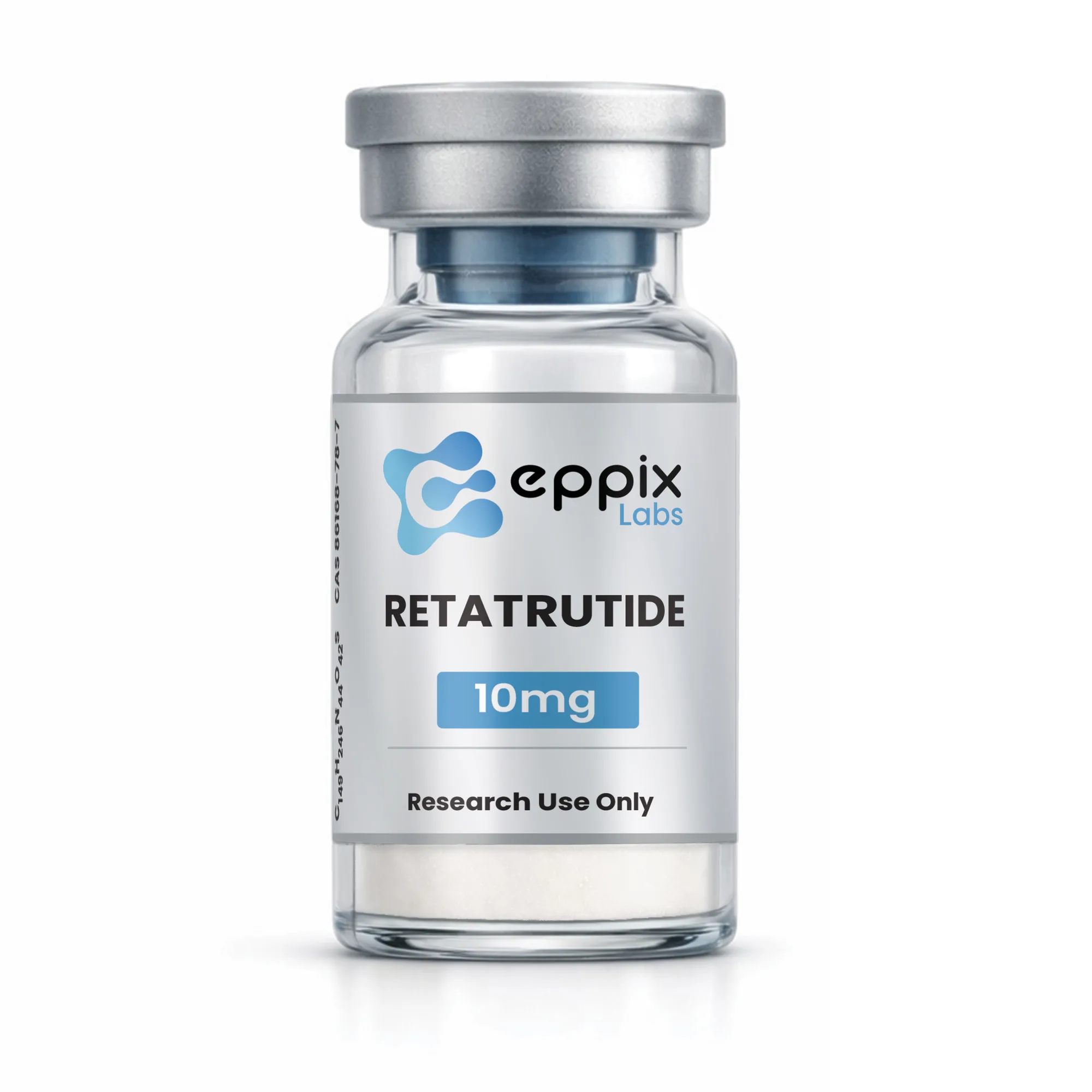
Triple GIP / GLP-1 / Glucagon Agonist · 10, 20, 40 & 120 mg
Retatrutide is a synthetic peptide developed for controlled laboratory research involving multi-receptor signaling systems. It is structurally designed to interact with GLP-1, GIP, and glucagon receptor pathways within experimental environments.
Dual GIP / GLP-1 Agonist · 10, 30 & 65 mg
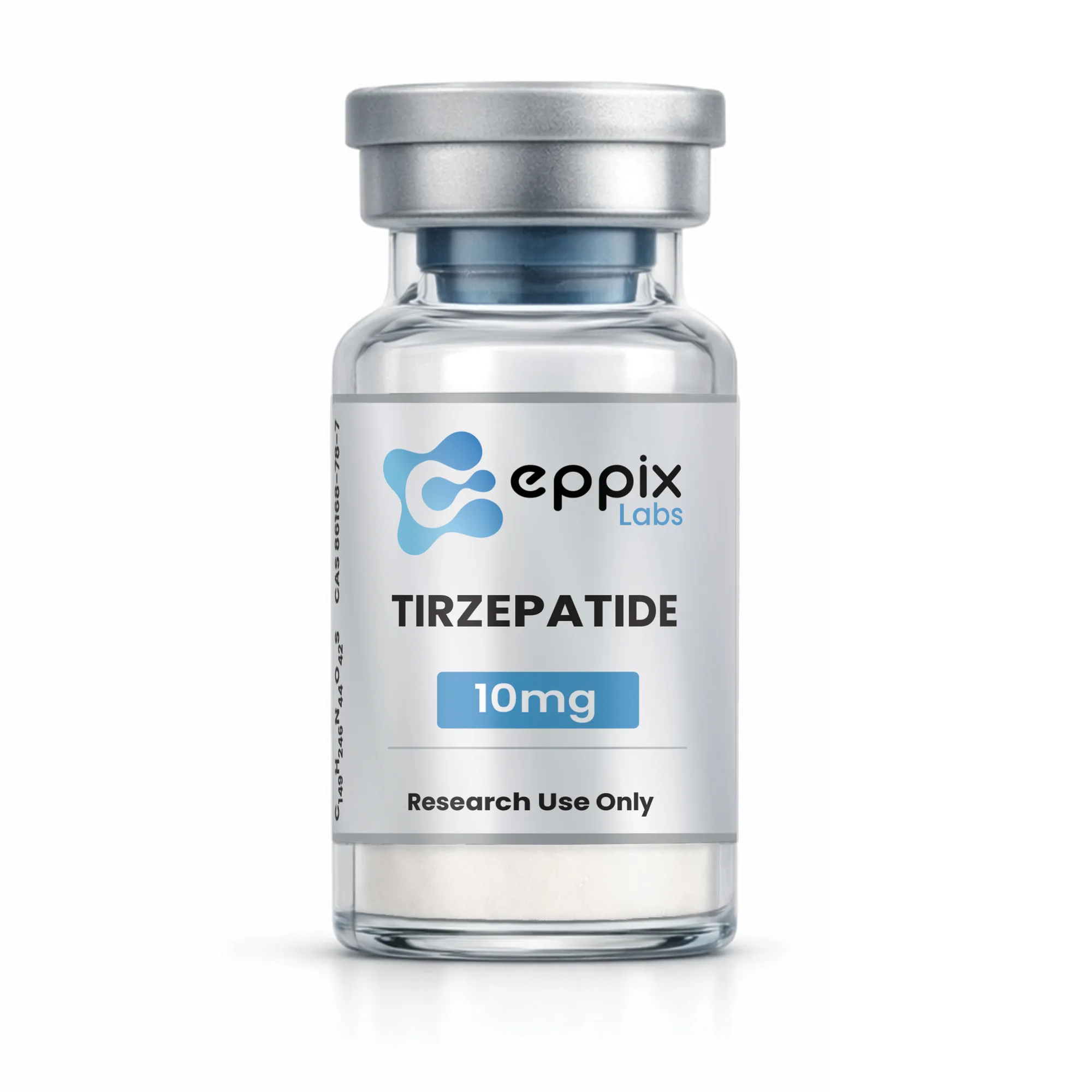
Tirzepatide is a synthetic peptide developed for controlled laboratory research involving dual incretin receptor signaling systems. It is structurally designed to interact with GLP-1 and GIP receptor pathways within experimental environments.
GLP-1 Receptor Agonist · 10 mg
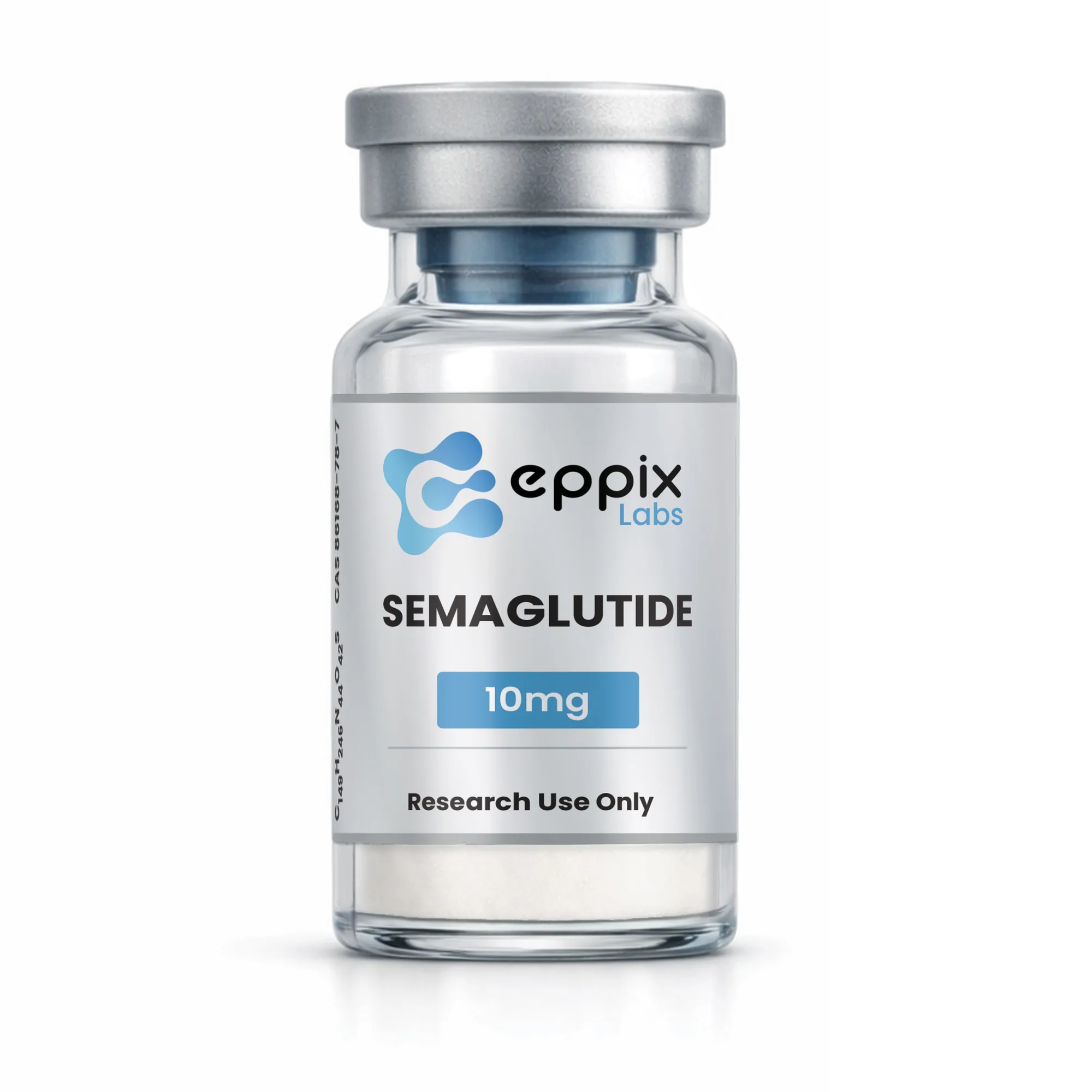
Semaglutide is a synthetic analogue of glucagon-like peptide-1 (GLP-1), a naturally occurring incretin hormone involved in glucose-dependent signaling. It is developed for controlled laboratory investigation within regulated experimental environments.
Selective Amylin Agonist (LY3841136) · 10 mg
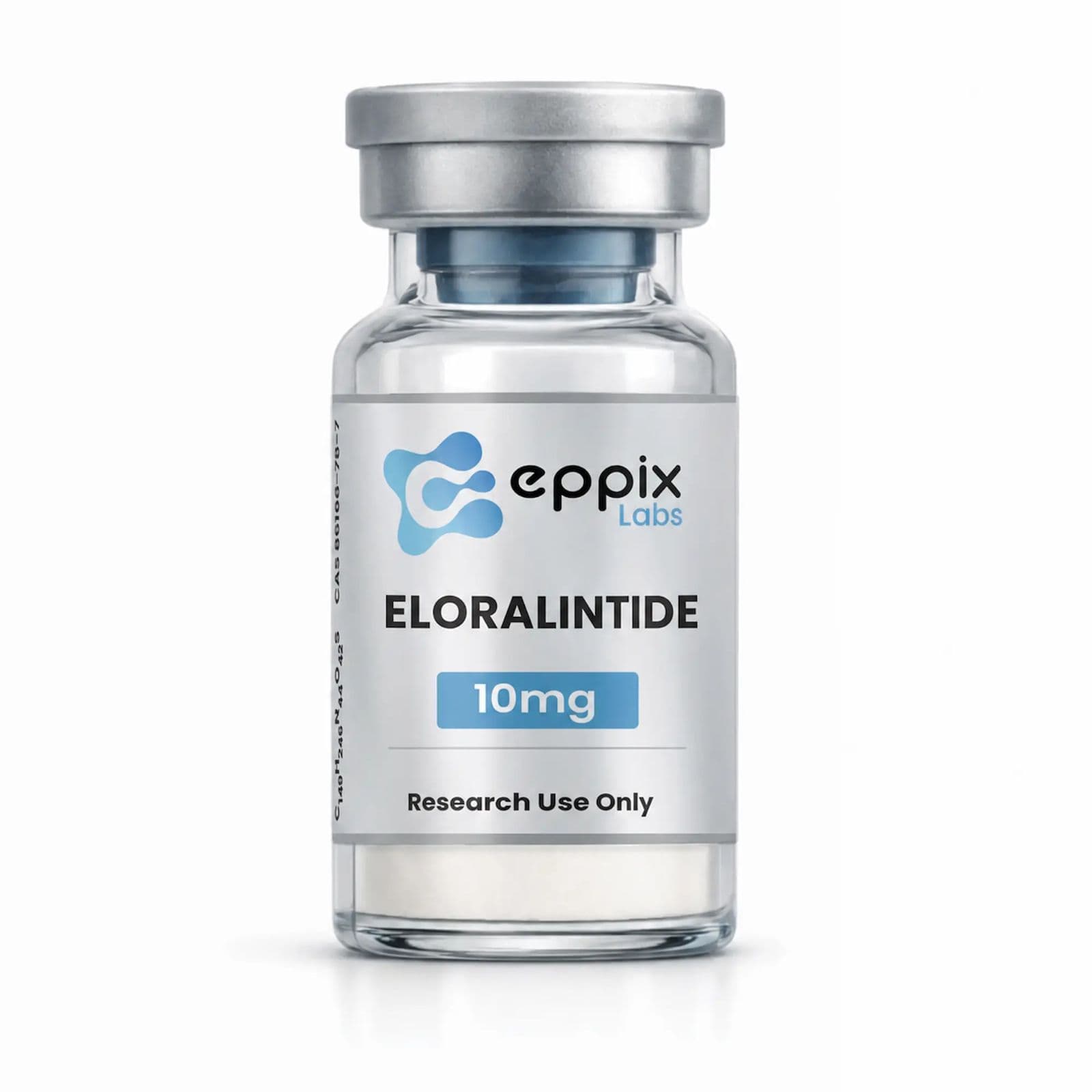
This product is supplied as eloralintide (LY3841136), a long-acting, selective amylin receptor agonist studied in research on metabolic and body-weight regulation.
Have questions about batch verification, documentation, or research specifications? Our team is available to assist with product and compliance inquiries.


 30% Off