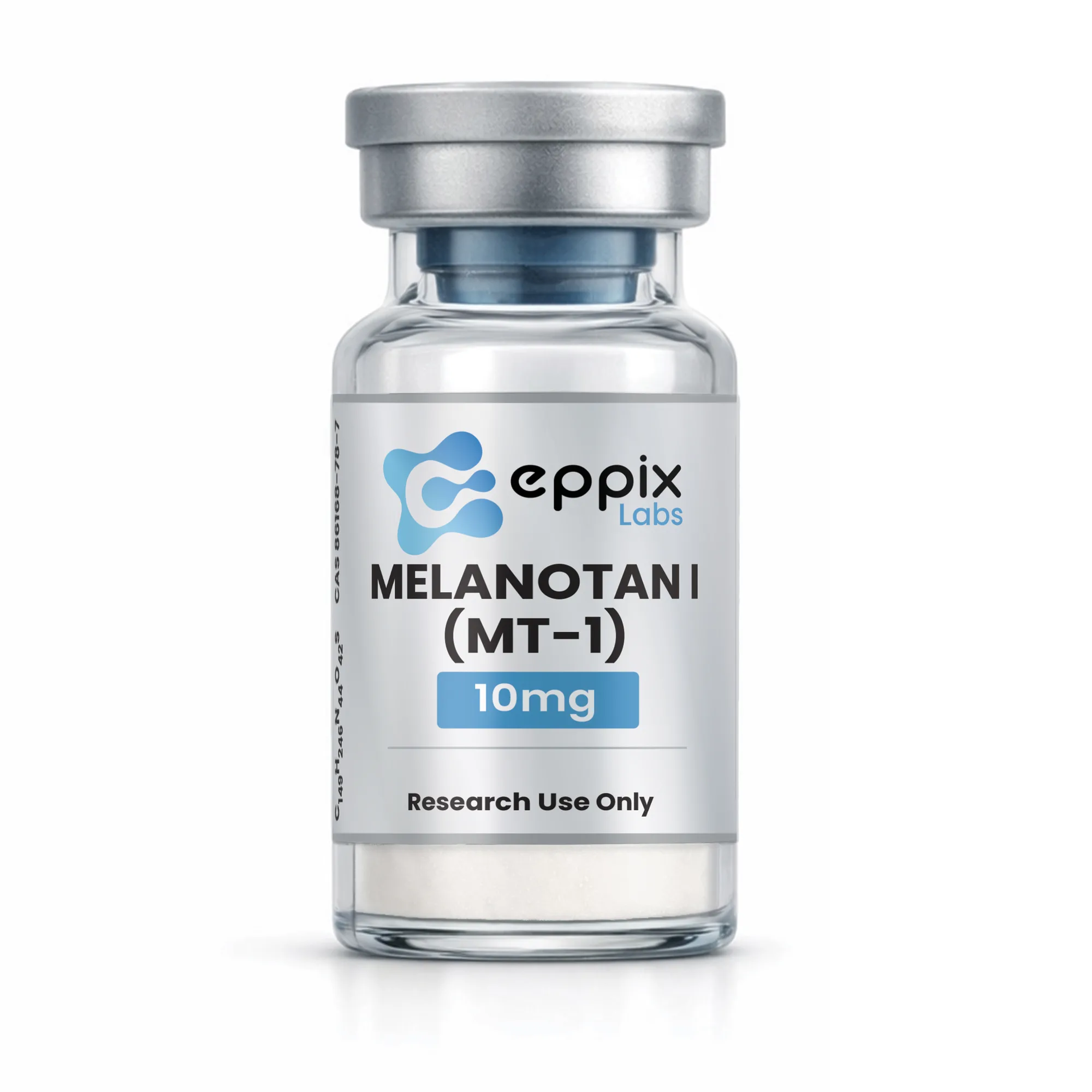
Melanotan-1 (afamelanotide) is a synthetic analogue of α-melanocyte-stimulating hormone, studied in research for melanocortin-receptor signaling.
$29.95CAD
Mix & Match
1 vial — no vial discount yet.
Add 2 more vials for 5% off vials.
After that, 10% at 5 vials, 20% at 10 vials.
Purity VerifiedLab TestedSecure
Research Use Only
This product is intended strictly for laboratory research use within Canada. It is not approved by Health Canada for the diagnosis, treatment, cure, or prevention of any disease. Not for human or veterinary use.
By purchasing, you confirm the material will be used solely for lawful research purposes in accordance with applicable Canadian regulations.
Melanotan-1 (afamelanotide) is a synthetic analogue of α-melanocyte-stimulating hormone, studied in research for melanocortin-receptor signaling.
Experimental models examine its receptor-binding activity and downstream pigmentation and photoprotection pathways.
Melanotan-1 is a potent, stable analogue of α-MSH that activates melanocortin-1 receptors, characterized in research for stimulation of melanin synthesis and photoprotective signaling. Investigations have examined its receptor pharmacology and protective effects in light-sensitivity models.
Studies span dermatological and melanocortin-system research frameworks under structured conditions.
History
Melanotan-1 (afamelanotide) was developed from research into stable α-MSH analogues with prolonged melanocortin-receptor activity.
Clinical and preclinical work characterized its photoprotective profile, notably in erythropoietic protoporphyria research.
Key Research Areas
Research into melanotan-1 focuses on melanocortin-receptor activation and pigmentation/photoprotection models. Frameworks evaluate α-MSH analogue pharmacology and protective endpoints under controlled clinical and preclinical conditions.
0 of the 4 areas below are addressed directly by a paper cited on this page.
Melanocortin-1 receptor activation models
No paper cited on this page reports on melanocortin, receptor or activation. This heading marks where Melanotan-1 is discussed in the category rather than a question the cited literature answers, and it is worth knowing which of these areas has work behind it and which does not.
Pigmentation and photoprotection research
No paper cited on this page reports on pigmentation or photoprotection. This heading marks where Melanotan-1 is discussed in the category rather than a question the cited literature answers, and it is worth knowing which of these areas has work behind it and which does not.
α-MSH analogue pharmacology
No paper cited on this page reports on analogue or pharmacology. This heading marks where Melanotan-1 is discussed in the category rather than a question the cited literature answers, and it is worth knowing which of these areas has work behind it and which does not.
Dermatological endpoint studies
No paper cited on this page reports on dermatological or endpoint. This heading marks where Melanotan-1 is discussed in the category rather than a question the cited literature answers, and it is worth knowing which of these areas has work behind it and which does not.
The references section of this page cites 3 primary papers published between 2016 and 2024 — a thin record. Every citation is linked to its PubMed or DOI record so it can be read rather than taken on trust, and the summaries above describe what those papers report rather than what the compound is claimed to do.
Research compounds attract claims that outrun their evidence. Below are the ones most often encountered for Melanotan-1, set against what the papers cited on this page actually report. Where the record is thin or contested, that is stated rather than smoothed over.
Also called
Melanotan-1 is also referred to as MT-1, afamelanotide, and technically as Afamelanotide / NDP-MSH.
Approved prescription medicines containing the same active ingredient are sold under the brand name Scenesse. The material supplied here is not those products and is not interchangeable with them. Those are regulated pharmaceuticals manufactured to a licensed specification and dispensed under medical supervision. This is a research compound, and what is published for it is its measured purity and content per lot.
Preclinical only
Melanotan-1 is commonly described online in connection with better skin, reduced wrinkles and hair growth. In the research literature the same compound is filed under melanocortin-1 receptor activation models, pigmentation and photoprotection research and α-MSH analogue pharmacology.
The 3 papers cited on this page, published between 2016 and 2024 (2 reviews) describe laboratory and animal work. None reports a controlled trial in humans. Findings in cell culture or in a rodent model describe what happened in that system; they do not establish that the same occurs in humans, and this compound is not approved for human use.
Nothing above is a statement of what this material does. It is a summary of what has been published and what has not. Eppix Labs supplies research materials only and provides no dosing, administration or protocol guidance.
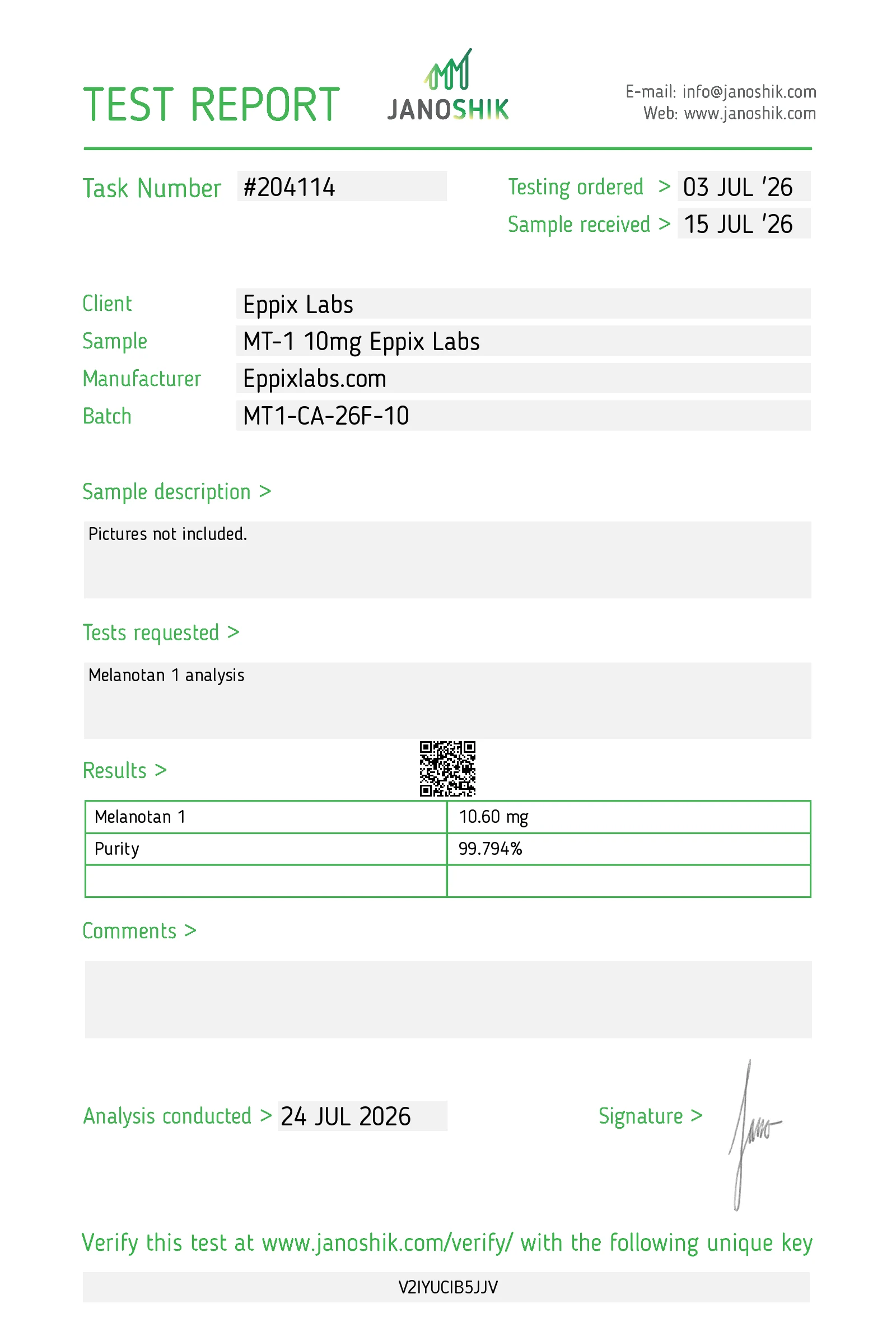
Verification for Melanotan-1 is per lot, not per product. The current 10mg lot MT1-CA-26F-10 returned 99.794% purity, 10.6 mg measured, 106% of the labelled 10 mg, assayed by Janoshik. Those figures are the laboratory's, published in full rather than reduced to a badge.
Purity is half the number. It states what fraction of the material in the vial is Melanotan-1; it says nothing about how much material is in the vial, and a short-filled vial can return a purity result that is entirely accurate. The figure that answers the second question is measured mass against expected content — for Melanotan-1, this lot measured 106% of its labelled 10 mg. Both numbers are published for every lot, whichever way they fall.
The lot code printed on the vial matches the code on the certificate for Melanotan-1. Matching the two is what confirms the unit in hand came from the batch that was tested — a certificate not tied to a lot code proves nothing about any particular unit.
Researchers who buy Melanotan-1 in Canada through Eppix Labs receive the lot described by the certificate above: the code printed on the vial label is the code on the certificate, and both are searchable on the batch verification page.
−20 °C long-term; stable at room temperature in transit
After reconstitution
2–8 °C
Light
Protect from UV and direct light
Freeze-thaw
Avoid repeated cycles
Vehicle
Bacteriostatic water in most published protocols
Format
Lyophilized powder
Melanotan-1 is supplied as lyophilized powder. In the dry state the material is comparatively stable, which is why it ships at ambient temperature without a cold chain; once reconstituted it is a peptide in solution and the handling constraints tighten considerably. At 13 residues it is short enough to be produced by solid-phase synthesis, and the published sequence on this page is what an identity assay is checked against.
Repeated freeze-thaw cycling is the handling error most likely to degrade material of this class, because each cycle concentrates solutes at the ice boundary. Where a protocol calls for the same vial across multiple sessions, the published literature generally describes aliquoting after reconstitution rather than re-freezing the whole volume.
Vials may appear empty on arrival. Lyophilized material collects at the base of the vial and is often not visible until the vial is inspected under direct light.
1 × sealed glass vial in the strength selected (10mg / Single Vial, 10mg / 5-Pack, 10mg / 10-Pack available), batch-labelled
The batch-linked Certificate of Analysis for the exact lot shipped
Discreet outer packaging with no product names on the exterior
Canada Post Xpresspost, tracked, typically 1–2 business days from Canadian stock
Not included
Bacteriostatic water or any other reconstitution vehicle
Syringes, needles or filters
Dosing, administration or protocol guidance of any kind
Reconstitution materials are sourced separately. The reconstitution calculator on this site works out concentrations for a given volume, but it is an arithmetic tool for laboratory record-keeping and not a protocol.
No. Eppix Labs products are supplied exclusively for laboratory research. We do not provide dosing, administration, or usage guidance.
Each unit contains the labeled quantity of melanotan 1. Independent third-party analysis verifies purity, identity, and net content per batch.
The unit contains only the research compound. Any laboratory materials required for reconstitution or experimental procedures must be sourced separately.
Duration depends entirely on research design, storage conditions, and laboratory protocol.
Wensink, D. et al.(2021)
Afamelanotide for prevention of phototoxicity in erythropoietic protoporphyria
Triple GIP / GLP-1 / Glucagon Agonist · 10, 20, 40 & 120 mg
Retatrutide is a synthetic peptide developed for controlled laboratory research involving multi-receptor signaling systems. It is structurally designed to interact with GLP-1, GIP, and glucagon receptor pathways within experimental environments.
Dual GIP / GLP-1 Agonist · 10, 30 & 65 mg
Tirzepatide is a synthetic peptide developed for controlled laboratory research involving dual incretin receptor signaling systems. It is structurally designed to interact with GLP-1 and GIP receptor pathways within experimental environments.
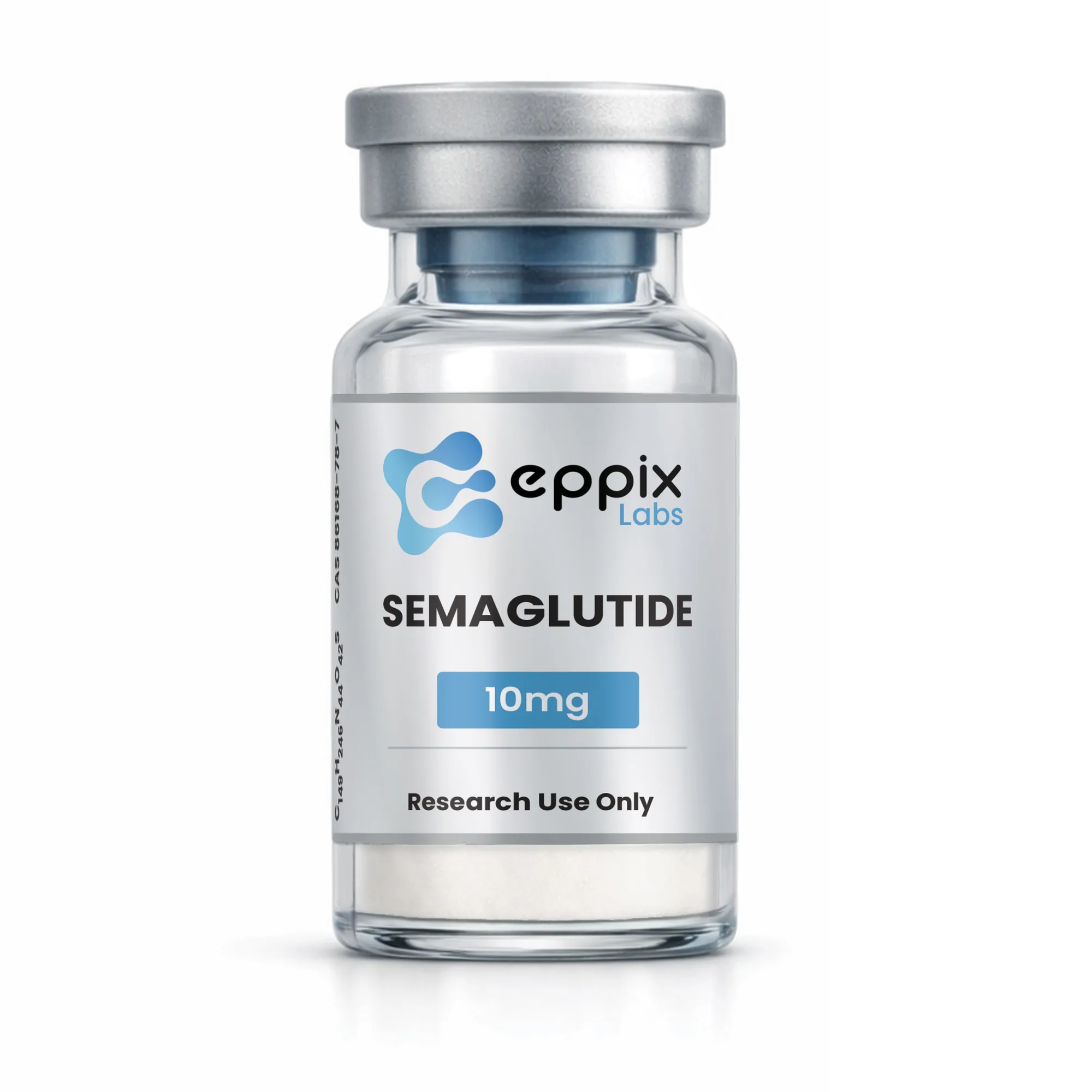
GLP-1 Receptor Agonist · 10 mg
Semaglutide is a synthetic analogue of glucagon-like peptide-1 (GLP-1), a naturally occurring incretin hormone involved in glucose-dependent signaling. It is developed for controlled laboratory investigation within regulated experimental environments.
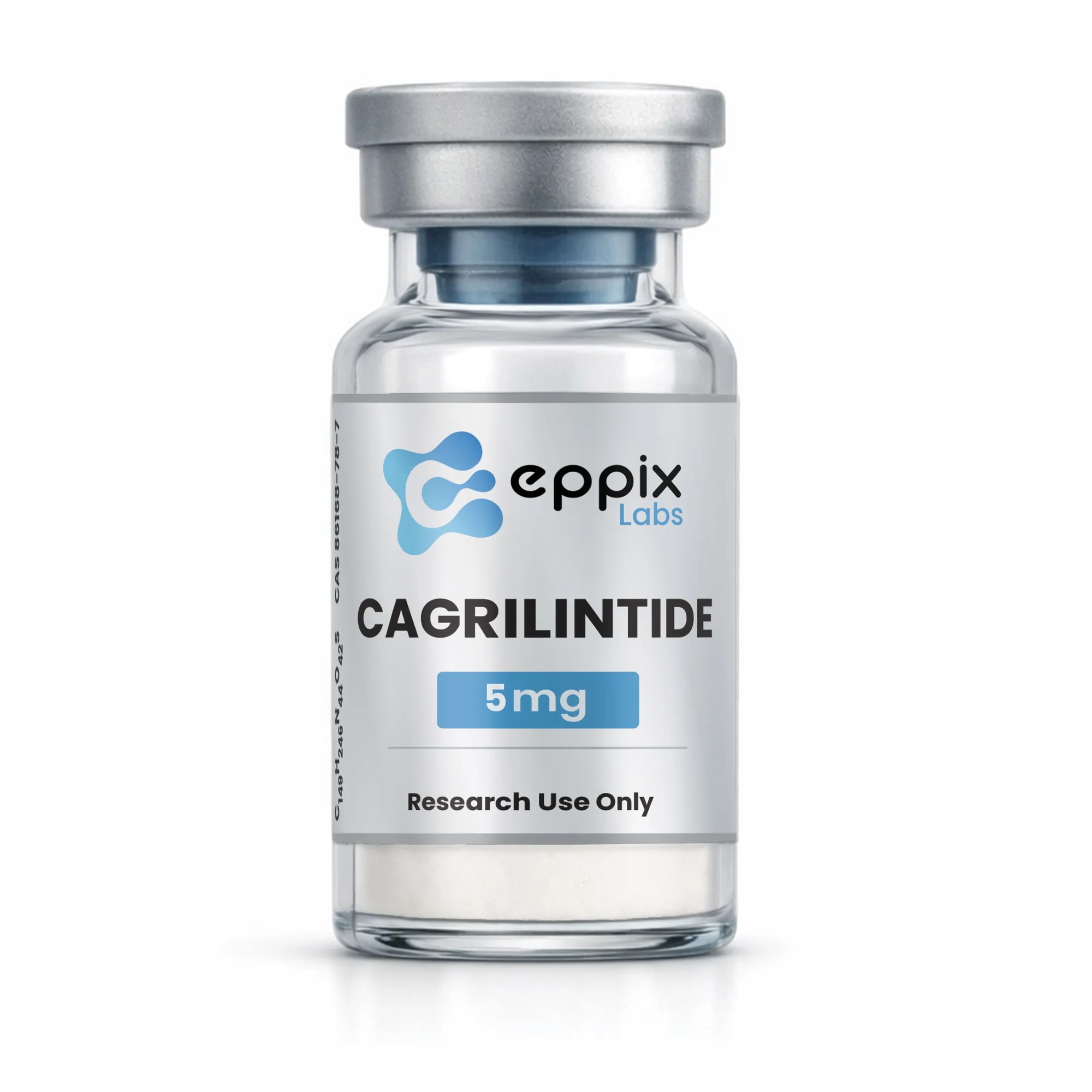
Long-Acting Amylin Analogue · 5 & 10 mg
Cagrilintide is a synthetic peptide developed for controlled laboratory research involving amylin receptor signaling systems. It is structurally designed to interact with amylin-associated pathways within experimental environments.
Have questions about batch verification, documentation, or research specifications? Our team is available to assist with product and compliance inquiries.