

 Sale
SaleMetabolic & GLP-1
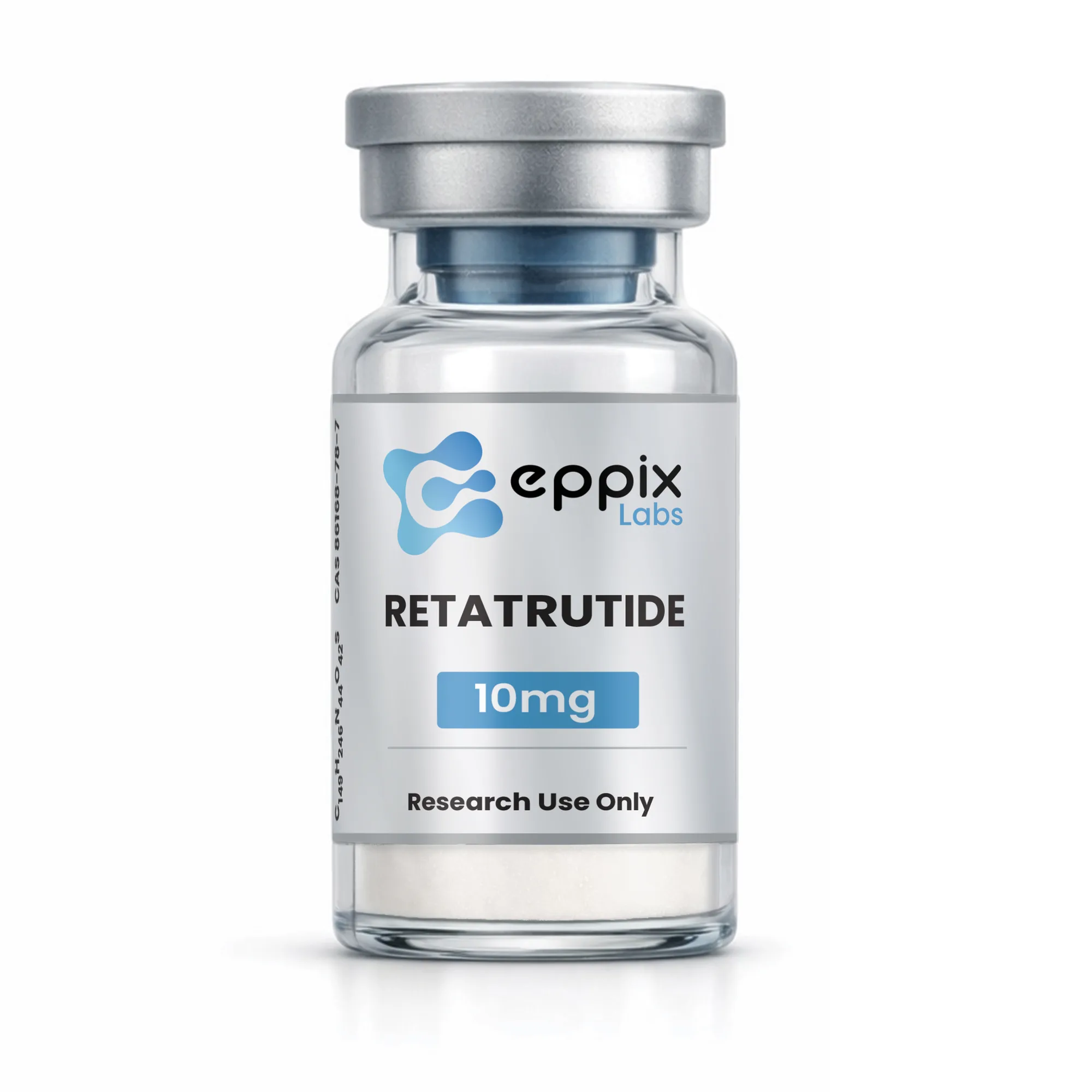
Retatrutide
Next-generation GLP receptor agonist studied for metabolic signaling and nutrient partitioning pathways
RETA-CA-26E-0199.637%
11.76 mg / 10 mg
$60.00$70.00CAD
GLP-1 / Glucagon Dual Agonist
Also known as IBI362 / LY3305677
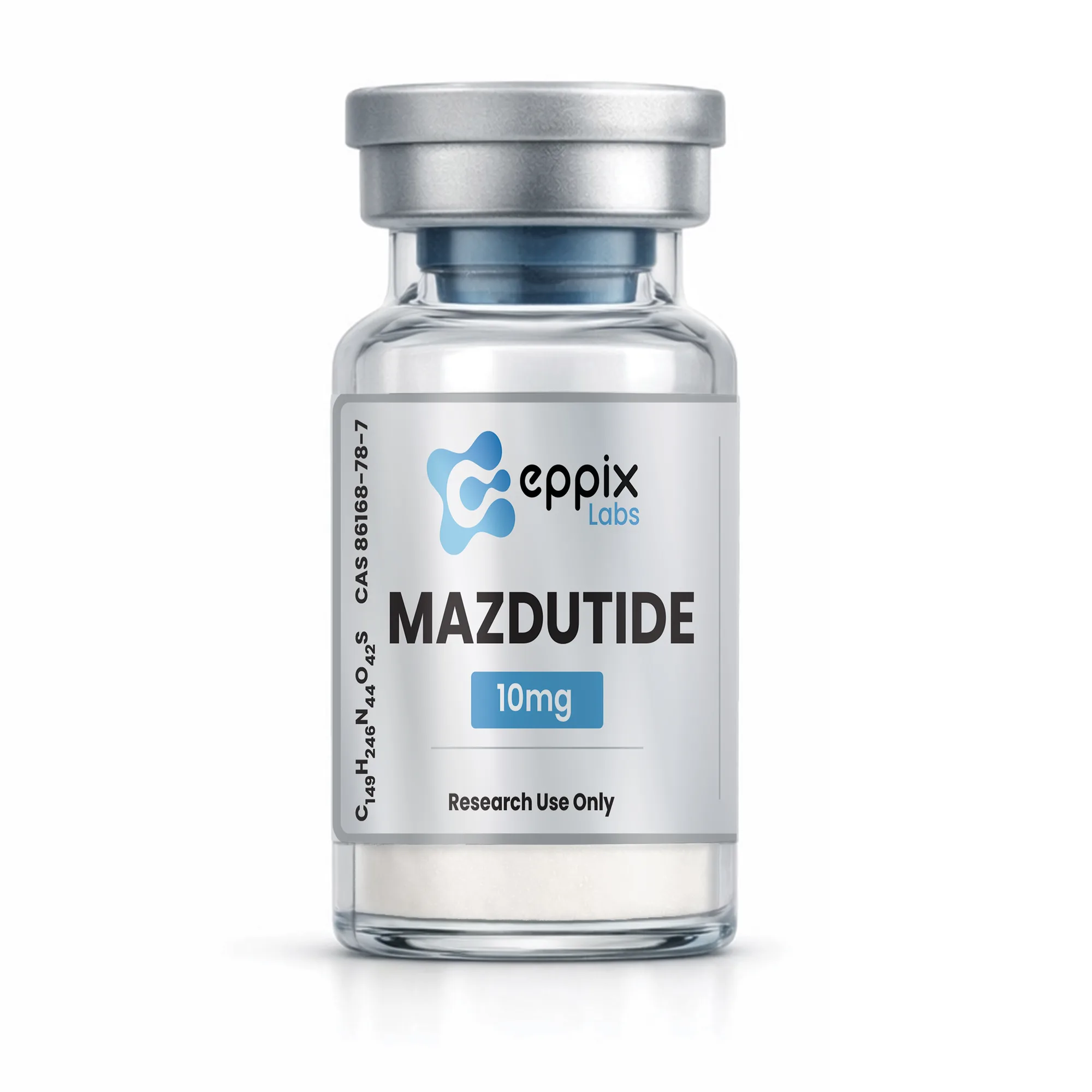
Mazdutide is a synthetic peptide studied in research as a dual agonist of the glucagon-like peptide-1 (GLP-1) and glucagon receptors.
Mix & Match
1 vial — no vial discount yet.
Add 2 more vials for 5% off.
After that, 10% at 5 vials, 20% at 10 vials.
🔬 This product is coming soon — ordering is not yet available.
This product is intended strictly for laboratory research use within Canada. It is not approved by Health Canada for the diagnosis, treatment, cure, or prevention of any disease. Not for human or veterinary use.
By purchasing, you confirm the material will be used solely for lawful research purposes in accordance with applicable Canadian regulations.
Mazdutide is a synthetic peptide studied in research as a dual agonist of the glucagon-like peptide-1 (GLP-1) and glucagon receptors.
Experimental models examine its combined incretin and glucagon signaling within controlled metabolic frameworks.
Third-party tested for purity, ID, quantity.
Coming Soon
The certificate of analysis for the 10mg lot is being finalised and will be published here as soon as the lab returns it.
Mazdutide is a GLP-1/glucagon receptor dual agonist based on the oxyntomodulin scaffold, characterized in research for combined activation of two metabolic-regulatory receptors. Investigations have examined effects on glycemic control and body-weight endpoints in clinical research populations.
Studies evaluate the dual-agonist pharmacology and metabolic outcomes under structured conditions.
Mazdutide emerged from research into multi-receptor incretin agonists designed to combine the metabolic effects of GLP-1 and glucagon signaling.
Clinical trials have since characterized its efficacy and pharmacology in obesity and type 2 diabetes research.
Research into mazdutide focuses on GLP-1/glucagon dual-receptor signaling and metabolic regulation. Frameworks evaluate glycemic control, energy expenditure, and body-weight endpoints under controlled clinical and preclinical conditions.
2 of the 4 areas below are addressed directly by a paper cited on this page.
Addressed on this page by Ji 2022, Xie 2024. Each is linked to its source record in the references below, so what was measured — and in what system — can be read rather than taken on trust.
No paper cited on this page reports on incretin or metabolic. This heading marks where Mazdutide is discussed in the category rather than a question the cited literature answers, and it is worth knowing which of these areas has work behind it and which does not.
No paper cited on this page reports on energy or expenditure. This heading marks where Mazdutide is discussed in the category rather than a question the cited literature answers, and it is worth knowing which of these areas has work behind it and which does not.
Addressed on this page by Ji 2022, Ji 2025, Xie 2024. Each is linked to its source record in the references below, so what was measured — and in what system — can be read rather than taken on trust.
The references section of this page cites 3 primary papers published between 2022 and 2025 — a thin record. Every citation is linked to its PubMed or DOI record so it can be read rather than taken on trust, and the summaries above describe what those papers report rather than what the compound is claimed to do.
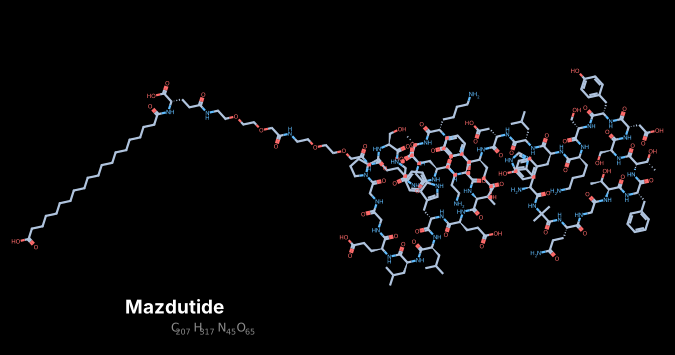
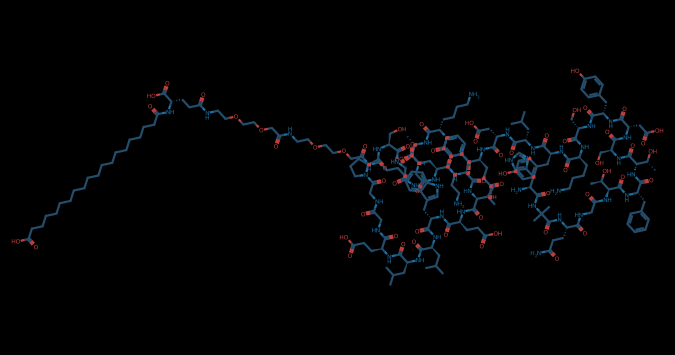
Mazdutide is frequently listed as a peptide by suppliers in this market. It is not one. The structure published on this page is the compound's actual chemistry, and research on it should be read against its own class rather than against peptide literature.
Research compounds attract claims that outrun their evidence. Below are the ones most often encountered for Mazdutide, set against what the papers cited on this page actually report. Where the record is thin or contested, that is stated rather than smoothed over.
Mazdutide is also referred to as mazu, and technically as IBI362 / LY3305677.
Mazdutide is commonly described online in connection with weight loss, appetite suppression and fat reduction. In the research literature the same compound is filed under GLP-1/glucagon dual-agonist models, incretin-pathway metabolic research and energy-expenditure signaling studies.
Of the 3 papers cited on this page, published between 2022 and 2025, 2 report work in human participants — Ji 2022 and Xie 2024. Human data for a molecule is not the same as evidence for material supplied as a research compound: published trials use pharmaceutical-grade product under medical supervision at defined doses. What is established for the material sold here is its measured purity and content per lot.
Nothing above is a statement of what this material does. It is a summary of what has been published and what has not. Eppix Labs supplies research materials only and provides no dosing, administration or protocol guidance.
Every lot of Mazdutide is independently assayed before it is released, and the certificate for the lot shipped is published rather than summarised. Where a certificate for a current lot is not yet posted, the lot has not yet been released against it.
Researchers who buy Mazdutide in Canada through Eppix Labs receive a batch-labelled vial whose certificate is published against that lot code, so the material can be matched to its analysis rather than to a generic specification.
Mazdutide is supplied as lyophilized powder. It is not a peptide, and solvent behaviour follows from its own chemistry rather than from the aqueous-vehicle conventions that apply to peptide material — the published literature for this compound is the reference for solvent selection, not a general peptide protocol.
Dry storage below freezing and protection from light are the general controls. As with any lyophilized material, the powder frequently sits as a thin film at the base of the vial and is easy to mistake for an empty vial before inspection.
Vials may appear empty on arrival. Lyophilized material collects at the base of the vial and is often not visible until the vial is inspected under direct light.
Reconstitution materials are sourced separately. The reconstitution calculator on this site works out concentrations for a given volume, but it is an arithmetic tool for laboratory record-keeping and not a protocol.
No. Eppix Labs products are supplied exclusively for laboratory research. We do not provide dosing, administration, or usage guidance.
Each unit contains the labeled quantity of mazdutide. Independent third-party analysis verifies purity, identity, and net content per batch.
The unit contains only the research compound. Any laboratory materials required for reconstitution or experimental procedures must be sourced separately.
Duration depends entirely on research design, storage conditions, and laboratory protocol.
Safety and efficacy of a GLP-1 and glucagon receptor dual agonist mazdutide (IBI362) 9 mg and 10 mg in Chinese adults with overweight or obesity: A randomised, placebo-controlled, multiple-ascending-dose phase 1b trial
PubMedSeven glucagon-like peptide-1 receptor agonists and polyagonists for weight loss in patients with obesity or overweight: an updated systematic review and network meta-analysis of randomized controlled trials
PubMedRelated
SaleMetabolic & GLP-1
Next-generation GLP receptor agonist studied for metabolic signaling and nutrient partitioning pathways
RETA-CA-26E-0199.637%
11.76 mg / 10 mg
$60.00$70.00CAD
 Sale
SaleMetabolic & GLP-1
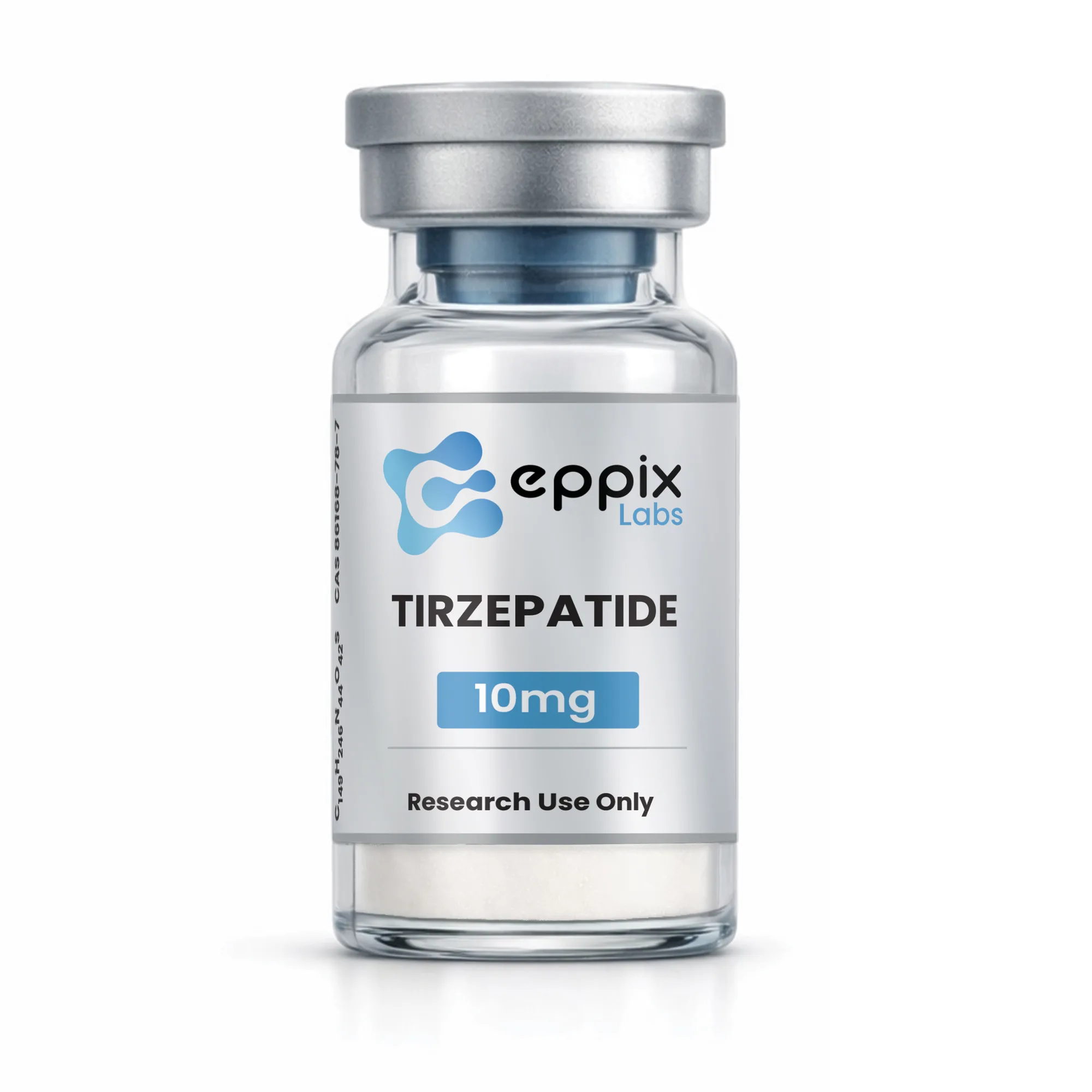
Dual incretin receptor agonist studied for glucose regulation, metabolic signaling, and weight pathway research
TIRZ-CA-26G-1099.634%
11.42 mg / 10 mg
$35.00$40.00CAD
Metabolic & GLP-1
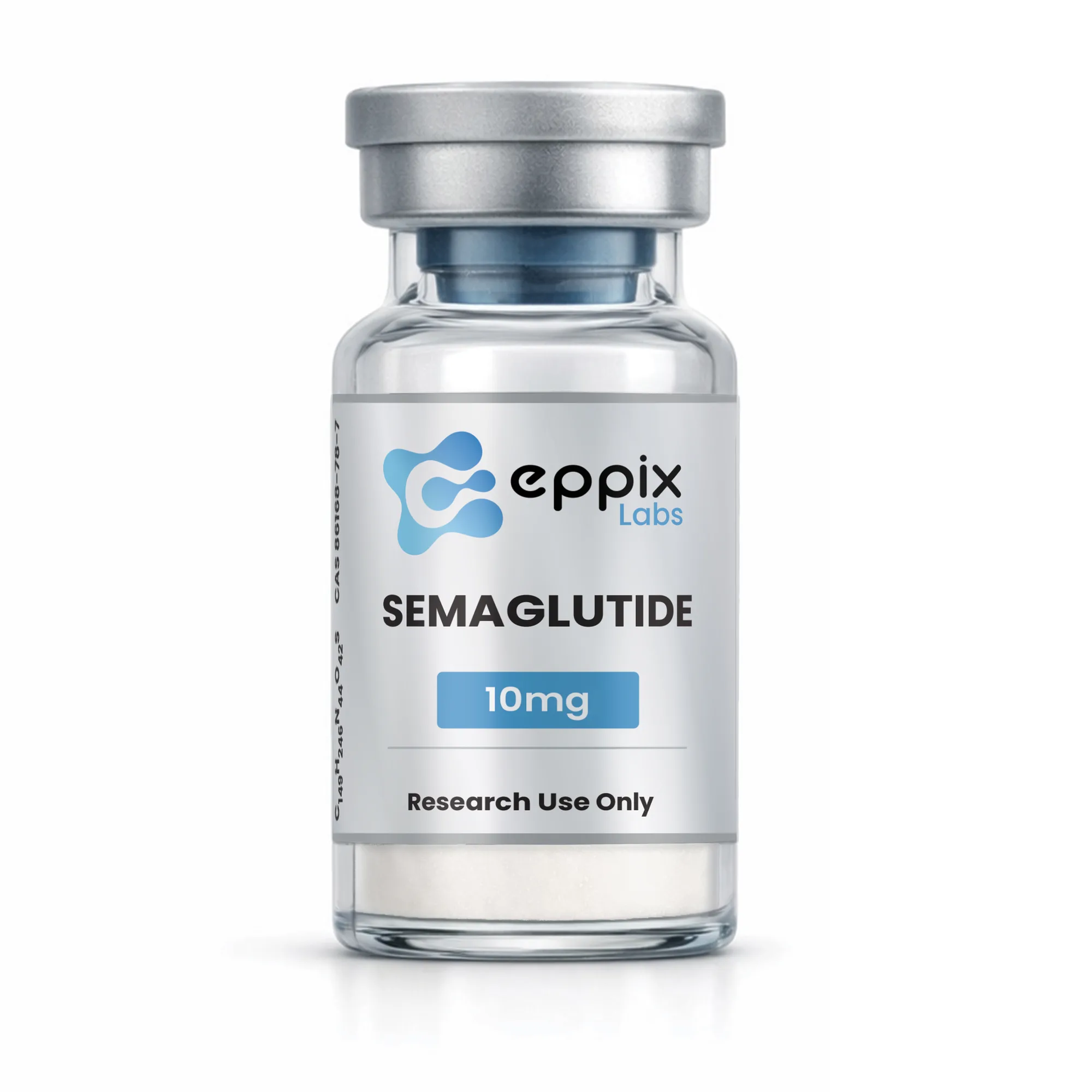
Studied in metabolic research for its effects on glucose regulation, appetite signaling, and energy balance.
10 mgSEMA-CA-26F-1099.504%
11.27 mg / 10 mg
$70.00CAD
Metabolic & GLP-1
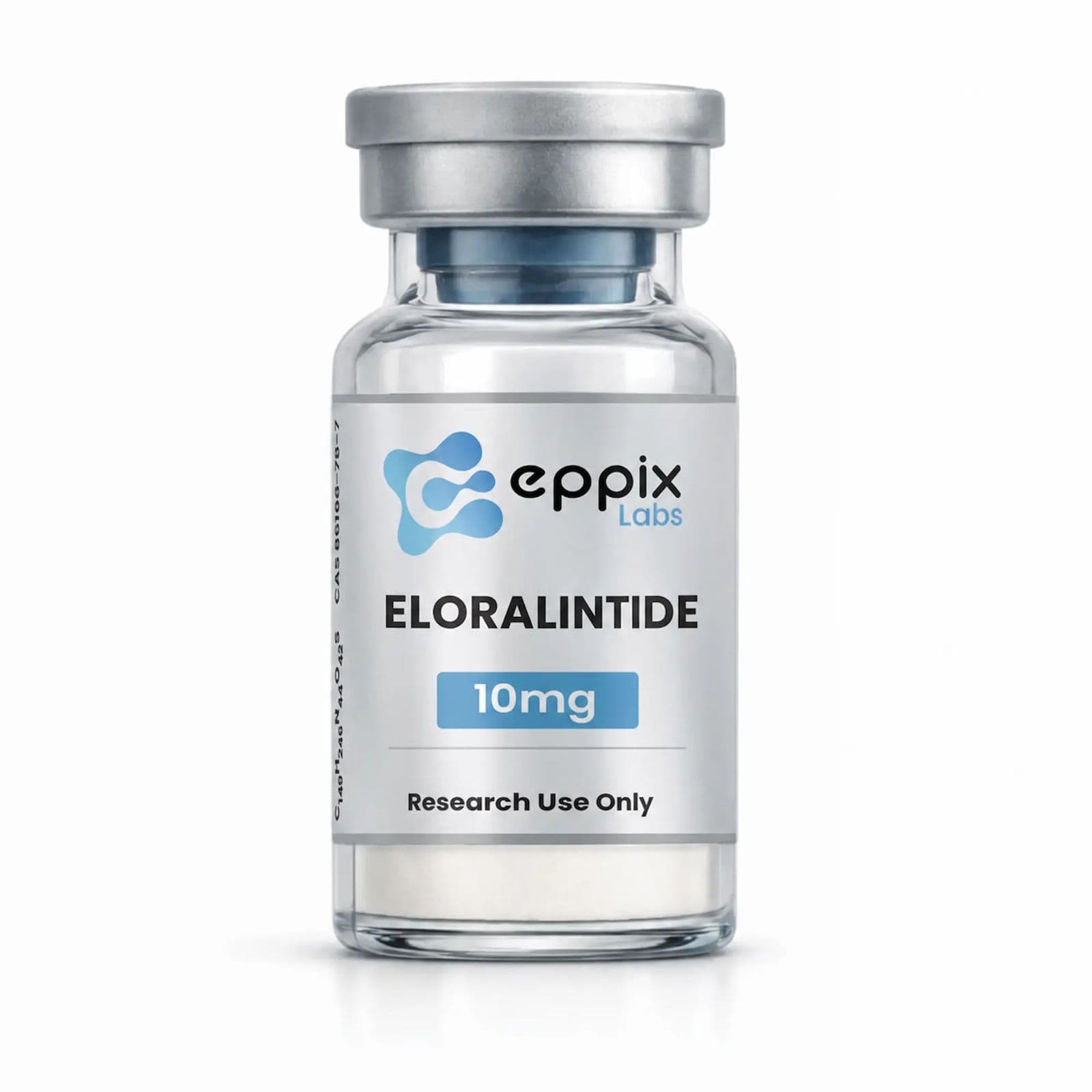
This product is supplied as eloralintide (LY3841136), a long-acting, selective amylin receptor agonist studied in research on metabolic and body-weight regulation.
10 mgELOR-CA-26G-1099.810%
12.42 mg / 10 mg
$150.00CAD