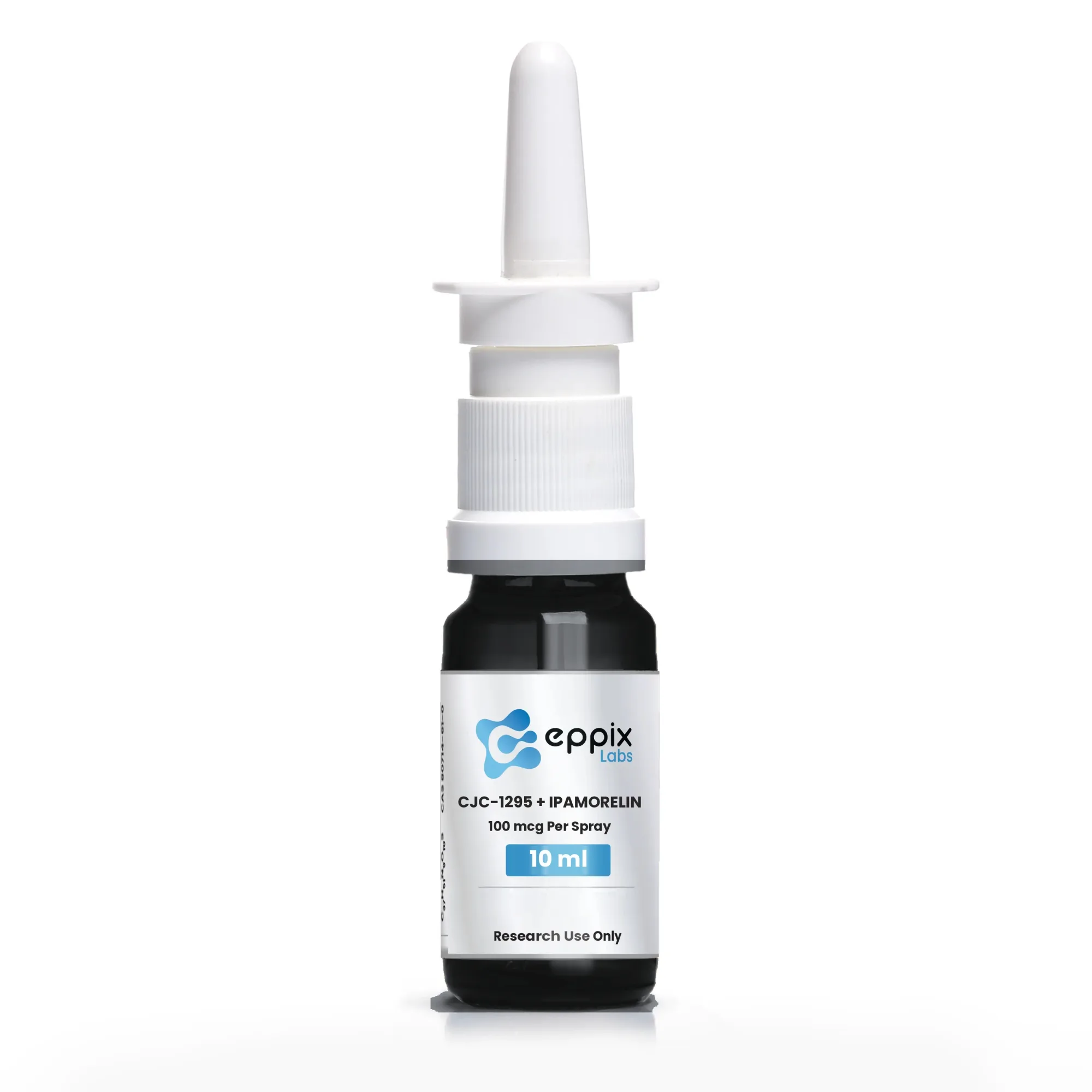
CJC-1295 Ipamorelin Spray is a combination preparation containing two synthetic peptides studied in connection with the growth hormone / IGF-1 axis. CJC-1295 is a modified growth hormone-releasing hormone analogue, and ipamorelin is a pentapeptide ghrelin receptor (GHS-R1a) ligand. The combination is supplied for laboratory research only.
$94.95CAD
Purity VerifiedLab TestedSecure
Research Use Only
This product is intended strictly for laboratory research use within Canada. It is not approved by Health Canada for the diagnosis, treatment, cure, or prevention of any disease. Not for human or veterinary use.
By purchasing, you confirm the material will be used solely for lawful research purposes in accordance with applicable Canadian regulations.
CJC-1295 Ipamorelin Spray is a combination preparation containing two synthetic peptides studied in connection with the growth hormone / IGF-1 axis. CJC-1295 is a modified growth hormone-releasing hormone analogue, and ipamorelin is a pentapeptide ghrelin receptor (GHS-R1a) ligand. The combination is supplied for laboratory research only.
Published literature on the two peptides is largely descriptive. Review articles in sports medicine, orthopaedics and endocrinology discuss them as examples of growth hormone secretagogues that circulate outside approved clinical use, and analytical chemistry work has addressed their detection in biological matrices. Controlled studies of the specific combination, and of any spray formulation of it, are not represented in the available record.
As characterised in review literature, the two components act at separate points on the same axis. CJC-1295 is described as a GHRH analogue with amino acid substitutions intended to resist enzymatic degradation, engaging the GHRH receptor on somatotroph cells. Ipamorelin is described as a selective ghrelin receptor agonist acting through a distinct receptor population. Combination preparations are discussed in these reviews on the rationale of engaging both pathways, though the reviews themselves note that supporting experimental data for the pairing is limited.
Research endpoints addressed in the published record are mostly indirect. Narrative and critical reviews catalogue reported use patterns, regulatory status, and the gap between mechanistic rationale and clinical evidence for GH-IGF1 axis secretagogues. Separate analytical work has developed mass spectrometry methods for identifying these and related bioactive peptides in plasma for doping control purposes. No well-controlled trial of the combination appears among the available references, and claims about relative potency or efficacy of the pairing cannot be grounded in this literature.
History
CJC-1295 and ipamorelin were developed separately as growth hormone secretagogues during investigation of GHRH analogues and ghrelin receptor ligands. The origin of the paired formulation, and of spray-format preparations specifically, is not documented in the available literature; it appears in reviews as an observed market and compounding practice rather than as a product with a traceable development record.
The research record since has been dominated by review and analytical work rather than primary pharmacology. Doping control chemistry addressed detection of these peptides in plasma over a decade ago, and more recent review articles across sports medicine, orthopaedics, gerontology and endocrinology have revisited the class in the context of unapproved use and antidoping policy.
Key Research Areas
The combination appears in the literature chiefly within review frameworks examining growth hormone secretagogues and the GH-IGF1 axis, and within analytical frameworks developed for peptide detection in biological samples. Reviews characterise the mechanistic rationale for pairing a GHRH analogue with a ghrelin receptor ligand while noting the absence of controlled studies supporting the combination. The published record on this specific preparation is thin.
2 of the 4 areas below are addressed directly by a paper cited on this page.
GH-IGF1 axis secretagogue models
Addressed on this page by Dominikowski 2026. Each is linked to its source record in the references below, so what was measured — and in what system — can be read rather than taken on trust.
Dominikowski, A. et al. (2026) — The emerging landscape of performance-enhancing peptides modulating GH-IGF1 axis: bridging the gap between clinical evidence and patient self-administration
GHRH receptor signaling studies
No paper cited on this page reports on ghrh or receptor. This heading marks where CJC-1295 Ipamorelin Spray is discussed in the category rather than a question the cited literature answers, and it is worth knowing which of these areas has work behind it and which does not.
Ghrelin receptor (GHS-R1a) ligand research
No paper cited on this page reports on ghrelin, receptor or ligand. This heading marks where CJC-1295 Ipamorelin Spray is discussed in the category rather than a question the cited literature answers, and it is worth knowing which of these areas has work behind it and which does not.
Peptide detection and doping control analysis
Addressed on this page by Kwok 2013, Coutinho 2026, Villegas 2026. Each is linked to its source record in the references below, so what was measured — and in what system — can be read rather than taken on trust.
Kwok, WH. et al. (2013) — Doping control analysis of seven bioactive peptides in horse plasma by liquid chromatography-mass spectrometry
Coutinho, LFD. et al. (2026) — A new era of doping? Use of peptide and peptide-analog drugs in recreational and professional sport and bodybuilding: a critical review
Villegas, Meza AD. et al. (2026) — Injectable Peptides in Sports Medicine: A Structured Narrative Review of Evidence, Safety, and Antidoping Implications
The references section of this page cites 5 primary papers published between 2013 and 2026 — a limited but non-trivial record. Every citation is linked to its PubMed or DOI record so it can be read rather than taken on trust, and the summaries above describe what those papers report rather than what the compound is claimed to do.
CJC-1295 Ipamorelin Spray is frequently listed as a peptide by suppliers in this market. It is not one. The structure published on this page is the compound's actual chemistry, and research on it should be read against its own class rather than against peptide literature.
Research compounds attract claims that outrun their evidence. Below are the ones most often encountered for CJC-1295 Ipamorelin Spray, set against what the papers cited on this page actually report. Where the record is thin or contested, that is stated rather than smoothed over.
Preclinical only
CJC-1295 Ipamorelin Spray is commonly described online in connection with muscle growth, fat loss and improved recovery. In the research literature the same compound is filed under GH-IGF1 axis secretagogue models, GHRH receptor signaling studies and ghrelin receptor (GHS-R1a) ligand research.
The 5 papers cited on this page, published between 2013 and 2026 (2 reviews) describe laboratory and animal work. None reports a controlled trial in humans. Findings in cell culture or in a rodent model describe what happened in that system; they do not establish that the same occurs in humans, and this compound is not approved for human use.
Nothing above is a statement of what this material does. It is a summary of what has been published and what has not. Eppix Labs supplies research materials only and provides no dosing, administration or protocol guidance.
The lot code printed on the vial matches the code on the certificate for CJC-1295 Ipamorelin Spray. Matching the two is what confirms the unit in hand came from the batch that was tested — a certificate not tied to a lot code proves nothing about any particular unit.
Researchers who buy CJC-1295 Ipamorelin Spray in Canada through Eppix Labs receive the lot described by the certificate above: the code printed on the vial label is the code on the certificate, and both are searchable on the batch verification page.
CJC-1295 Ipamorelin Spray ships as a prepared solution rather than as lyophilized powder, so it is already past the point at which a powder would be reconstituted. That shortens handling but tightens storage: a compound in solution is less stable than the same compound dry, and refrigeration from arrival onward is the relevant control.
The stability window for a solution is shorter than the shelf life of a sealed lyophilized vial of the same compound. Records for laboratory work in this format should note the date the unit was opened, not only the date it was received.
Vials may appear empty on arrival. Lyophilized material collects at the base of the vial and is often not visible until the vial is inspected under direct light.
1 × sealed spray unit (10mL - 100 mcg per spray / Single Vial), batch-labelled
The batch-linked Certificate of Analysis for the exact lot shipped
Discreet outer packaging with no product names on the exterior
Canada Post Xpresspost, tracked, typically 1–2 business days from Canadian stock
Not included
Laboratory consumables of any kind
Dosing, administration or protocol guidance of any kind
No. Eppix Labs products are supplied exclusively for laboratory research. We do not provide dosing, administration, or usage guidance.
Each unit contains the labeled quantity of the peptide combination. Independent third-party analysis verifies purity, identity, and net content per batch.
The unit contains only the compound as supplied. Any laboratory materials required for handling or experimental procedures must be sourced separately.
Duration depends entirely on research design, storage conditions, and laboratory protocol.
Dominikowski, A. et al.(2026)
The emerging landscape of performance-enhancing peptides modulating GH-IGF1 axis: bridging the gap between clinical evidence and patient self-administration
Triple GIP / GLP-1 / Glucagon Agonist · 10, 20, 40 & 120 mg
Retatrutide is a synthetic peptide developed for controlled laboratory research involving multi-receptor signaling systems. It is structurally designed to interact with GLP-1, GIP, and glucagon receptor pathways within experimental environments.
Dual GIP / GLP-1 Agonist · 10, 30 & 65 mg
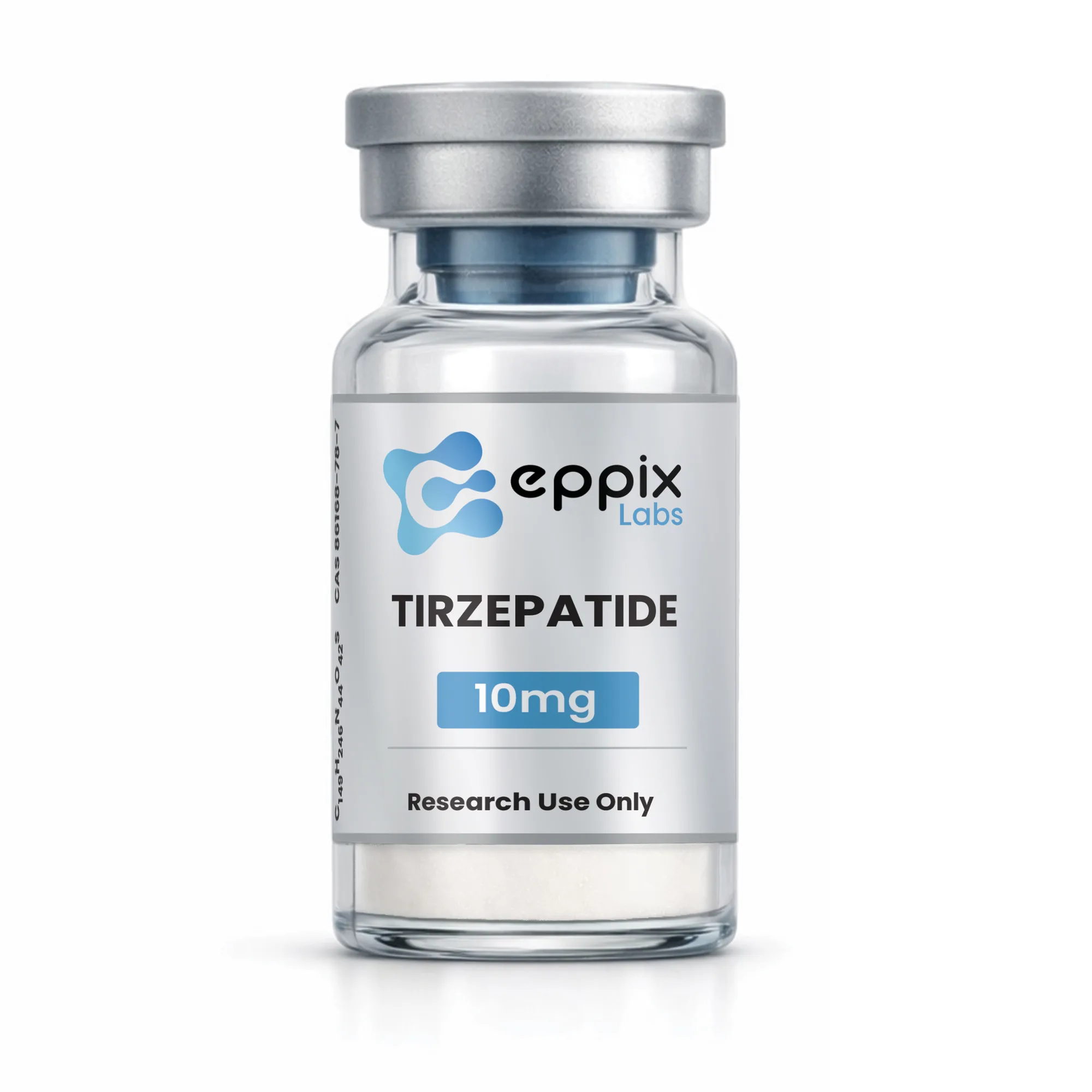
Tirzepatide is a synthetic peptide developed for controlled laboratory research involving dual incretin receptor signaling systems. It is structurally designed to interact with GLP-1 and GIP receptor pathways within experimental environments.
GLP-1 Receptor Agonist · 10 mg
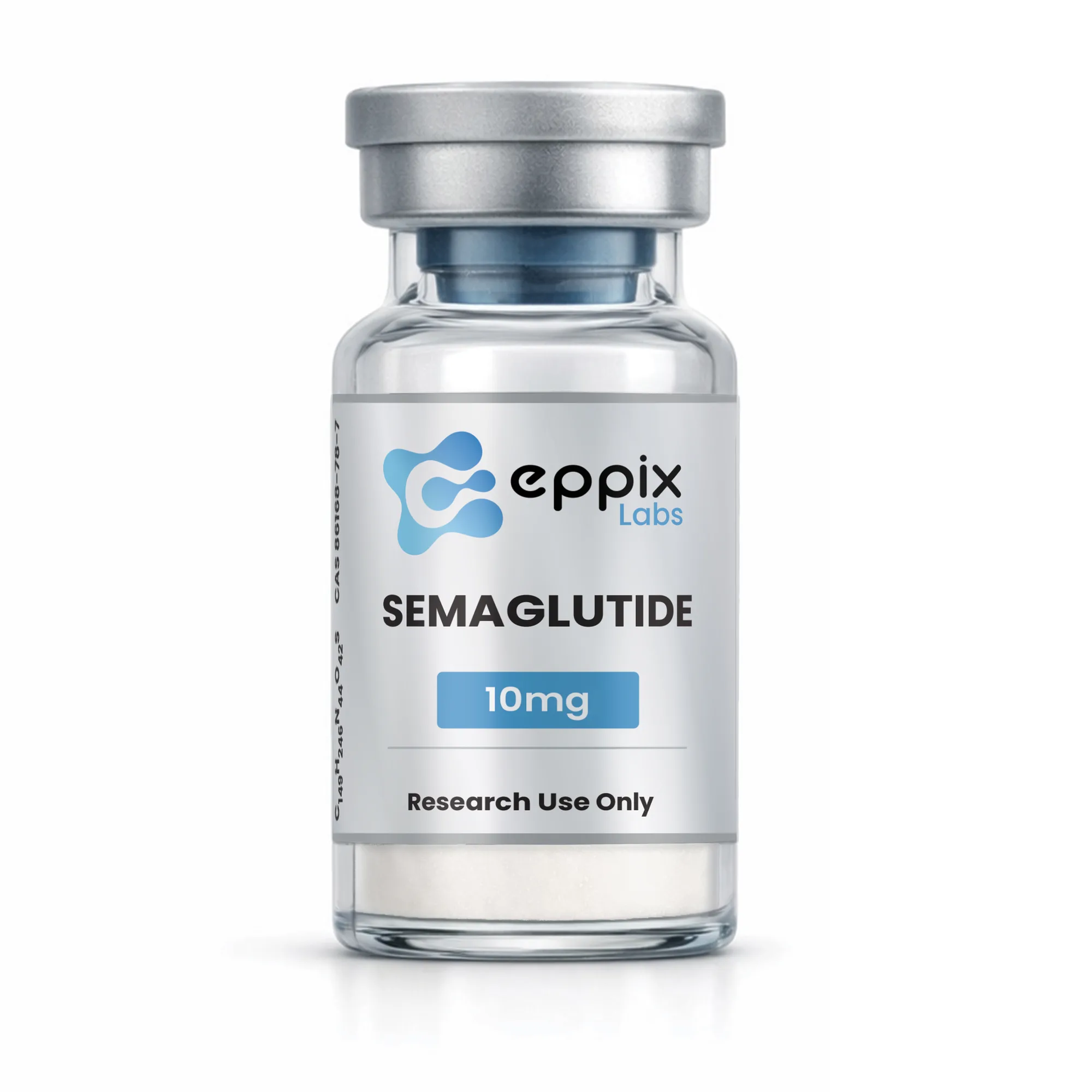
Semaglutide is a synthetic analogue of glucagon-like peptide-1 (GLP-1), a naturally occurring incretin hormone involved in glucose-dependent signaling. It is developed for controlled laboratory investigation within regulated experimental environments.
Selective Amylin Agonist (LY3841136) · 10 mg
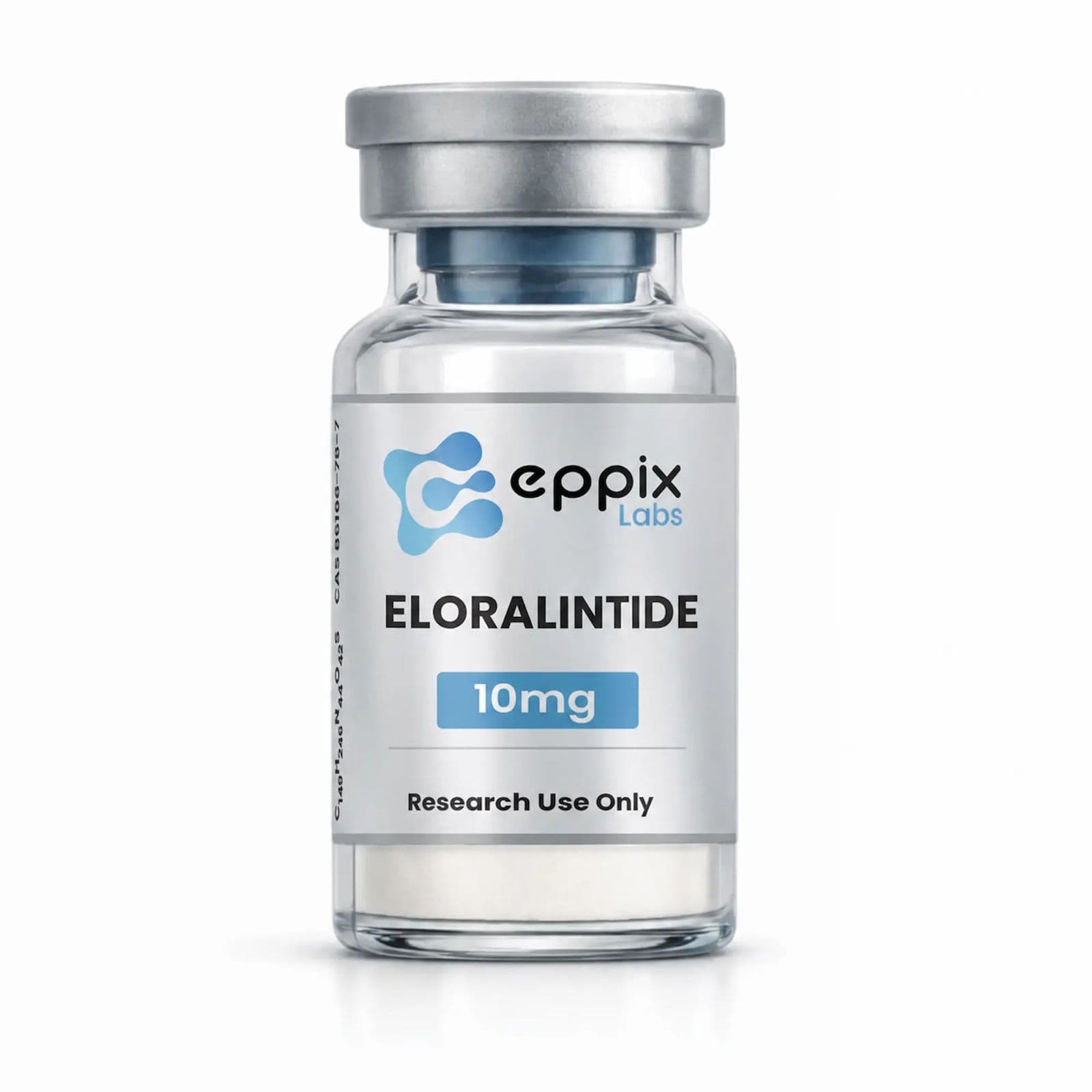
This product is supplied as eloralintide (LY3841136), a long-acting, selective amylin receptor agonist studied in research on metabolic and body-weight regulation.
Have questions about batch verification, documentation, or research specifications? Our team is available to assist with product and compliance inquiries.



 Eppix Flash Sale −30%