BPC-157 is a synthetic peptide derived from a fragment of a naturally occurring gastric protein. It is produced for laboratory research and studied within controlled experimental environments.
$66.47$94.95Eppix Flash Sale −30%CAD
⚡ Flash sale −30%Ends in 00:00:00Applied automatically at checkout
Purity VerifiedLab TestedSecure
Research Use Only
This product is intended strictly for laboratory research use within Canada. It is not approved by Health Canada for the diagnosis, treatment, cure, or prevention of any disease. Not for human or veterinary use.
By purchasing, you confirm the material will be used solely for lawful research purposes in accordance with applicable Canadian regulations.
BPC-157 is a synthetic peptide derived from a fragment of a naturally occurring gastric protein. It is produced for laboratory research and studied within controlled experimental environments.
In scientific literature, BPC-157 has been explored for its involvement in angiogenic and inflammatory signaling processes, contributing to ongoing research focused on cellular response mechanisms and structural recovery models.
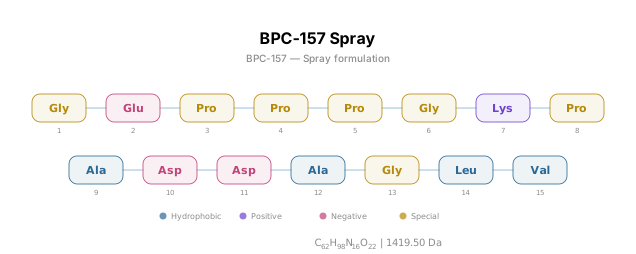
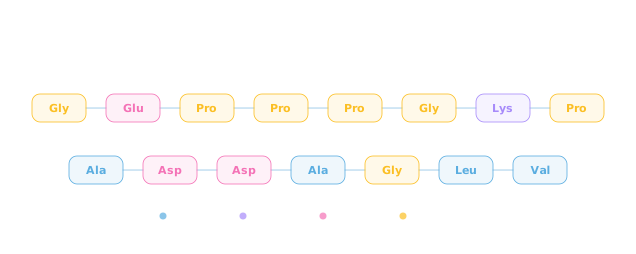
BPC-157 (Body Protection Compound-157) is a stable 15–amino acid peptide fragment first characterized in the early 1990s during investigations of gastric cytoprotective compounds. Since its identification, it has been evaluated across multiple preclinical research models.
Experimental studies have examined its influence on angiogenesis, nitric oxide pathways, collagen organization, and cytoprotective signaling. Within controlled laboratory settings, these findings have positioned BPC-157 as a compound of continued interest in structural integrity, connective tissue research, and systemic resilience models.
History
BPC-157 was originally synthesized during research into protective peptides present in gastric tissue. Early experimental models focused on gastrointestinal integrity, with subsequent investigations expanding into musculoskeletal, vascular, and dermal systems.
Over time, BPC-157 became a recurring subject in laboratory research due to its measurable biological activity across diverse preclinical models.
Key Research Areas
Preclinical investigations have explored BPC-157 in structural, vascular, and inflammatory research models. Laboratory data suggest involvement in angiogenic signaling, nitric oxide modulation, collagen-related pathways, and cytoprotective mechanisms under experimental conditions.
3 of the 4 areas below are addressed directly by a paper cited on this page.
Structural models involving tendon and ligament systems
Addressed on this page by Staresinic 2003, Chang 2011. The work appeared in J Orthop Res. Each is linked to its source record in the references below, so what was measured — and in what system — can be read rather than taken on trust.
Staresinic, M. et al. (2003) — Gastric pentadecapeptide BPC 157 accelerates healing of transected rat Achilles tendon and in vitro stimulates tendocytes growth. J Orthop Res 21(6):976–983.
Chang, C.H. et al. (2011) — The promoting effect of pentadecapeptide BPC 157 on tendon healing involves tendon outgrowth, cell survival, and cell migration. J Appl Physiol (1985) 110(3):774–780.
Vascular research focused on angiogenesis and nitric oxide signaling
Addressed on this page by Hsieh 2020, Huang 2015. The work appeared in Sci Rep and Drug Des Devel Ther. Each is linked to its source record in the references below, so what was measured — and in what system — can be read rather than taken on trust.
Hsieh, M.J. et al. (2020) — Modulatory effects of BPC 157 on vasomotor tone and the activation of Src-Caveolin-1-endothelial nitric oxide synthase pathway. Sci Rep 10(1):17078.
Huang, T. et al. (2015) — Body protective compound-157 enhances alkali-burn wound healing in vivo and promotes proliferation, migration, and angiogenesis in vitro. Drug Des Devel Ther 9:2485–2499.
Addressed on this page by Huang 2015. The work appeared in Drug Des Devel Ther. Each is linked to its source record in the references below, so what was measured — and in what system — can be read rather than taken on trust.
Huang, T. et al. (2015) — Body protective compound-157 enhances alkali-burn wound healing in vivo and promotes proliferation, migration, and angiogenesis in vitro. Drug Des Devel Ther 9:2485–2499.
Systemic models evaluating cytoprotective and inflammatory pathway interactions
No paper cited on this page reports on systemic, evaluating or cytoprotective. This heading marks where BPC-157 Spray is discussed in the category rather than a question the cited literature answers, and it is worth knowing which of these areas has work behind it and which does not.
The references section of this page cites 8 primary papers published between 1993 and 2020 — a reasonably developed body of work for a research compound. Every citation is linked to its PubMed or DOI record so it can be read rather than taken on trust, and the summaries above describe what those papers report rather than what the compound is claimed to do.
Research compounds attract claims that outrun their evidence. Below are the ones most often encountered for BPC-157 Spray, set against what the papers cited on this page actually report. Where the record is thin or contested, that is stated rather than smoothed over.
Also called
BPC-157 Spray is also referred to as BPC, body protection compound, the wolverine peptide.
Preclinical only
BPC-157 Spray is commonly described online in connection with faster healing from injury and improved recovery. In the research literature the same compound is filed under structural models involving tendon and ligament systems, vascular research focused on angiogenesis and nitric oxide signaling and dermatological models examining wound closure processes.
The 8 papers cited on this page, published between 1993 and 2020 (4 in animal models and 1 review) describe laboratory and animal work. None reports a controlled trial in humans. Findings in cell culture or in a rodent model describe what happened in that system; they do not establish that the same occurs in humans, and this compound is not approved for human use.
Nothing above is a statement of what this material does. It is a summary of what has been published and what has not. Eppix Labs supplies research materials only and provides no dosing, administration or protocol guidance.
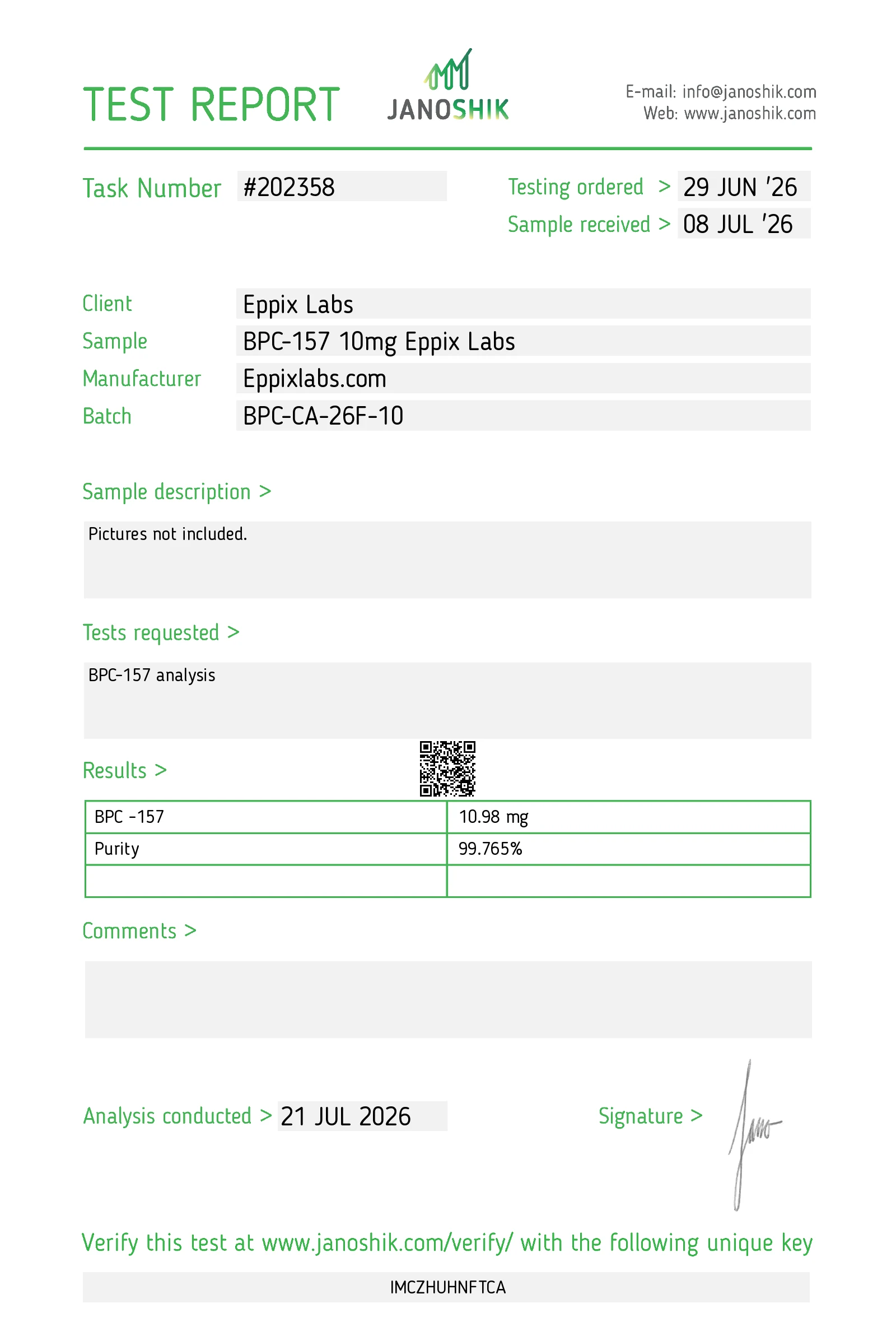
Verification for BPC-157 Spray is per lot, not per product. The current 10mg lot BPC-CA-26F-10 returned 99.765% purity, 10.98 mg measured, 109.8% of the labelled 10 mg, assayed by Janoshik. Those figures are the laboratory's, published in full rather than reduced to a badge.
The lot code printed on the vial matches the code on the certificate for BPC-157 Spray. Matching the two is what confirms the unit in hand came from the batch that was tested — a certificate not tied to a lot code proves nothing about any particular unit.
Researchers who buy BPC-157 Spray in Canada through Eppix Labs receive the lot described by the certificate above: the code printed on the vial label is the code on the certificate, and both are searchable on the batch verification page.
BPC-157 Spray ships as a prepared solution rather than as lyophilized powder, so it is already past the point at which a powder would be reconstituted. That shortens handling but tightens storage: a compound in solution is less stable than the same compound dry, and refrigeration from arrival onward is the relevant control.
The stability window for a solution is shorter than the shelf life of a sealed lyophilized vial of the same compound. Records for laboratory work in this format should note the date the unit was opened, not only the date it was received.
Vials may appear empty on arrival. Lyophilized material collects at the base of the vial and is often not visible until the vial is inspected under direct light.
1 × sealed spray unit (10mL - 100 mcg per spray / Single Vial), batch-labelled
The batch-linked Certificate of Analysis for the exact lot shipped
Discreet outer packaging with no product names on the exterior
Canada Post Xpresspost, tracked, typically 1–2 business days from Canadian stock
Not included
Laboratory consumables of any kind
Dosing, administration or protocol guidance of any kind
No. Eppix Labs products are supplied exclusively for laboratory research. We do not provide dosing, administration, or usage guidance.
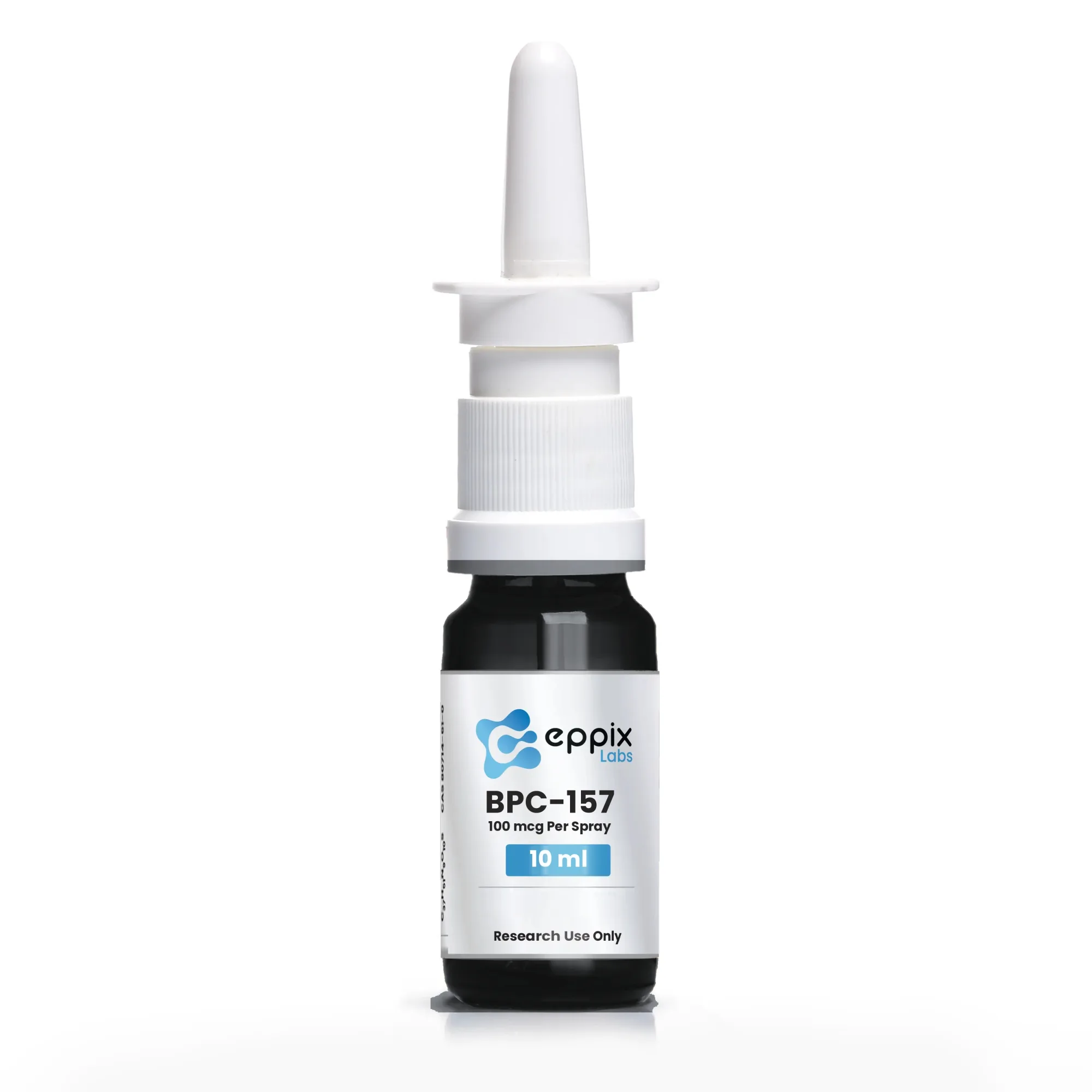
Each 10mL spray bottle contains the labeled total quantity of BPC-157 in solution, metered at 100 mcg per spray. Independent third-party analysis verifies purity, identity, and net content per batch.
The spray is supplied pre-diluted and ready for laboratory use — no reconstitution is required. Any other laboratory materials for experimental procedures must be sourced separately.
Duration depends entirely on research design, storage conditions, and laboratory protocol.
Sikirić, P. et al.(1993)
A new gastric juice peptide, BPC. An overview of the stomach-stress-organoprotection hypothesis and beneficial effects of BPC. J Physiol Paris 87(5):313–327.
Gastric pentadecapeptide BPC 157 accelerates healing of transected rat Achilles tendon and in vitro stimulates tendocytes growth. J Orthop Res 21(6):976–983.
Body protective compound-157 enhances alkali-burn wound healing in vivo and promotes proliferation, migration, and angiogenesis in vitro. Drug Des Devel Ther 9:2485–2499.
Stable gastric pentadecapeptide BPC 157 in the treatment of colitis and ischemia and reperfusion in rats: New insights. World J Gastroenterol 23(48):8465–8488.
Triple GIP / GLP-1 / Glucagon Agonist · 10, 20, 40 & 120 mg
Retatrutide is a synthetic peptide developed for controlled laboratory research involving multi-receptor signaling systems. It is structurally designed to interact with GLP-1, GIP, and glucagon receptor pathways within experimental environments.
Dual GIP / GLP-1 Agonist · 10, 30 & 65 mg
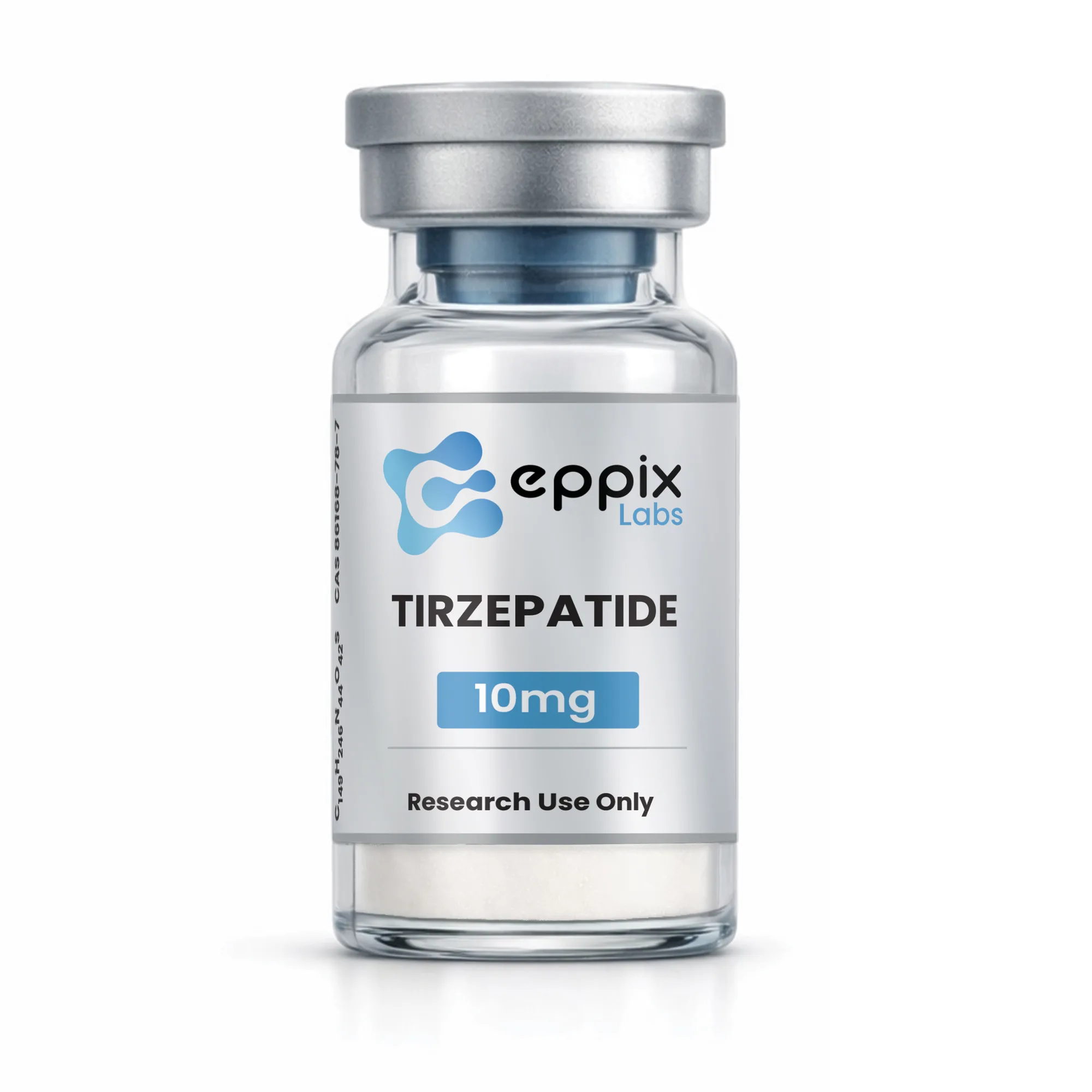
Tirzepatide is a synthetic peptide developed for controlled laboratory research involving dual incretin receptor signaling systems. It is structurally designed to interact with GLP-1 and GIP receptor pathways within experimental environments.
GLP-1 Receptor Agonist · 10 mg
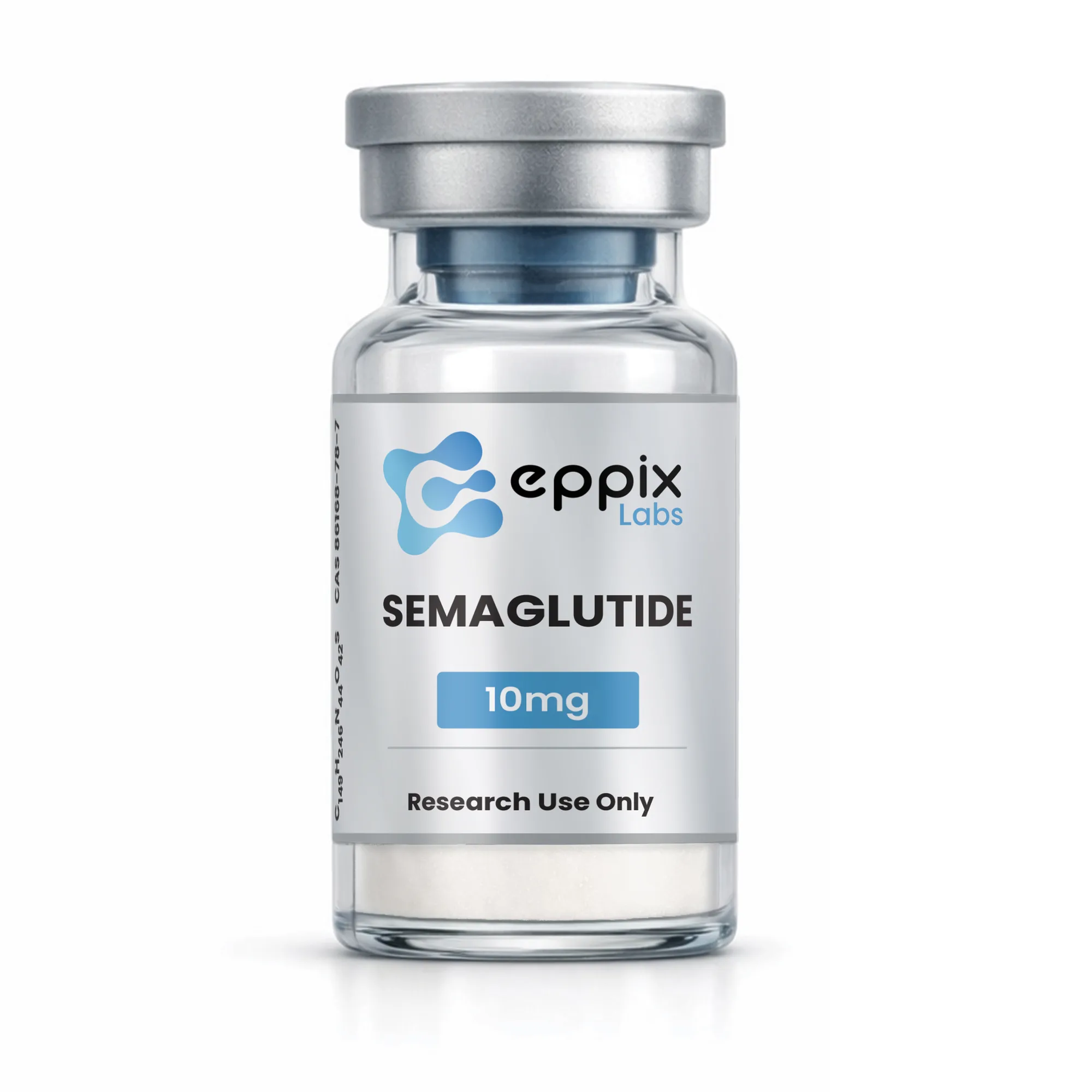
Semaglutide is a synthetic analogue of glucagon-like peptide-1 (GLP-1), a naturally occurring incretin hormone involved in glucose-dependent signaling. It is developed for controlled laboratory investigation within regulated experimental environments.
Selective Amylin Agonist (LY3841136) · 10 mg
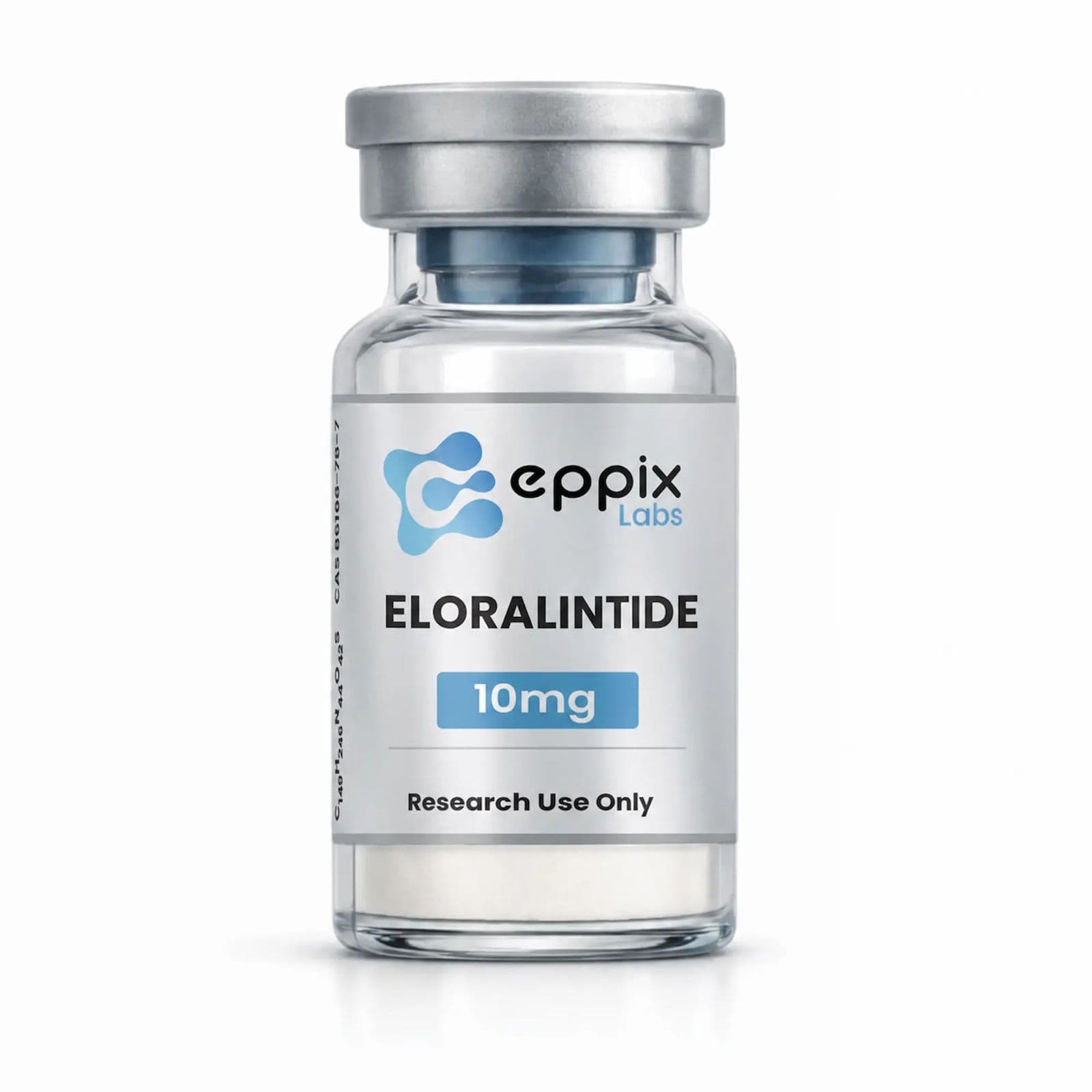
This product is supplied as eloralintide (LY3841136), a long-acting, selective amylin receptor agonist studied in research on metabolic and body-weight regulation.
Have questions about batch verification, documentation, or research specifications? Our team is available to assist with product and compliance inquiries.


 Eppix Flash Sale −30%