Measures bacterial endotoxin present in the material.
Batch 51Q-CA-26I-50 · this lot
Endotoxin and heavy-metals testing is done periodically on selected batches to verify quality — not on every batch. Each result applies to the batch shown.
Nicotinamide N-Methyltransferase (NNMT) Inhibitor Research Compound — Capsules
5-Amino-1MQ is a small-molecule research compound studied as an inhibitor of nicotinamide N-methyltransferase (NNMT), an enzyme involved in cellular metabolic regulation. It is developed for controlled laboratory investigation within experimental environments.
$39.95CAD
Discount and referral codes apply at checkout. Sales, Mix & Match and payment-method discounts don't.
This product is intended strictly for laboratory research use within Canada. It is not approved by Health Canada for the diagnosis, treatment, cure, or prevention of any disease. Not for human or veterinary use.
By purchasing, you confirm the material will be used solely for lawful research purposes in accordance with applicable Canadian regulations.
5-Amino-1MQ is a small-molecule research compound studied as an inhibitor of nicotinamide N-methyltransferase (NNMT), an enzyme involved in cellular metabolic regulation. It is developed for controlled laboratory investigation within experimental environments.
In scientific literature, 5-Amino-1MQ is examined in models evaluating NNMT-associated metabolic pathways, methylation-related signaling systems, and intracellular regulatory mechanisms under in vitro and preclinical research conditions.
5-Amino-1MQ is evaluated in research focused on NNMT pathway modulation and metabolic signaling systems. Experimental studies examine its interaction with enzymatic regulatory frameworks and intracellular methylation-associated processes within controlled laboratory environments.
Research publications have explored its biochemical interaction profile and pathway-level signaling characteristics under structured experimental conditions.
History
Research into NNMT as a metabolic regulatory enzyme led to the development of small-molecule inhibitors such as 5-Amino-1MQ. Investigations into enzymatic pathway modulation expanded into laboratory models evaluating metabolic regulation and intracellular signaling systems.
Subsequent studies documented its interaction with NNMT-related pathways in controlled experimental frameworks.
Key Research Areas
Laboratory investigations into 5-Amino-1MQ have focused on NNMT inhibition models and metabolic pathway regulation systems. Research frameworks evaluate enzymatic interaction dynamics, methylation-associated processes, and intracellular regulatory mechanisms under controlled in vitro and preclinical conditions.
0 of the 4 areas below are addressed directly by a paper cited on this page.
NNMT inhibition models
No paper cited on this page reports on nnmt or inhibition. This heading marks where 5-Amino-1MQ Capsules is discussed in the category rather than a question the cited literature answers, and it is worth knowing which of these areas has work behind it and which does not.
Metabolic pathway regulation studies
No paper cited on this page reports on metabolic or regulation. This heading marks where 5-Amino-1MQ Capsules is discussed in the category rather than a question the cited literature answers, and it is worth knowing which of these areas has work behind it and which does not.
Enzymatic signaling framework investigations
No paper cited on this page reports on enzymatic. This heading marks where 5-Amino-1MQ Capsules is discussed in the category rather than a question the cited literature answers, and it is worth knowing which of these areas has work behind it and which does not.
Intracellular methylation pathway research
No paper cited on this page reports on intracellular or methylation. This heading marks where 5-Amino-1MQ Capsules is discussed in the category rather than a question the cited literature answers, and it is worth knowing which of these areas has work behind it and which does not.
The references section of this page cites 2 primary papers published between 2017 and 2024 — a thin record. Every citation is linked to its PubMed or DOI record so it can be read rather than taken on trust, and the summaries above describe what those papers report rather than what the compound is claimed to do.
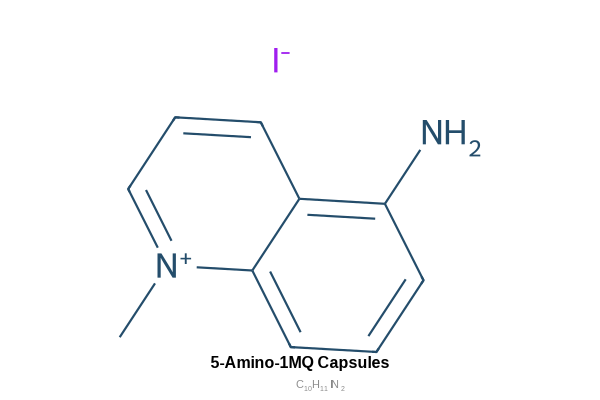
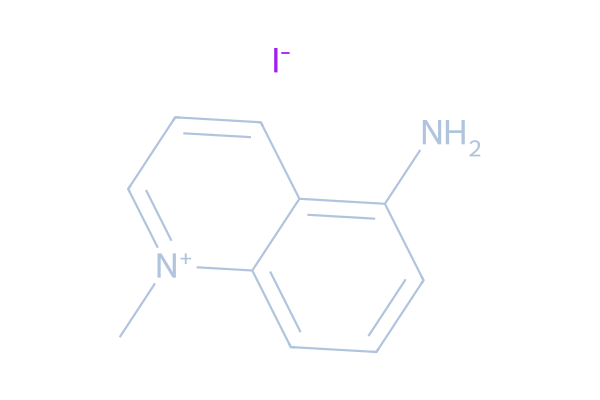
5-Amino-1MQ Capsules is frequently listed as a peptide by suppliers in this market. It is not one. The structure published on this page is the compound's actual chemistry, and research on it should be read against its own class rather than against peptide literature.
Research compounds attract claims that outrun their evidence. Below are the ones most often encountered for 5-Amino-1MQ Capsules, set against what the papers cited on this page actually report. Where the record is thin or contested, that is stated rather than smoothed over.
Also called
5-Amino-1MQ Capsules is also referred to as 5A1MQ, 5 amino.
Preclinical only
5-Amino-1MQ Capsules is commonly described online in connection with weight loss, appetite suppression and fat reduction. In the research literature the same compound is filed under NNMT inhibition models, metabolic pathway regulation studies and enzymatic signaling framework investigations.
The 2 papers cited on this page, published between 2017 and 2024 describe laboratory and animal work. None reports a controlled trial in humans. Findings in cell culture or in a rodent model describe what happened in that system; they do not establish that the same occurs in humans, and this compound is not approved for human use.
Not supported
Presented alongside compounds with decades of published research, as though the evidence base is comparable.
It is not. 5-Amino-1MQ Capsules rests on 2 cited papers (between 2017 and 2024). A record that thin cannot support conclusions about mechanism, effect or safety, and the honest reading is that this compound has been studied very little rather than studied and validated.
Nothing above is a statement of what this material does. It is a summary of what has been published and what has not. Eppix Labs supplies research materials only and provides no dosing, administration or protocol guidance.
The lot code printed on the bottle matches the code on the certificate for 5-Amino-1MQ Capsules. Matching the two is what confirms the unit in hand came from the batch that was tested — a certificate not tied to a lot code proves nothing about any particular unit.
Researchers who buy 5-Amino-1MQ Capsules in Canada through Eppix Labs receive the lot described by the certificate above: the code printed on the vial label is the code on the certificate, and both are searchable on the batch verification page.
5-Amino-1MQ Capsules is supplied in capsule form, which removes the reconstitution step entirely: there is no vehicle to add, no reconstitution volume to record and no post-reconstitution stability window to track. What that leaves a laboratory to control is storage — capsule shells draw moisture from the air, so the container should be kept sealed and dry rather than decanted into an open vessel.
Because the material is already at its labelled quantity per capsule, batch verification carries more weight in this format than it does for powder: there is no point at which the researcher independently confirms mass by weighing. The measured content published for each lot is the figure that answers that question.
Triple GIP / GLP-1 / Glucagon Agonist · 10, 20, 40 & 120 mg
Retatrutide is a synthetic peptide developed for controlled laboratory research involving multi-receptor signaling systems. It is structurally designed to interact with GLP-1, GIP, and glucagon receptor pathways within experimental environments.
Dual GIP / GLP-1 Agonist · 10, 30 & 65 mg
Tirzepatide is a synthetic peptide developed for controlled laboratory research involving dual incretin receptor signaling systems. It is structurally designed to interact with GLP-1 and GIP receptor pathways within experimental environments.
GLP-1 Receptor Agonist · 10 mg
Semaglutide is a synthetic analogue of glucagon-like peptide-1 (GLP-1), a naturally occurring incretin hormone involved in glucose-dependent signaling. It is developed for controlled laboratory investigation within regulated experimental environments.
Selective Amylin Agonist (LY3841136) · 10 mg
This product is supplied as eloralintide (LY3841136), a long-acting, selective amylin receptor agonist studied in research on metabolic and body-weight regulation.
Have questions about batch verification, documentation, or research specifications? Our team is available to assist with product and compliance inquiries.


 30% Off