Canada Post Xpress1–2 day delivery across CanadaFree on orders over $200

Verification

How to Spot a Fake Peptide COA: Seven Red Flags

Most bad certificates are not forgeries. They are real documents used to say something they do not say.

·Compiled by Eppix Labs

Outright forgery is rarer than the market assumes and easier to catch than the alternatives. The certificates that actually mislead buyers are usually genuine laboratory documents, presented in a way that implies something they do not establish.

These are the seven patterns, roughly in order of how often they appear. The positive version of this check, what to do rather than what to avoid, is at how to verify a peptide COA.

1. The recycled lot

A real certificate for a lot tested eighteen months ago, still on the product page, still being shown to buyers of material filled last week. Nothing on the document is false. It is simply about different material.

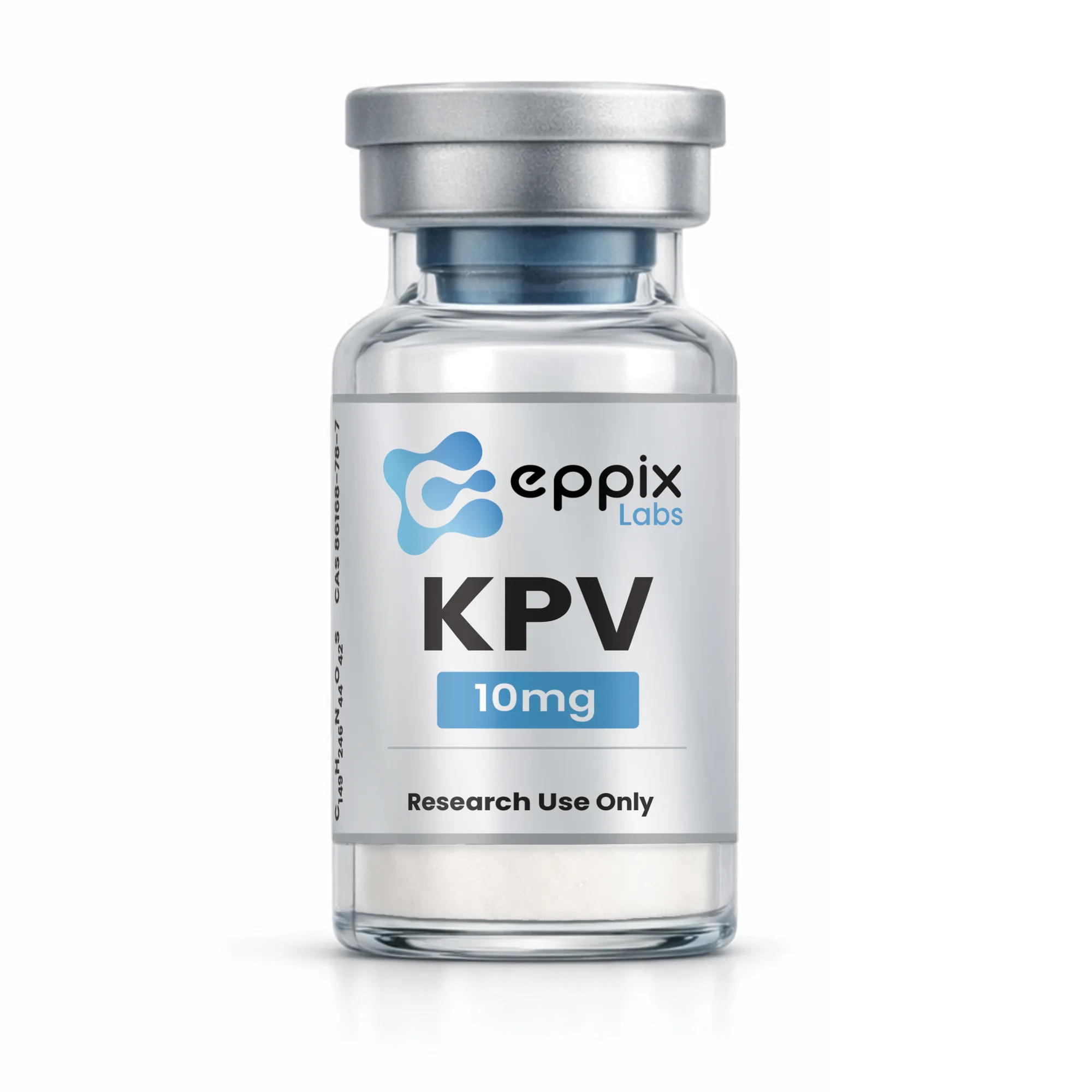
How to catch it: compare the batch number on the certificate to the batch number printed on the vial label, and check the test date against when the lot was listed. If the supplier cannot produce a certificate carrying the batch code on your vial, they have not tested your vial.
2. No batch number anywhere

A certificate with a compound name, a purity figure and no lot identifier cannot be tied to anything. Neither can a vial with no batch code on the label. Either one alone breaks the chain; both together mean there is no chain.

How to catch it: look for the batch code on the label before you look at the certificate. If it is absent, the certificate cannot be about your vial in any checkable sense.

3. No verification path

A PDF hosted on the seller's own domain, with no report key, no link to the issuing laboratory, and no way to ask that laboratory whether it issued the document. This is the structural weakness that makes every other manipulation possible.

How to catch it: find the report key or link and resolve it on the laboratory's own site. Compare client name, batch, date and numbers against the copy the seller published. Laboratories that operate a public verification database, Janoshik among them, make this a two-minute check.

4. Purity without content

A prominent "99.4% pure" and no measured milligram figure. This is not a forgery and it is not an accident: purity is the flattering number and content is the one that exposes underfilling, which is the most profitable and least detectable way to shortchange a buyer.

How to catch it: look for a measured content figure in milligrams against the labelled amount. If it is missing, ask for it. A supplier who tests content will publish it; a supplier who does not will explain why the question is unnecessary.

Published Certificate
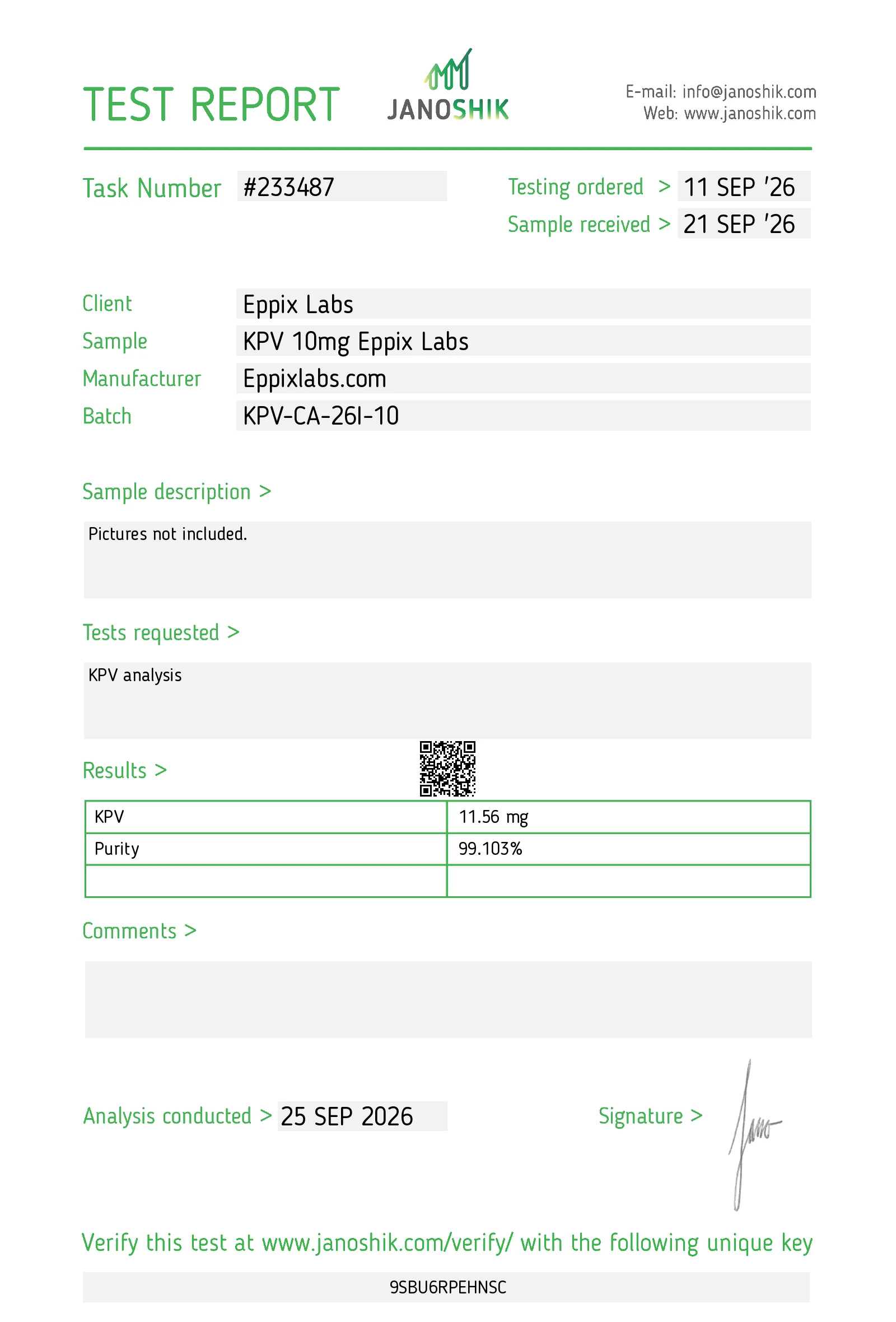
Certificate of analysis for Buy KPV Peptide Canada | 10mg & 30mg 10mg, batch KPV-CA-26F-10, 99.023% purity, 12.05 mg measured content

Select strength

Batch
KPV-CA-26F-10
Purity (HPLC)
99.023%
Measured content
12.05 mglabelled 10 mg
Laboratory
Janoshik
A certificate carrying both numbers: HPLC purity and measured content against the labelled amount, per strength.

5. The wrong client name

The client field on a laboratory report names whoever commissioned the test. A certificate naming a different company is a real certificate for someone else's material, most often a manufacturer's document circulated by a reseller who has tested nothing themselves.

How to catch it: read the client field. If it names a company you are not buying from, ask what the relationship is. Sometimes the answer is legitimate, a supplier reselling a manufacturer's lot with that manufacturer's testing. More often it means the vial in front of you has never been independently tested at all.

6. Signs of editing

Genuine forgeries do exist, and they are usually crude: a number in a different font or weight from the rest of the row, inconsistent decimal places within one table, misaligned rows, a compound name that does not match the retention-time trace, a date format that changes between fields.

How to catch it: zoom in on the specific figures rather than skimming the layout. Editing artefacts show at the character level. Then verify on the laboratory's site, which settles it regardless of how good the edit was.

7. Numbers that are too good

A 44-residue peptide at 99.99% purity. A 100.0% measured content figure. Identical purity figures across every product a supplier sells. Real analytical results are untidy: they carry decimals that vary, they differ between compounds of different synthetic difficulty, and long peptides do not test as cleanly as tripeptides.

How to catch it: compare a supplier's numbers across their catalogue. Uniformity across chemically dissimilar compounds is not a sign of consistent quality control. It is a sign the numbers were not measured separately.

What a certificate that survives all seven looks like

  • ·Client name matching the supplier you are buying from.
  • ·Batch number matching the code on your vial label.
  • ·A test date consistent with the current lot.
  • ·Identity confirmed by mass spectrometry.
  • ·HPLC purity as a measured number, varying between products.
  • ·Measured content in milligrams against the labelled amount.
  • ·A report key that resolves on the issuing laboratory's own database.

How this works here

Every Eppix lot is tested by Janoshik Analytical and the certificate is published before the lot is listed, carrying the batch code that appears on the vial label and a link to the report on the laboratory's database. The archive is at certificates of analysis and the batch lookup at verify.

The reason to publish before sale rather than on request is structural rather than promotional: a certificate already sitting on a third party's database cannot be withheld if the numbers turn out badly.

Frequently Asked

Are fake COAs common?

Outright forgeries are less common than misuse of genuine documents. Recycled lots, missing batch numbers and certificates issued to a different client account for most of the problem.

What is the fastest single check?

Match the batch number on the certificate to the batch number printed on the vial. It takes seconds and it catches the most frequent failure.

How do I check a certificate on the laboratory's site?

Find the report key or link on the certificate and resolve it at the issuing laboratory. Compare client name, batch, test date and numbers against what the seller published. Any difference is the seller's edit.

Is a certificate naming a different company always a problem?

Not always. A supplier may legitimately resell a manufacturer's lot along with that manufacturer's testing. It is worth asking, because the alternative explanation is that nobody has tested the vial you are buying.

Why is a purity figure without a content figure a red flag?

Purity is the flattering number. Content is the one that reveals underfilling. Publishing the first and omitting the second answers the easier of the two questions.

Can identical purity figures across a catalogue be legitimate?

Rarely. Compounds of different synthetic difficulty do not test identically. Uniform figures across chemically dissimilar products suggest the numbers were not measured independently.

Research Use Only

This article summarizes published preclinical research literature. Compounds referenced are supplied by Eppix Labs strictly as research materials for laboratory investigation within Canada. They are not approved by Health Canada for human or veterinary use, and nothing on this page should be interpreted as medical advice or guidance on human or animal administration.