Canada Post Xpresspost1–2 day delivery across CanadaFree on orders over $200

Compound Comparison

GHK-Cu: Cosmetic Topicals Against Research-Grade Material

The one compound in this catalogue with a parallel life in the cosmetics aisle, and the confusion that generates about what the research-grade product actually is

·By Adam Reeves · Research Editor, Eppix Labs

GHK-Cu is unusual in this catalogue: it is sold in cosmetic serums on one side of the market and as lyophilised research material on the other, and the two worlds share a molecule and very little else. That overlap produces a steady stream of confused questions, most of which reduce to one: if it is in a face serum, what exactly is the research-grade product for?

This page answers that. Research-grade GHK-Cu is supplied for laboratory research only and is not a cosmetic ingredient, a skincare product or anything intended for human use. The full evidence review is in buy GHK-Cu in Canada.

One molecule, two products

GHK is a tripeptide, Gly-His-Lys, first isolated from human plasma in the early 1970s in work on liver-cell function.[4] It binds copper(II) with high affinity, and the copper complex is the form that carries most of the published activity, including the effects on collagen and matrix synthesis reported from the late 1980s onward.[3]

The molecule in a cosmetic serum and the molecule in a research vial are the same copper tripeptide complex. What differs is everything around it: concentration, matrix, regulatory category, and whether anyone measured what is actually in the container.
Chemical Structure
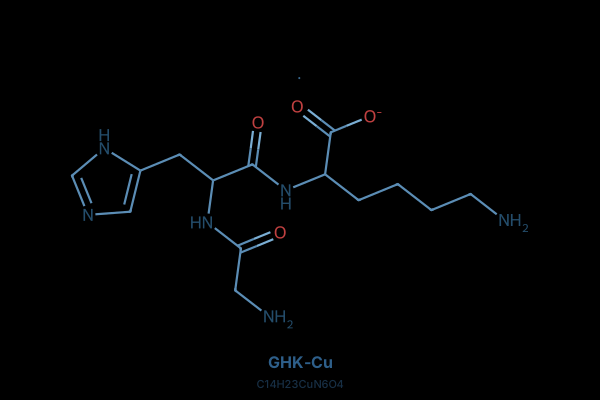
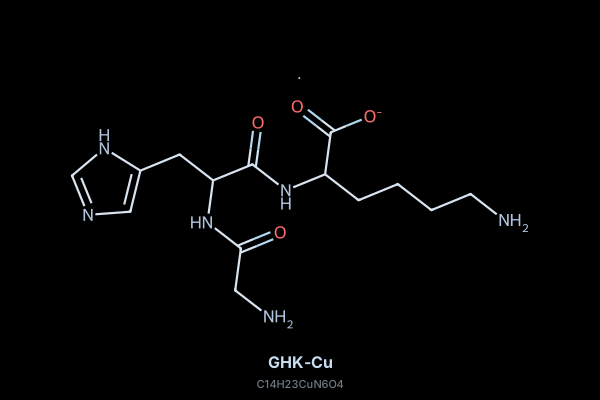
Chemical Structure diagram
The copper(II) tripeptide complex, identical in both contexts.

What actually differs

  • ·Form. Cosmetic: a serum or cream, with GHK-Cu typically present at a fraction of a percent alongside proprietary excipients. Research-grade: lyophilised powder, essentially all peptide, reconstituted by the researcher.
  • ·Regulation. Cosmetic: regulated as a cosmetic, which permits appearance claims and nothing more. Research-grade: a laboratory research material with no authorisation for human use of any kind.
  • ·Evidence base. Cosmetic: human studies conducted on formulations at cosmetic concentrations, genuine but narrow in scope. Research-grade: the cell-culture and animal literature on collagen synthesis, matrix metalloproteinase regulation and gene-expression modulation.[1][2]
  • ·Verification. Cosmetic: rarely any batch-level analysis available to the buyer. Research-grade: a lot certificate carrying purity and measured content.
  • ·Concentration control. Cosmetic: fixed by the manufacturer and usually undisclosed. Research-grade: chosen by the researcher at reconstitution, which is the entire reason the format exists.

What each literature actually supports

The cosmetic studies address topical formulations and skin-appearance endpoints. They are real studies, and they are also narrow: they say something about a formulated product applied to skin, and nothing about the compound at other concentrations, by other routes, or for other endpoints.

The research literature is a different body of work. It covers collagen synthesis, regulation of matrix metalloproteinases and their inhibitors, and broader gene-expression effects in cultured cells and animal wound models.[1][2] It is mechanistically informative and it is preclinical.

Neither body of work supports the systemic claims that circulate about this compound on social media. Saying so is not hedging; it is the accurate description of what has and has not been studied.

Why researchers use reconstituted material

Concentration control, and nothing more complicated than that. A defined mass of verified peptide dissolved in a chosen volume is a controllable experimental variable. A cosmetic serum with an undisclosed concentration in a proprietary excipient base is not, and no amount of care downstream recovers the information the formulation removed.

That is also why measured content matters more for GHK-Cu than for most compounds in the catalogue. It is commonly sold in large vials, 50 mg and 100 mg being ordinary, and a proportional short fill on a large vial is a large absolute quantity of missing material. Purity says nothing about it, for reasons set out in purity vs fill accuracy.

Research Material
General Image
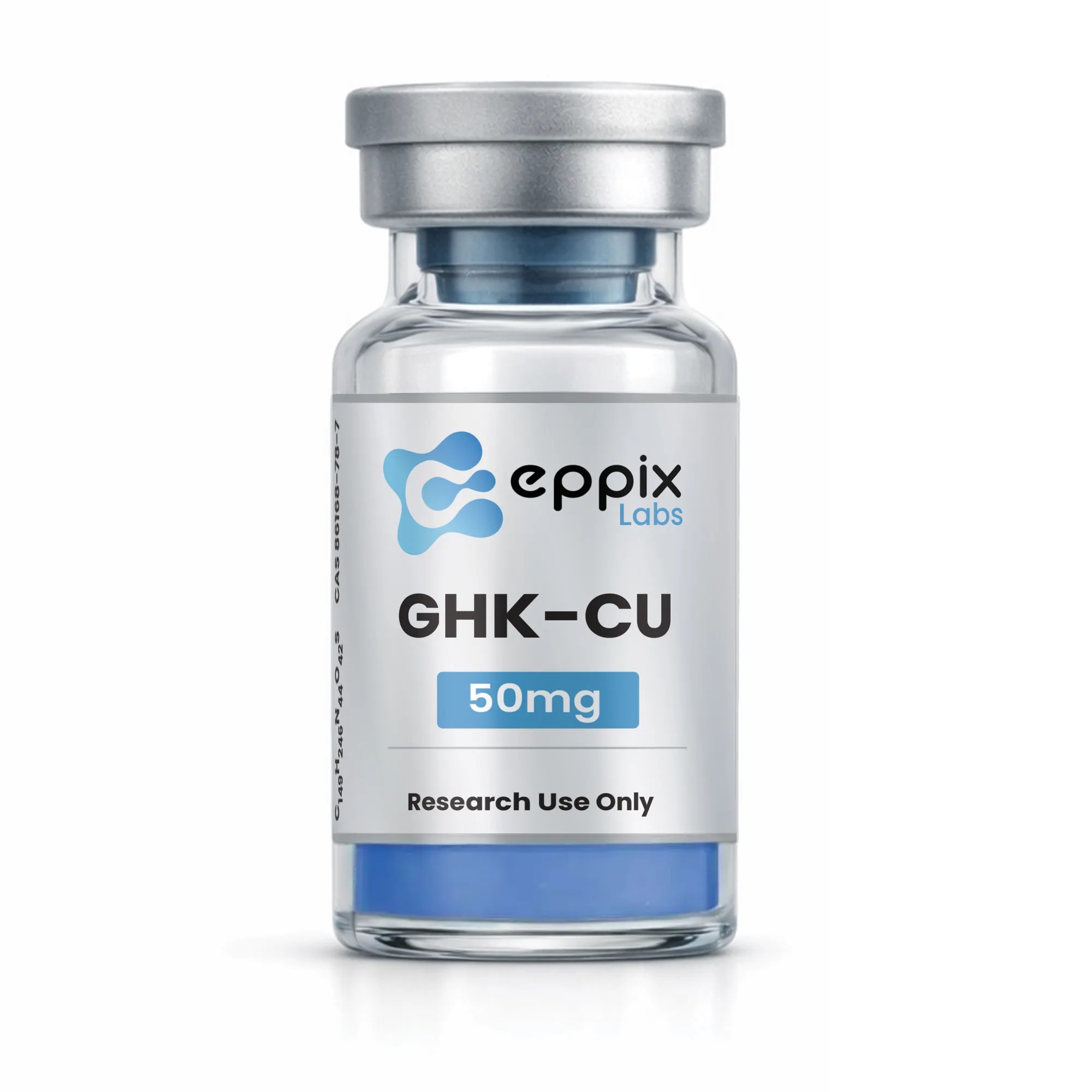
Research-grade GHK-Cu as supplied: lyophilised, in vial sizes where a proportional short fill would be a large absolute shortfall.
Published Certificate
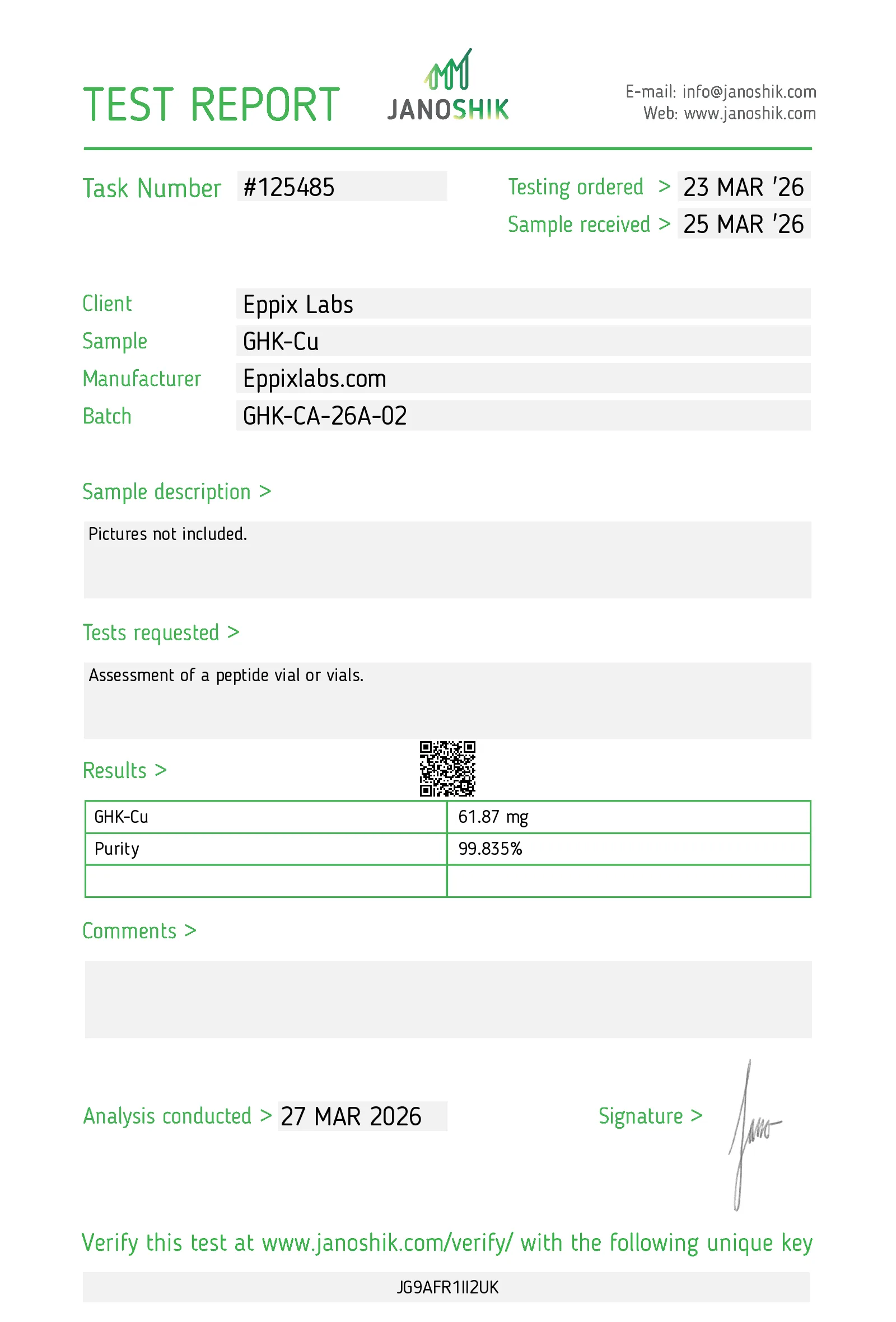
Certificate of analysis for Buy GHK-Cu Canada | Copper Peptide 50/100mg 50mg, batch GHK-CA-26A-02, 99.835% purity, 61.87 mg measured content

Select strength

Batch
GHK-CA-26A-02
Purity (HPLC)
99.835%
Measured content
61.87 mglabelled 50 mg
Laboratory
Janoshik
The current published certificate, carrying purity and measured content per lot.

A note on the colour

GHK-Cu is blue, and the blue is often treated as a quality signal. It is not. The colour comes from the copper(II) complex, and any copper-complexed GHK will show it regardless of purity, regardless of how much is in the vial, and regardless of whether the peptide is the right sequence.

The certificate is the quality signal. The colour is chemistry doing what chemistry does.

Frequently Asked

Is cosmetic GHK-Cu the same molecule?

Yes, the same copper tripeptide complex, present at a small fraction of the concentration and formulated into a regulated cosmetic matrix.

Does the blue colour indicate quality?

No. Any copper-complexed GHK is blue. Colour tells you a copper complex is present and nothing about purity, identity or how much is in the vial.

Can research-grade GHK-Cu be used in cosmetics?

No. Research-grade material is supplied for laboratory research and is not for human use in any form. Manufacturing cosmetics is a separate regulated activity with its own requirements.

What should the certificate show?

Lot number, testing laboratory, HPLC purity and measured content, with a key that resolves on the laboratory's own database. Measured content carries extra weight here because of the large vial sizes.

Is GHK-Cu legal in Canada?

Research-grade material may be supplied for laboratory research. It is not an authorised health product and is not for human or veterinary use. Cosmetic products containing GHK-Cu are a separate regulated category. This is general information, not legal advice.

References

  1. Pickart, L., Margolina, A. (2018). Regenerative and protective actions of the GHK-Cu peptide in the light of the new gene data. Int J Mol Sci 19(7):1987. PMID 29986520
  2. Pickart, L., Vasquez-Soltero, J.M., Margolina, A. (2015). GHK peptide as a natural modulator of multiple cellular pathways in skin regeneration. Biomed Res Int 2015:648108. PMID 26236730
  3. Maquart, F.X. et al. (1988). Stimulation of collagen synthesis in fibroblast cultures by the tripeptide-copper complex glycyl-L-histidyl-L-lysine-Cu2+. FEBS Lett 238(2):343-346. PMID 3169264
  4. Pickart, L., Thaler, M.M. (1973). Tripeptide in human serum which prolongs survival of normal liver cells and stimulates growth in neoplastic liver. Nat New Biol 243(124):85-87. PMID 4349963

Research Use Only

This article summarizes published preclinical research literature. Compounds referenced are supplied by Eppix Labs strictly as research materials for laboratory investigation within Canada. They are not approved by Health Canada for human or veterinary use, and nothing on this page should be interpreted as medical advice or guidance on human or animal administration.